Violence After El Mencho’s Death Casts Shadow Over 2026 FIFA World Cup Matches in Mexico
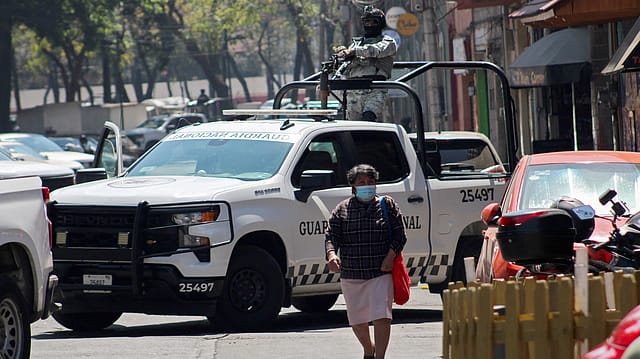
The killing of Mexico’s most powerful cartel leader has sent shockwaves right up to football’s biggest stage.
With the FIFA World Cup 2026 just months away, a surge in cartel violence across 20 states is now raising an uneasy question: can Guadalajara, one of the tournament’s key host cities, truly guarantee the safety of millions of visiting fans?
A Cartel Leader Falls: What Sparked the Crisis?
On February 22, Mexican army forces killed Nemesio Ruben Oseguera Cervantes, widely known as El Mencho, in Tapalpa, Jalisco, about 90 kilometres south of Guadalajara.

Losing Memory
16 Oct 2026 - Vol 05 | Issue 42
The making of a medical and social emergency
El Mencho was the founder and supreme leader of the Jalisco New Generation Cartel, often described as Mexico’s most powerful criminal organisation.
His death appears to have triggered an immediate and widespread reaction.
How Bad Was the Violence on Ground?
Within hours of the operation, between 80 and 250 narco-blockades were reported across several cities.
Vehicles, buses, pharmacies and banks were set on fire, creating scenes of fear and disruption. Guadalajara reportedly turned into a near ghost town by Sunday night, while panic spread at its international airport after gunshots were heard nearby.
The U.S. Embassy issued shelter-in-place advisories for American citizens in multiple Mexican states, underlining the seriousness of the situation.
Which FIFA World Cup 2026 Host City Is Most at Risk?
Guadalajara, scheduled to host four World Cup matches, lies in the heart of Jalisco, the CJNG’s traditional stronghold.
That geographic reality makes the city especially vulnerable to possible reprisals. Reports also indicated that four Liga MX matches were postponed due to security concerns, reflecting how deeply the unrest has affected daily life and sport alike.
Can FIFA Relocate or Cancel World Cup Matches Over Security Concerns?
FIFA’s 2026 host regulations grant the governing body full authority to cancel, reschedule or relocate matches if safety becomes a concern.
Sports law experts say FIFA holds broad powers to withdraw from host city arrangements under extraordinary circumstances, although any such decision would carry significant legal and financial implications.
So far, FIFA has not issued a public statement, and that silence has only added to the uncertainty surrounding the situation.
What Could Be the Real Repercussions for the World Cup?
Beyond immediate security worries, the fallout could also affect the tournament commercially and logistically.
International fans already cautious about safety in Mexico may rethink travel plans, potentially impacting ticket sales and tourism revenue.
If matches were to be shifted to co-host nations like the United States or Canada, the operational and financial strain would be considerable for all involved.
What Does El Mencho’s Death Mean for Cartel Leadership in Mexico?
According to Al Jazeera, there is no clear successor within the CJNG, with El Mencho long seen as its undisputed head.
The International Crisis Group notes that the cartel’s highly centralised structure could now lead regional bosses to compete aggressively for control.
Analysts have already drawn parallels with the instability that followed the arrest of El Chapo.
How Has the United States Responded?
U.S. Deputy Secretary of State Christopher Landau described El Mencho as “one of the bloodiest and most ruthless drug kingpins,” and welcomed his death as a positive development for Mexico.
Meanwhile, American Airlines has waived change fees for flights to Guadalajara and Puerto Vallarta, a move that reflects growing anxiety among travellers.
What Happens Next for the FIFA World Cup 2026?
With Guadalajara set to host four matches, alongside fixtures in Mexico City and Monterrey, the stakes are extremely high.
The opening match is scheduled at Estadio Azteca on June 11, 2026, leaving little room for prolonged instability.
Whether the CJNG’s leadership vacuum leads to a violent power struggle or a quick internal settlement may ultimately shape how secure Mexico’s World Cup plans remain.
For now, the shadow of cartel violence has cast a cloud of uncertainty over one of the most anticipated sporting events in the world.
(With inputs from yMedia)