El Chapo to El Mencho: Billion-Dollar History of Mexico's Drug Cartels
The Mexico drug cartel story didn't begin with a gunfight. It began with opium seeds, migration routes and a porous border in the late 1800s.
Over a century later, it produced names such as El Chapo and El Mencho - and a body count that continues to rise.
How did Mexico become a drug trafficking hub?
According to the Peace Palace Library, Chinese migrants barred from entering the US in 1882 settled in Mexico’s border regions and introduced opium cultivation. Ironically, early American drug laws reportedly boosted Mexico's smuggling industry rather than curbing it.
By the 1960s, Mexico reportedly supplied around 75% of US marijuana and 15% of its heroin.
When did organised cartels first emerge?
The Guadalajara Cartel - Mexico's first major cartel - was founded in the late 1970s, reportedly with ties to Colombian trafficker Pablo Escobar. It transported heroin and marijuana northward and represented the first true consolidation of drug lordship in Mexico.

Losing Memory
16 Oct 2026 - Vol 05 | Issue 42
The making of a medical and social emergency
What caused the Guadalajara Cartel to collapse?
Its downfall came after the 1985 kidnapping and murder of DEA agent Enrique Camarena. The backlash triggered arrests of cartel founders and a political crackdown, fragmenting the organisation into smaller cartels - including the Sinaloa, Tijuana, Gulf, and Zetas - that would go on to dominate the Mexican drug war for decades.
Who was El Chapo and why does his name define an era?
Joaquín "El Chapo" Guzmán led the Sinaloa Cartel - reportedly Mexico's most powerful criminal organisation. He escaped prison twice. According to the Peace Palace Library, it was reportedly his contact with movie producers seeking a biographical film that helped authorities locate and recapture him in January 2016.
How did government crackdowns shape the Mexican drug war?
President Calderón's 2006 offensive deployed reportedly 45,000 troops, leading to thousands of arrests but also further cartel fragmentation and surging violence. According to the Peace Palace Library, an estimated 80,000 crime-related homicides were recorded since 2006, with around 26,000 persons disappearing between 2006 and 2012.
Did political change in Mexico affect the cartels?
Significantly. When President Vicente Fox ended 71 years of one-party rule in 2000, he severed old government-cartel ties - and violence reportedly surged as a result. The relationship between political power and organised crime had long kept a lid on inter-cartel conflict; removing it blew that lid off.
Who was El Mencho and how did the CJNG rise to power?
Nemesio Oseguera Cervantes, known as “El Mencho,” founded the Jalisco New Generation Cartel (CJNG) around 2009. According to the Associated Press, it became Mexico's fastest-growing criminal organisation, trafficking cocaine, methamphetamines and fentanyl into the US, and was reportedly active in at least 21 Mexican states. It also pioneered the use of drones and improvised explosive devices in cartel warfare.
What happened to El Mencho, and what does it mean?
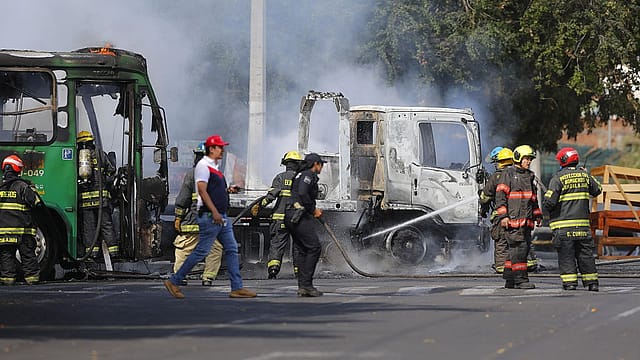
On February 22, 2026, the Mexican army killed El Mencho during an operation in the town of Tapalpa, Jalisco. Cartel members responded by blocking roads across 20 states. The US had reportedly offered a $15 million reward for his capture. Analysts warn the power vacuum could trigger renewed violence - meaning the Mexican drug war is far from over.
(With inputs from yMedia)