The Hottest World Cup
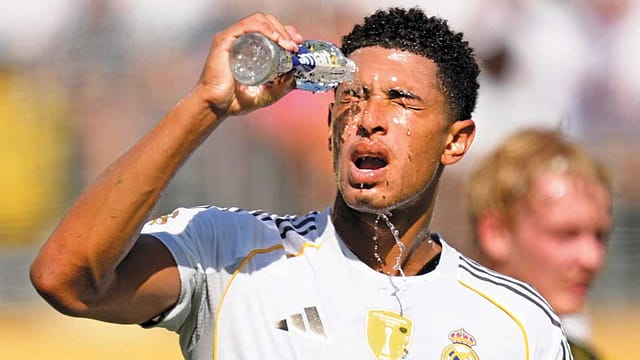
The FIFA football World Cup beginning June 11 has several firsts: 48 teams, three host nations, etc. But it may also witness an unprecedented level of heat. Extreme weather—heat, thunderstorms, wildfires nearby—is normal across the southern US and northern Mexico and wildfires don’t spare Canada either. A group of leading scientists has warned FIFA its additional precautions—threeminute cooling breaks, climate-controlled dugouts— are inadequate. They want six-minute cooling breaks, postponement of matches above 28C WBGT (Wet Bulb Globe Temperature, a measure of physical stress based on heat and humidity), etc.
Current measures fall short of the standards proposed by the players’ union FIFPRO. The experts think FIFA is risking players, support staff, and the public, although spectators can bring in factory-sealed water bottles and additional cooling measures like misting, shade, cooling buses, etc will be in place. The scientists estimate some matches could be played above 28C WBGT, which is 38C in dry heat and 30C in humid conditions. FIFPRO considers such levels unsafe and only last year, the Club World Cup in the US was hard on players. While the Trump administration will allow international football fans to enter the US without visa bonds, climate change could make this a very different experience from 1994.
A Goudstikker Looted by Göring

This could have come straight out of Lynn Nicholas’ The Rape of Europa, documenting the Third Reich’s loot of Europe’s treasures. It involves Toon Kelder, the avant-garde Dutch painter; Jacques Goudstikker, the Jewish-Dutch art dealer who perished on the English Channel fleeing the Nazis; Reichsmarschall Hermann Göring, who denuded Europe’s museums and private collections; and Hendrik Seyffardt, a notorious Dutch Waffen-SS commander. All this time, Seyffardt’s heirs were in possession of Kelder’s Portrait of a Young Girl but kept mum, knowing it was one of the 1,100-odd paintings confiscated from the Goudstikker collection plundered by Göring. Till one descendant felt ashamed enough to contact the police recently. Art detective Arthur Brand said he had recovered Nazi-looted art before but never a Goudtsikker. Seyffardt had bought the painting at an auction in 1940 and the case recalls last year’s discovery of Giuseppe Ghislandi’s long-vanished Portrait of a Lady, also one of Goudtsikker’s, which surfaced on the website of a realtor advertising a house near Buenos Aires being sold by a daughter of Friedrich Kadgien, SS officer and financial adviser to Göring who escaped in 1945. That painting isappeared again and Kadgien’s daughters have no intention of returning it.
Colours of Crisis
If the blockade of the Strait of Hormuz has triggered a crisis of essentials across the globe, that includes an ingredient for ink, which has made Japanese snack giant Calbee switch to black-and-white packaging temporarily. Fourteen products, including crisps and crackers, will sport the new packaging from later this month. The problem is the supply of naphtha used in ink and plastic, which is a byproduct of the process of refining oil. Japan was importing nearly half of its naphtha from the Middle East before the Iran War and prices in Asia have doubled since the war began.