Engaging Myanmar and Aung San Suu Ki

A highlight of the visit of Myanmar President U Min Aung Hlaing to India which concluded on June 3 was the assurance that the country’s territory will not be used against India. In turn India reaffirmed support for Myanmar’s sovereignty and territorial integrity. The declarations are important in light of armed groups exploiting shared ethnicity and a 1,643 km border to set up safe havens in Myanmar and keep troubled areas like Manipur on the boil.
India’s support for Myanmar’s territorial integrity is important as the country’s ruling military junta faces a serious erosion of authority due to regional separatists and an armed pro-democracy movement. Hlaing’s visit then raises the important question whether India abandoned the cause of National League for Democracy leader Aun San Suu Kyi, currently under house arrest after being denied fair judicial process in cases of alleged corruption.
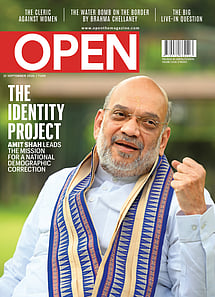
The Identity Project
11 Sep 2026 - Vol 05 | Issue 37
Amit Shah leads the mission for a national demographic correction
Cross-Border Camps
To begin with, the ability of armed groups such as the Kuki National Army (KNA) to stir trouble in Manipur is aided by cross-border support it receives in Chin areas along the border. All communities in Manipur are guilty of atrocities in the state and the latest conflict between Kukis and Nagas is one more such instance. Every time the situation appears to be stabilizing and Manipur is off the front pages, a fresh outrage scrapes raw nerves and rekindles the conflict.
Engaging with the military junta is not a choice, but a necessity. Foreign secretary Vikram Misri put it plainly when he said disengagement did not produce democratic change if that is the objective. “On the other hand, disengagement only produces a vacuum that others go and fill then to detriment. And those others have no interest in democracy. I can assure you about that,” he said.
The reference to China is obvious. It was back in the late 1990s when the Vajpayee government was in office that India took a pragmatic decision to work with the Junta after it became clear that not doing so will advantage China and hurt Indian interests. Though the number of armed insurgencies in the north-east have reduced and several armed groups have accepted negotiations, the long border is vulnerable to infiltration. A emergence of “independent” areas where the writ of the Myanmar military is limited or does not run have worsened matters.
ASSK and Myanmar Peace Process
Yet, at the same time, Hlaing did not get a pass on ASSK when he met Prime Minister Narendra Modi. “The Prime Minister did raise the matter…as Myanmar finds its way back to democracy, the need for an enduring peace in the country, the need for inclusion, the need to have all stakeholders at the table, and to examine the point so views of all the interlocutors who have been part of this process over a long period,” Misri said, describing the interaction as a “freewheeling” conversation.
Managing the border is not without complications and challenges. In a bid to curb movement of armed groups across the border, India has placed curbs on the free movement regime. At the same time, as the foreign secretary explained, there is need to ensure that long-standing people-to-people interactions across the border, and the familial and social ties that exist between communities are not adversely affected. “The fencing work is underway and at several locations there will be designated entry points and gates,” he said.
Misri summed it up by saying India’s engagement with Myanmar is not intended to be a “commentary” on the internal political arrangements in that country even as it recognizes the importance of sustained dialogue. In other words, India’s approach would not prescriptive and this is a recognition that there is only so much that can said or done in the matter. Yet, the engagement with Myanmar that is underway and is likely to be enhanced after Hlaing’s visit will provide India some levers in the situation and might make some impression on the Junta.
Some Leverage Better than None
The focus on defence cooperation will continue in areas of training, capacity and institutional building. A part of the training is in the context of UN peacekeeping. The operation of cyber scams from Myanmar which has trapped Indians requires urgent attention. Misri said 150-odd Indian national are still stuck in the nation while more than 2,400 have been repatriated. India also continues to pursue the Kaladan multi-modal transport project and the India-Myanmar-Thailand trilateral highway. But the Kaladan project has been hit by fighting between the Myanmar army and Rakhine rebels.
The foreign secretary emphasized the “very important question” of activities of Indian insurgent groups in Myanmar close to India’s borders. Hlaing assured Modi that Myanmar is sensitive to Indian concerns. “I don’t think from the outside anybody has any ready-made solutions to offer Myanmar. Yes, we can offer experiences, we can share experiences and as a matter of fact, that is what India has done consistently over the years,” Misri said.