250 Days at Sea, 200 Without Port: Why USS Abraham Lincoln is Finally Coming Home
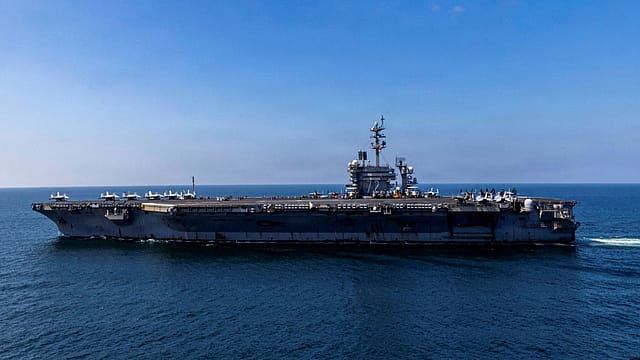
For more than eight months, thousands of American sailors aboard the USS Abraham Lincoln have lived inside a floating war machine.
They have launched combat aircraft, operated under threat, slept, eaten and worked aboard the nuclear-powered carrier while supporting US military operations against Iran.
For more than 200 consecutive days, they haven't had a port call. One sailor told CNN in July that he hadn't stepped off the ship at all in 2026. Another had watched the birth of his first child on FaceTime. He had never met her.
Now, after more than 250 days deployed, the Abraham Lincoln is finally heading home. Acting US Navy Secretary Hung Cao announced Friday that the carrier would return to the United States as part of a planned rotation. But why has one aircraft carrier suddenly become a story about much more than America's military operations against Iran?

Losing Memory
16 Oct 2026 - Vol 05 | Issue 42
The making of a medical and social emergency
How long has the USS Abraham Lincoln actually been out?
Long enough to make history. The carrier left San Diego in November 2025, initially deploying to the Indo-Pacific before being redirected towards West Asia as the confrontation with Iran intensified. By July 6, it had completed 207 consecutive days at sea, surpassing a modern US carrier record previously set by the USS Dwight D Eisenhower during the Covid-19 pandemic, Stars and Stripes reported. The deployment then kept going. According to Cao, the Lincoln has now spent 266 days deployed, including around 200 days in a combat zone, launching more than 10,000 sorties and dropping roughly 1.5 million pounds of ordnance. Reuters reports that the carrier has now spent more than 260 days deployed, with more than 200 days passing without a port visit.
Why didn't the Navy bring it home earlier?
Because the war changed the plan. The Lincoln's deployment was extended as it became a critical platform for US operations against Iran. Cao acknowledged that reality bluntly: “The Lincoln was extended because the mission demanded it.” The ship has been operating in and around one of the world's most dangerous maritime theatres, providing both offensive and defensive capabilities during the Iran conflict. CNN reporters who visited the carrier in July described sailors working under persistent threat while the ship remained central to US operations.
So, why are conditions aboard the Lincoln under scrutiny?
Because families and lawmakers have increasingly questioned the human cost of keeping roughly 5,000 sailors and Marines at sea for so long. Reuters says families have raised concerns about mental health, living conditions and the absence of port calls, while Democratic lawmakers have sought greater scrutiny of conditions aboard the carrier. AP similarly reports growing concern about sailors' mental health and supplies, with lawmakers seeking more information from the Pentagon. Cao acknowledged that a “small number” of mental-health cases had been treated but said there had been no loss of life. He also confirmed that meal plans had sometimes been altered when fresh supplies weren't available and that sailors' calls home were restricted when operational threats were considered too high.
Did a sailor really go overboard?
There has been at least one confirmed recent incident in which a sailor went overboard and was rescued. Reports about the circumstances and other alleged incidents have intensified concerns among families, but the Navy has disputed suggestions of a broader mental-health crisis. That distinction matters. There are serious allegations and concerns, but not every claim circulating about conditions aboard the ship has been independently established. Cao has pushed back strongly against portrayals of the crew as victims, arguing that the sailors have remained operationally effective despite the extraordinary pressure.
What has Donald Trump said?
This is where the story acquired another political edge. Asked Friday about the extraordinary length of the deployment, President Donald Trump said it was “not nearly long enough.” He added that another carrier would replace the Lincoln. Reuters and AP reported that the remark came as concerns about the crew's welfare were already attracting congressional and public attention. The administration's argument is essentially that this is what a military at war is required to do. Families and some lawmakers are asking a different question: How long can you keep asking people to do it?
Who replaces the Lincoln?
The USS George Washington. AP reports that the George Washington is heading towards the region to relieve the Lincoln, allowing the latter and its crew to finally return home. That rotation matters beyond the homecoming. Moving another aircraft carrier into West Asia allows Washington to maintain its military presence against Iran, but it also demonstrates how the conflict is consuming US naval resources. The Wall Street Journal reports that diverting the George Washington from the Indo-Pacific could have consequences for America's military posture there, particularly at a time of heightened strategic competition with China.
What does 250-plus days at sea actually look like?
Perhaps the most revealing answer came before the controversy exploded. When CNN visited the Lincoln in July, Lieutenant Commander Joe Capstaff spoke about the daughter born while he was deployed. He had watched her birth remotely. He was waiting to meet her. And he wasn't alone. “Unfortunately, it's a common story on the ship,” he said. That may ultimately be the story behind all the numbers. 266 days deployed. 200 days in a combat zone. More than 10,000 sorties. Around 5,000 sailors and Marines. The USS Abraham Lincoln has spent months projecting American power across West Asia. Now the ship is finally turning towards home. And for thousands aboard, the most important destination isn't another combat zone. It is the pier.
(With inputs from ANI)