US-Iran Conflict Impacts Taiwan Defense Deal: What We Know
The United States has paused a proposed USD 14 billion arms sale to Taiwan as concerns grow over American munitions stockpiles following the ongoing conflict with Iran.
According to a report by The Hill, the pause was confirmed during a Senate Appropriations Defense Subcommittee hearing by Acting Navy Secretary Hung Cao, who said the move was linked to military readiness requirements connected to “Operation Epic Fury”.
“Right now we're doing a pause in order to make sure we have the munitions we need for Epic Fury -- which we have plenty,” Cao told Senator Mitch McConnell, according to The Hill. “We're just making sure we have everything, but then the foreign military sales will continue when the administration deems necessary.”

Zeroing In on ECI
09 Oct 2026 - Vol 05 | Issue 41
Constitutional legitimacy versus political opportunism
The proposed Taiwan package reportedly includes advanced missile systems and precision-guided weapons that are also heavily used by US forces in the Middle East.
What Did US Officials Say About the Pause?
During the hearing, Senator Mitch McConnell pressed Cao on whether the Taiwan arms package would eventually move forward.
Cao responded that the final decision would rest with War Secretary Pete Hegseth and Secretary of State Marco Rubio.
“Yeah, that's what's really distressing,” McConnell replied, expressing concern over the delay.
The exchange highlighted growing divisions within Washington over balancing military commitments in the Middle East while maintaining deterrence in the Indo-Pacific region.
How Did Donald Trump Link the Deal to China?
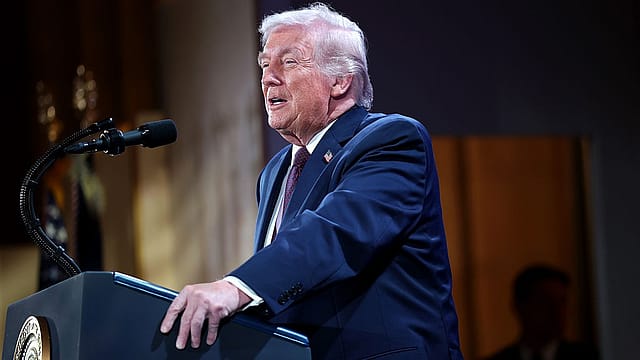
The debate intensified after US President Donald Trump suggested the Taiwan arms sale could become part of broader negotiations with China.
“I haven't approved it yet. We're going to see what happens,” Trump told Fox News, as cited by The Hill. “I may do it; I may not do it.”
Following a recent visit to China, Trump said the issue had been discussed “in great detail” with Chinese President Xi Jinping.
Trump also said he would “make a determination over the next fairly short period”.
His comments appeared to differ from Cao’s explanation that the delay was mainly tied to military stockpile management.
Why Is the “Six Assurances” Policy Important?
The controversy has revived attention on the United States’ long-standing “Six Assurances” policy toward Taiwan.
The principles, introduced during former President Ronald Reagan’s administration in 1982, include an assurance that Washington would not consult Beijing regarding arms sales to Taiwan.
Trump’s remarks about discussing the issue with Xi Jinping have therefore sparked debate among strategic analysts and lawmakers who see Taiwan arms sales as separate from US-China negotiations.
Are US Weapons Stockpiles Under Pressure?
The pause comes amid increasing scrutiny over the condition of US military stockpiles after months of operations connected to the Iran conflict.
According to the report, the US has used thousands of missiles since the conflict began on February 28. These reportedly include long-range stealth cruise missiles, Tomahawk missiles, Patriot interceptors, Precision Strike missiles and ATACMS ground-based missiles.
The White House is also preparing to seek between USD 80 billion and USD 100 billion in supplemental funding from Congress for the Iran conflict. A significant portion is expected to go toward replenishing advanced weapons systems used during the 12-week war, which has remained under a tense ceasefire since early April.
Despite these concerns, Hegseth rejected suggestions that the US military was facing serious shortages.
“First of all, the munitions issue has been foolishly and unhelpfully overstated,” Hegseth told House appropriators last week. “We know exactly what we have. We have plenty of what we need.”
Why Is Taiwan Concerned About the Delay?
Taiwanese officials have continued urging the Trump administration to proceed with the arms sales programme, arguing that stronger military capabilities are essential to deter potential Chinese aggression.
“If we want to prevent a war from happening, I think it's best that Taiwan is strong, able to defend itself, and therefore we should be able to acquire -- to buy the arms that we need to have a stronger defense,” Alexander Yui, Taiwan’s representative to the United States, said on Sunday.
The delay is likely to raise fresh concerns in Taipei about whether growing US military commitments elsewhere could affect Washington’s ability to support allies and partners in the Indo-Pacific.
(With inputs from ANI)