US Controls Strait of Hormuz, Says Hegseth; CENTCOM Launches Fresh Strikes on Iran
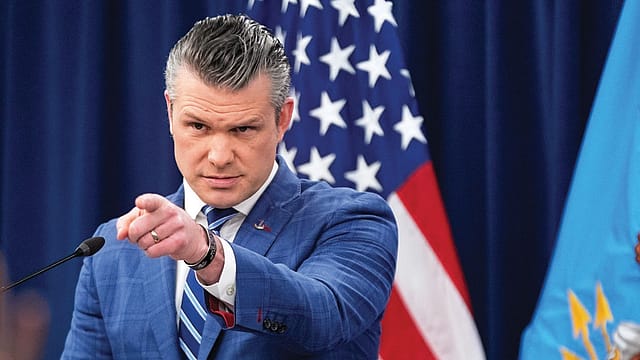
The United States controls the Strait of Hormuz, Secretary of War Pete Hegseth declared on Wednesday (US time), asserting that American operations have ensured the continued movement of commercial shipping and oil through the key waterway despite Iranian opposition, even as US Central Command launched fresh self-defence strikes against multiple targets in Iran.
Speaking to reporters outside US CENTCOM headquarters in Tampa, Florida, Hegseth said the US blockade had halted nearly 140 ships linked to Iranian ports while simultaneously protecting commercial vessels through the strait in operations Tehran could neither detect nor prevent.

Zeroing In on ECI
09 Oct 2026 - Vol 05 | Issue 41
Constitutional legitimacy versus political opportunism
“In the middle of the night, protected by the United States in a way that Iran can't stop. They can't see it, and they can't stop it," he added.
Hegseth left little ambiguity about who he believed held the upper hand in the waterway.
"If our blockade is ironclad, which it is. We just disabled another tanker attempting to leave just yesterday. Our blockade has stopped almost 140 ships attempting to navigate in or out of Iranian ports,” he said.
“If our blockade is ironclad, which it is, and we're able to move commercial shipping in and out of the Strait of Hormuz, who controls the Strait of Hormuz? President Trump said it, and he's right,” he added.
“The United States of America controls the Strait of Hormuz. We're able to move oil in and out and other things with partners and have done so now for weeks and weeks in ways the Iranians don't want to acknowledge. That's a powerful reality on the ground," the US Secretary of War said.
Hegseth also addressed the downing of a US Apache helicopter by Iran, saying the pilots were in good condition and praising their conduct under fire.
"The Apache pilots are in good shape. What they did bringing that thing down was incredible. It was just class A work by the great Americans who are incredibly skilled,” he said.
“People don't realise this is a contested environment. As we've noted, we're running ships through. Iran doesn't really know how to see them or how to sense them. And so they're doing well, good spirits, and we're grateful for everything they've done to protect the shipping and our interests in the process," he added.
On the ground, CENTCOM confirmed that its forces had disabled an oil tanker in the Gulf of Oman for the second consecutive day after the vessel violated the blockade by attempting to transport Iranian oil.
In an official statement, CENTCOM said: "At 11:14 p.m. on June 9, U.S. forces disabled an oil tanker in the Gulf of Oman for the second consecutive day after another vessel violated the ongoing blockade by attempting to transport oil from Iran. U.S. Central Command (CENTCOM) disabled Palau-flagged M/T Settebello as it transited the Gulf of Oman."
"A U.S. aircraft fired precision munitions into the ship's engine room after the crew repeatedly failed to comply with directions from American forces. CENTCOM forces have disabled eight non-compliant vessels, redirected 134 ships that complied, and allowed 42 vessels supporting humanitarian aid to pass since initiating the blockade on April 13," the statement added.
(With inputs from ANI)