Two-week pause to US-Iran war offers breathing space: Key questions answered
A tentative calm has emerged after Donald Trump announced a two-week suspension of US military operations against Iran, framing the development as a turning point. Taking to Truth Social, the US President said, “A big day for World Peace! Iran wants it to happen, they've had enough! Likewise, so has everyone else! The United States of America will be helping with the traffic buildup in the Strait of Hormuz. There will be lots of positive action! Big money will be made. Iran can start the reconstruction process. We'll be loading up with supplies of all kinds, and just "hangin' around" in order to make sure that everything goes well. I feel confident that it will. Just like we are experiencing in the U.S., this could be the Golden Age of the Middle East!!!”
The post followed Washington’s decision to halt its “bombing and attack” campaign, contingent on Tehran ensuring safe passage through the Strait of Hormuz, a critical global oil route.
What prompted the sudden ceasefire decision?
Trump indicated that the move came after diplomatic outreach involving Shehbaz Sharif and Asim Munir, alongside Iran’s willingness to negotiate based on a proposed framework.
“Based on conversations with Prime Minister Shehbaz Sharif and Field Marshal Asim Munir, of Pakistan, and wherein they requested that I hold off the destructive force being sent tonight to Iran, and subject to the Islamic Republic of Iran agreeing to the COMPLETE, IMMEDIATE, and SAFE OPENING of the Strait of Hormuz, I agree to suspend the bombing and attack of Iran for a period of two weeks. This will be a double-sided CEASEFIRE!"

Open Minds 2026
26 Jun 2026 - Vol 05 | Issue 26
The power of ideas and arguments in 50 portraits
“The reason for doing so is that we have already met and exceeded all Military objectives, and are very far along with a definitive Agreement concerning Longterm PEACE with Iran, and PEACE in the Middle East. We received a 10 point proposal from Iran, and believe it is a workable basis on which to negotiate," he added further.
How has Iran responded to the US proposal?
Iran signalled conditional acceptance, with Foreign Minister Seyed Abbas Araghchi outlining Tehran’s position.
"Considering the request by the U.S. for negotiations based on its 15-point proposal as well as announcement by POTUS about acceptance of the general framework of Iran's 10-point proposal as a basis for negotiations, I hereby declare on behalf of Iran's Supreme National Security Council: If attacks against Iran are halted, our Powerful Armed Forces will cease their defensive operations. For a period of two weeks, safe passage through the Strait of Hormuz will be possible via coordination with Iran's Armed Forces and with due consideration of technical limitations," Aragchi said.
Why is Iran calling this a ‘historic victory’?
Even as it agreed to talks, Iran’s Supreme National Security Council projected strength, claiming the conflict had already tilted decisively in its favour.
“The enemy has suffered an undeniable, historic and crushing defeat in its cowardly, illegal and criminal war against the Iranian nation," the council said in a statement.
“The enemy has been begging for more than a month to stop the fierce fire of Iran and the resistance... [but] the country's officials... responded negatively to all these requests," the Council stated further.
The Council maintained that negotiations would focus only on finalising its framework and warned that the ceasefire does not mark the end of the war.
“This does not mean an end to the war and Iran will accept an end to the war only when... its details are also finalized in the negotiations," the Council added.
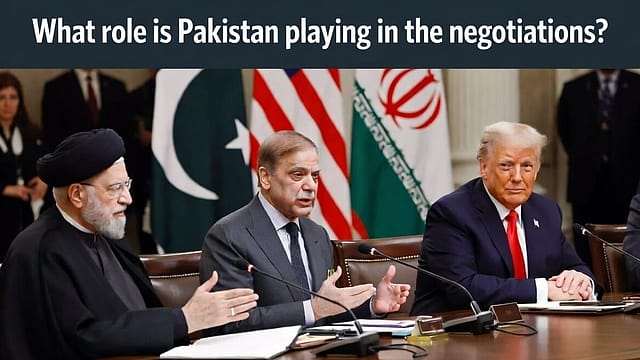
What role is Pakistan playing in the negotiations?
Islamabad has emerged as a key diplomatic bridge, with both sides indicating that upcoming talks could take place there. Pakistan’s involvement appears central to facilitating dialogue and preventing immediate escalation.
Can this ceasefire lead to lasting peace?
While the two-week pause offers breathing space, both Washington and Tehran continue to frame the outcome as a victory. The path ahead hinges on whether negotiations in Islamabad can reconcile sharply different expectations and transform a temporary halt into a durable agreement.
(With inputs from ANI)