Trump vs Joe Kent: War of Words After US Counterterror Chief Resigns
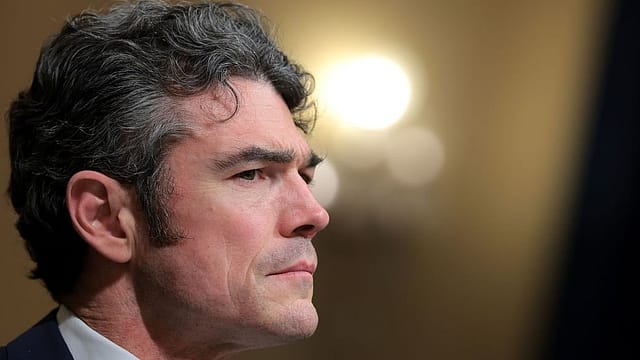
The resignation of former US National Counterterrorism Centre Director Joe Kent has ignited a fierce political and strategic debate, exposing deep divisions within Washington over the origins of the US-Iran conflict and the role of Israel in shaping that decision.
Kent has made explosive claims about the origins of the US-Iran confrontation, alleging that Israel played a decisive role in pushing Washington toward conflict.
Speaking on The Tucker Carlson Show, Kent said, “The Israelis drove the decision to take this action, which we knew would set off a series of events because the Iranians would retaliate.”
He further dismissed the narrative that Iran posed an immediate nuclear threat, stating, “No, they weren't three weeks ago when this started, and they weren't in June either. I mean, the Iranians have had a religious ruling, a fatwa, against actually developing a nuclear weapon since 2004.”
Kent added, “We had no intelligence to indicate that that fatwa was being disobeyed or it was on the cusp of being lifted.”
Challenging the justification for military action, he said, “There's simply no case that Iran was planning an immediate attack. It did not exist.”
Was Iran Really an Imminent Threat?
Kent’s assertions directly contradict the official stance of the US administration, raising questions about intelligence assessments and the urgency behind the decision to strike.
Reflecting on potential regime stability in Iran, Kent remarked, “I don't think the Ayatollah feared dying. Not because he's some crazy lunatic but because he knew if he was killed the regime would survive.”

Open Minds 2026
26 Jun 2026 - Vol 05 | Issue 26
The power of ideas and arguments in 50 portraits
His resignation letter reportedly reiterated that he “cannot in good conscience support the ongoing war with Iran,” while maintaining that Tehran posed "no imminent threat" to the United States.
Why Did Donald Trump Welcome Joe Kent’s Exit?
US President Donald Trump responded sharply to Kent’s resignation, openly criticising his stance on Iran.
Trump said, “I always thought he was a nice guy, but I always thought he was weak on security. But when I read his statement, I realised that it's a good thing that he's out because he said that Iran was not a threat. Every country realised what a threat Iran was...”
He further added, “When somebody is working with us that says they didn't think Iran was a threat, we don't want those people. They're not smart people, or they're not savvy people.”
How Did the White House Respond to Kent’s Allegations?
White House Press Secretary Karoline Leavitt strongly pushed back against Kent’s claims, dismissing them as misleading and unfounded.
She said, “He (Joe Kent) would resign with a letter filled with falsehoods, accusing the president of the United States by being controlled by a foreign country.”
Defending Trump’s authority, she added, “The president is the leader of the most powerful country and military in the world. Nobody tells him what to do.”
On Iran, Leavitt stressed, “We don't want somebody leading the counterterrorism task force who cannot agree that the number one state sponsor of terror in this world did not pose a threat to the United States.”
She further justified the administration’s actions, stating, “The president of the United States made the decision to attack Iran before they could attack American troops and our assets and bases in the region.”
Is There Evidence Behind the Administration’s Claims?
Backing the government’s position, Leavitt asserted that intelligence supported the decision to act.
She said, “Trump had strong and compelling evidence that Iran was going to attack the United States first,” adding that it was “compiled from many sources and factors.”
She also emphasised presidential authority, stating, “The Commander-in-Chief determines what does and does not constitute a threat.”
Rejecting Kent’s allegations outright, she called them an “absurd allegation” and described them as “insulting and laughable.”
What Happens Next in the West Asia Conflict?
Even as the controversy unfolds, the White House maintains that diplomatic and military efforts are ongoing.
Leavitt said, “The president is going to continue to talk to our allies both in Europe and also in the Gulf and Arab region.”
Highlighting military preparedness, she added, “The United States military has a lot of capabilities... they still do have tricks up their sleeve.”
She concluded, “Rest assured there is a plan. They're working on it.”
(With inputs from ANI)