Trump Says India Will Buy Venezuelan Oil, Invites China into Energy Shift
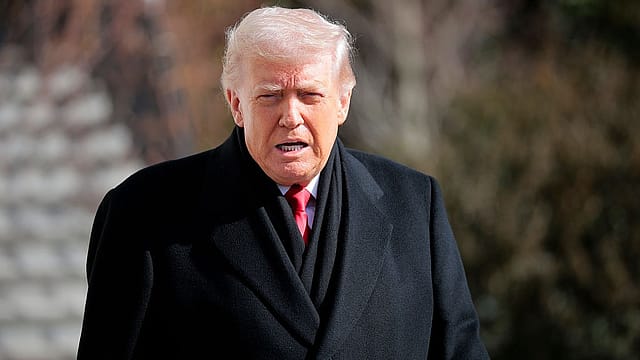
US President Donald Trump has claimed that India has agreed to buy Venezuelan oil, signalling a sharp shift in global energy alignments as Washington deepens its control over Venezuela’s oil flows following the capture of former president Nicolás Maduro.
Speaking to reporters aboard Air Force One, Trump said India would purchase Venezuelan crude instead of Iranian oil, framing the move as part of a broader US-led realignment of energy supply chains.
“We’ve already made a deal. India is coming in, and they’re going to be buying Venezuelan oil as opposed to buying it from Iran,” Trump said, adding that China was also “welcome” to buy Venezuelan oil if it wished.
The Modi Years
02 Oct 2026 - Vol 05 | Issue 40
A Nation Rebuilt
The Indian government has not yet responded publicly to Trump’s remarks.
Washington’s oil play in post-Maduro Venezuela
Trump’s comments follow his earlier assertion that Venezuela had offered the United States 50 million barrels of oil, worth about $5.2 billion, which Washington agreed to take because Caracas lacked storage capacity.
“We have to get it processed immediately because they have no room,” Trump said at an event marking the renaming of a New York street as Donald Trump Boulevard. “Will you take it? I said, we’ll take it.”
Trump has repeatedly described a “great relationship” with Venezuela’s interim government, installed after a US military operation that led to Maduro’s capture. He has made little effort to hide Washington’s ambitions during the transition period.
“We’re dealing with the new president… and we need total access to the oil and other things in their country,” Trump said earlier.
A report by Semafor recently confirmed that the US has already made its first sale of Venezuelan oil, valued at $500 million, with proceeds reportedly held in US-controlled accounts, including a key account based in Qatar.
Energy diplomacy meets hard power
Trump’s oil diplomacy has unfolded alongside a hardening stance on domestic unrest and immigration enforcement.
On Saturday, the president ordered the Department of Homeland Security (DHS) not to intervene in protests or riots in Democratic-led cities unless local authorities formally request federal assistance.
“I have instructed Secretary of Homeland Security Kristi Noem that under no circumstances are we going to participate… unless they ask us for help,” Trump wrote on Truth Social.
While ruling out proactive federal intervention, Trump warned that ICE, Border Patrol, and even the military would act “very forcefully” to protect federal buildings, adding that he could still invoke the Insurrection Act if unrest escalated.
A presidency defined by leverage
Together, the moves reflect a familiar Trump playbook: economic leverage abroad, coercive authority at home.
By steering Venezuelan oil toward India and inviting China into the equation, Trump is signalling that Washington—not markets or multilateral institutions—will decide how post-Maduro Venezuela re-enters the global economy.
At the same time, his DHS directive underscores a presidency increasingly willing to withhold federal power unless political conditions are met, even as it threatens overwhelming force when federal interests are challenged.
Whether India has, in fact, agreed to Trump’s oil proposal remains to be confirmed. But the message from Washington is unmistakable: energy, enforcement, and power are being negotiated on Trump’s terms.
(With inputs from ANI)