“The French Riots Weren’t Islamist, But They Will Help Marine Le Pen To Come To Power”
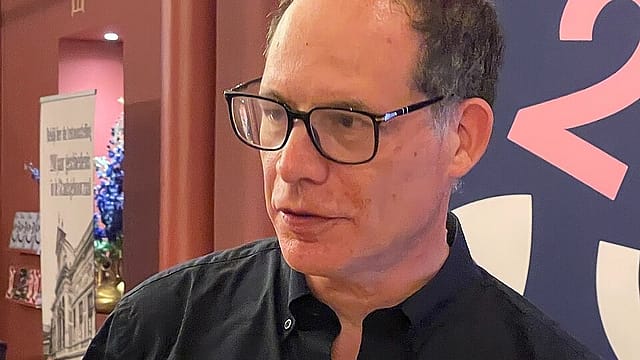
A widely read columnist, the 56-year-old Uganda-born British writer, who grew up in the Netherlands and the UK and has lived for the past 25 years in Paris, close to République, an epicentre of the protests, says he doesn’t see the recent agitation as a manifestation of Islam. He, however, forecasts that in the presidential elections due next year, Marine Le Pen of the far-right National Rally will most likely come to power, thanks to current developments that, according to Kuper, have made the centrists and the Left less popular. Kuper, an alumnus of Harvard University and Oxford University, also says, “I feel more confident in making pronouncements about France now as a journalist than even 10 years ago.” Edited excerpts:
Did you anticipate this scale of anger among people when the students started protesting in the suburbs of Paris?
I think everyone is surprised by just how much anger there is. It has long been true that the French are very discontented with (President Emmanuel) Macron, with politics generally. France is often the most pessimistic country in the world in surveys when you ask about expectations for years ahead. So there is anger.

Losing Memory
16 Oct 2026 - Vol 05 | Issue 42
The making of a medical and social emergency
And of course, street revolutions are normal in France. It is what you are supposed to do. You are supposed to protest and rise up against governments. I think what surprises people is the level of violence, which I don’t think anyone had seen, maybe, in any post-war demonstration. And the extreme levels of discontent with the status quo, which mean that now all political analysts are very confidently predicting that Le Pen will win the (presidential) elections (due next year).
How was it for you personally? You live close to République, which is typically one of the epicentres of Parisian protests.
Our street is often the marching route for protests. I’m used to that. I went out with my daughter and some of her friends on one of the neighbouring streets. We were queuing to get into the student protest, and the police had blocked off the square so the students couldn’t actually get to their protest and start the march.
Then people dispersed into different streets. And always with French demonstrations, when they are big, you get a group of what are known as wreckers, the breakers. And to some degree, it’s a far-left anarchist “black bloc”, people in black, you know, with balaclavas. They are real far-left revolutionaries; they want to fight the state. Then there is a much larger group of teenage boys who are thrill-seeking, often poor kids from the suburbs of Paris, the same kids who come out when Paris Saint-Germain wins the Champions League.
On my street, it ended up with me standing, watching the little supermarket opposite my house being plundered. They broke down the shutters and they broke the glass. These 17-year-old kids, they’re not political, really. They’re just thrill-seeking. And they go into the supermarket and they steal stuff that they don’t really want, like bottles of mineral water. They’re just trying to be cool. Macho 17-year-old kids.
I was the only middle-aged person on the street watching this. So it feels, when you see scenes like that, that in your own neighbourhood, order has broken down. And the next day, a lot of shopkeepers were crying, telling their stories. Some were saying they’re going to have to close down and that they have lost their stock. Neighbours were sweeping the pavements with brooms. So it felt pretty apocalyptic.
Do you think it is a failure of Macronism? Is it a failure of his economic policies?
I think that’s hugely exaggerated. That is the narrative of the far left. France is a very redistributive country. The French government’s spending is 57% of the GDP. It’s the highest in the Western world, with Finland. No one else comes close. So the government spends a lot of money on things like schools, hospitals, welfare, especially pensions, because, crazily, the French retire at 62. From age 62, since people’s life expectancy is 87, you have 25 years of pension paid for by the state.
So the state spending is very high. It is a high-tax country. But the narrative of the far left is that the rich are getting richer, in which there’s some truth. He (Macron) did cut some taxes at the top end, which he is being blamed for. But it’s not true that the poor are neglected. There have been a couple of big shocks, three big shocks: first, COVID. So the government supported people who were not able to work for quite a long time, probably too long. So if you worked in a restaurant, you didn’t have any income because the restaurant was closed. Then the Ukraine war began. And then came the Iran war. So it’s a cost-of-living crisis. And of course, that hits poor people hardest.
Essentially, in the Macron era, your real income has not risen and might have fallen a bit. But that’s largely because of these cost-of-living shocks. French economic growth has always been slow, and it has been slow under Macron. So he has been disappointing. It’s very hard to say what he’s done better. But this is not a disaster at all.
The French political rhetoric is very apocalyptic. He’s like Louis the 16th, who was guillotined. He’s like Hitler. This kind of crazy rhetoric is part of the revolutionary tradition. It’s very much exaggerated. I definitely think he’s a disappointing president, but he’s not a terrible president.
OK. Now, what do you think of the statements made by people like Trump in the United States and then certain others who have attributed these protests to a manifestation of Islamism?
There’s no Islamism in these riots. So the far-left guys are going around breaking things. They tend to be white people with high levels of education who very much believe in anarchism. These kids who were breaking things on my street, they were, I think, largely of immigrant origin. Some of them would have come from Muslim families, but this isn’t Islamic protest of any kind. They were badly behaved kids. It’s a bit like British football hooliganism of the 1980s. So you can definitely talk about a law-and-order problem in the suburbs.
The fact that they are discriminated against and excluded, no doubt, makes it easier for them to become wreckers, but it doesn’t mean they’re Islamist wreckers.

Why do you think all these developments, especially this protest that started on October 17, are going to help the right wing to come to power?
Well, look, there are three big political blocs now. There’s the far left of Jean-Luc Mélenchon; there’s the centre of Macron; and the far right of Le Pen.
The state looks both very repressive and weak at the same time. Macronism is very discredited at the moment. And the far left is very confrontational with the state, which isn’t really a government-in-waiting sort of position. As a government-in-waiting, you want to sound calm and sage. I think everyone thinks now that Le Pen will be elected president because the far right was not (seen as) involved in this chaos. And it fits her story.
The videos that I watch, even on independent media outlets like Mediapart, show that the condition of the schools, not only in the suburbs but also in other parts of Paris and in other cities in France, is not good.
Historically, France has underspent in the suburbs. It didn’t really care that much about them. But that’s changing. And so, for example, they’re opening 68 metro stations in the suburbs of Paris, which have very few metro links. And so the suburbs are being connected to the city in a way they’ve never been before.
But, yeah, there was underspending on schools. The education budget in France is smaller than what France spends on debt interest because the debt is mounting, and one-third of the education budget goes on pensions. And that’s a very typical French problem.
My last question to you, Simon, is that you were born in Africa. You have lived in different parts of the world and you have lived in Paris for decades now. So do you think you understand the French psyche?
Does anyone ever understand anything? I understand it better than 25 years ago when I arrived here. I feel more confident in making pronouncements about France now as a journalist than even 10 years ago.
What about the capacity of the French people to shock you?
I think I’m shocked in two ways. One is that there’s this kind of fake revolutionary chic, which the French are very susceptible to. The French love the idea of revolution. Look at the great moments in their history: the Revolution of 1789; the uprising against the Germans in the final days of the occupation of Paris in August 1944, when people mounted the barricades and started fighting the Germans; and then the revolution of May 1968.
But what surprised me this time is not that lots of people protested, not that some people broke things. For the first time since 1944, they’re going to elect an extremist. So what was fake, kind of radical chic, is becoming real radicalism. And that’s surprising. Everyone had worried about us reaching this moment with Le Pen, but this is totally new. The extremist choice would be totally new.