Strategic Partners to Hostile Neighbours: How Afghanistan-Pakistan Relations Unravelled
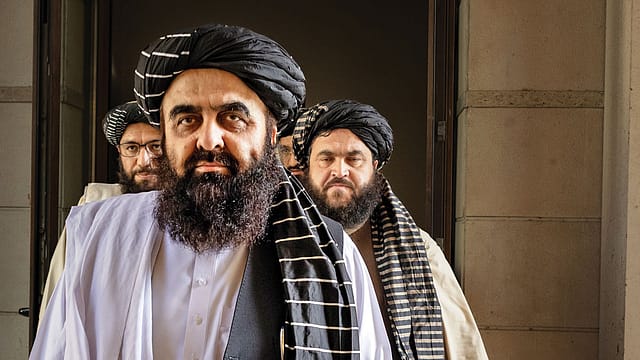
Afghanistan and Pakistan share a nearly 2,640-km border, deep ethnic ties, and a long, complicated history. For years, their relationship was defined by Pakistani support for the Afghan Taliban and a mutual, if uneasy, dependence. Since the Taliban's return to power in 2021, that relationship has collapsed.
Currently, the two nations are engaged in direct, severe military confrontations along their border. Today, Pakistan launched Operation Ghazab-lil-Haq against the Afghan Taliban, with Pakistani officials describing the situation as an "open war".
Here’s a closer look at the Afghanistan-Pakistan relations through the years.
Why did Pakistan historically support the Taliban?
Pakistan backed the Afghan Taliban based on a doctrine often referred to as "strategic depth", maintaining a friendly government in Kabul to secure Pakistani influence and limit rival powers on its western flank. This patron-client dynamic defined bilateral relations for much of the 1990s and 2000s.
When did relations begin to deteriorate?
Tensions escalated after the Taliban retook Kabul in August 2021. The Taliban proved far less amenable to Pakistani influence than anticipated. Key friction points emerged immediately - chiefly, the Taliban's refusal to act against the Tehrik-i-Taliban Pakistan (TTP) and its resistance to Pakistani demands on the border.
What is the TTP and why does it matter?
Survival Instinct
22 May 2026 - Vol 04 | Issue 72
India navigates global economic turmoil with austerity and smart diplomacy
The TTP is a militant organisation waging a sustained insurgency against the Pakistani state. According to security analysts, TTP attacks inside Pakistan increased significantly after 2021. Pakistan holds the Afghan Taliban responsible for providing the TTP sanctuary. Kabul denies Afghan territory is being used to launch cross-border attacks.
What is the Durand Line dispute?
Demarcated in 1893 under British colonial rule, the Durand Line has never been formally recognised by any Afghan government, including the Taliban. Pakistan regards it as a legally established frontier. The Taliban has opposed Pakistani efforts to fence the boundary, resulting in recurring armed clashes at border posts.
Has Pakistan conducted military strikes inside Afghanistan?
Reportedly, yes. Pakistan has carried out airstrikes inside Afghan territory in 2022, 2024, 2025, and early 2026, citing the need to neutralise TTP positions. The Taliban has condemned each instance as a violation of Afghan sovereignty. According to reports, the 2026 escalation was the most intense, resulting in casualties on both sides.
What role have Afghan refugees played?
Pakistan launched a large-scale crackdown on undocumented Afghan nationals, resulting in the deportation of reportedly over a million people. The Taliban government objected to the scale and manner of these deportations, adding a humanitarian dimension to an already strained relationship.
How has the Taliban's foreign policy affected ties with Pakistan?
Since 2021, the Taliban has pursued engagement with China, Russia, and India. According to regional observers, the Taliban's outreach to India - Pakistan's regional rival - has been a particular source of concern in Islamabad, which had expected Afghanistan to remain within its sphere of influence.
Why won’t the Taliban act against the TTP?
The Afghan Taliban and TTP share deep ideological roots. Analysts note the Taliban is unlikely to act against an ideologically aligned group. Additionally, accepting the Durand Line would require reversing a longstanding Afghan position on what Kabul considers a matter of national sovereignty.
Where do things stand in 2026?
Afghanistan-Pakistan relations are at their lowest point in recorded history. Border closures, trade disruptions, military clashes, and mass deportations have replaced what was once a relationship built on shared interests.
(With inputs from yMedia)