Sergey Lavrov’s India Visit To Signal Stronger Russia-India Ties Ahead of BRICS Summit
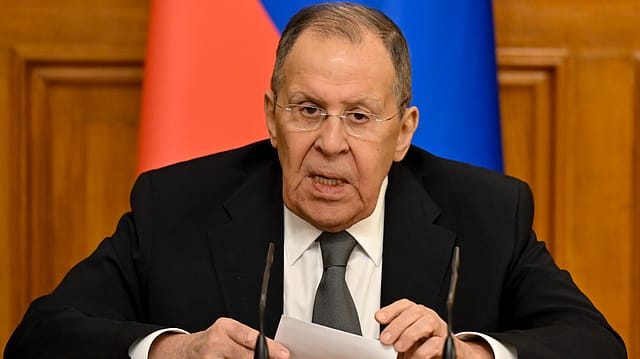
As global alignments continue to shift, India and Russia are reinforcing their long-standing partnership through renewed diplomatic engagement. Russian Foreign Minister Sergey Lavrov’s upcoming visit to New Delhi in May signals both continuity and ambition in bilateral ties, even as the BRICS bloc expands its global footprint.
What is the significance of Lavrov’s upcoming India visit?
Russian Foreign Minister Sergey Lavrov is set to visit New Delhi on May 14 and 15 to participate in the BRICS Foreign Ministers’ Meeting, a key gathering expected to shape the agenda for the upcoming BRICS summit under India’s presidency.
Confirming the visit, Russian Deputy Foreign Minister Andrey Rudenko said, “Russian Foreign Minister Sergey Lavrov plans to take part in the BRICS ministerial meeting on May 14-15 this year, which will determine the set and general outlines of the final documents that the Indian presidency will submit to the BRICS summit.”

Zeroing In on ECI
09 Oct 2026 - Vol 05 | Issue 41
Constitutional legitimacy versus political opportunism
Beyond the multilateral engagement, Lavrov is also expected to hold bilateral discussions with India’s External Affairs Minister S. Jaishankar and other senior officials. Rudenko added, “In connection with the BRICS events, it is also planned to hold a separate working visit by Lavrov to India to meet with Foreign Minister Subrahmanyam Jaishankar and other Indian officials.”
How is BRICS evolving under India’s presidency?
India’s leadership of BRICS in 2026 comes at a time when the grouping is rapidly expanding in both size and influence. Originally formed in 2006 by Brazil, Russia, India, and China—with South Africa joining in 2011—the bloc has recently widened its membership significantly.
In 2024, Egypt, Iran, the United Arab Emirates, and Ethiopia became full members, followed by Indonesia in 2025. Additionally, several countries including Belarus, Bolivia, Kazakhstan, Cuba, Malaysia, Thailand, Uganda, Uzbekistan, and Nigeria have been granted partner status, underscoring BRICS’ growing geopolitical relevance.
What does this visit reveal about India-Russia relations?
Lavrov’s visit builds on a series of high-level engagements that have reaffirmed the strategic depth of India-Russia ties. Speaking earlier this month, Lavrov highlighted Moscow’s eagerness to sustain this momentum, stating, "We look forward to welcoming Prime Minister Narendra Modi to Russia in 2026."
He described the bilateral relationship as a "time-tested friendship" that "stands as a model of how interstate relations should be built - on equality, mutual trust and respect, and due regard for each other's interests."
The groundwork for this phase of cooperation was laid during Russian President Vladimir Putin’s visit to India in December 2025. Reflecting on that visit, Lavrov said, "Following President Vladimir Putin's visit to New Delhi in December 2025, the alignment of Russia's and India's strategic objectives was reaffirmed, and a substantial package of documents, including policy documents, was signed."
Economic ties remain a key pillar of the partnership. Lavrov noted that "in 2025, bilateral trade reached approximately $60 billion," adding, "Our leaders have reaffirmed the goal of reaching $100 billion by 2030."
Looking ahead, he emphasized deeper collaboration across sectors, stating that both countries will "deepen cooperation in logistics, technology and investment, including through the development of the International North-South Transport Corridor and the Northern Sea Route." He also pointed out a significant shift in trade mechanisms, observing that "already today, 96 per cent of trade is conducted in national currencies."
(With inputs from ANI)