Researchers Convert Plastic Waste Into High-Performance Battery Material
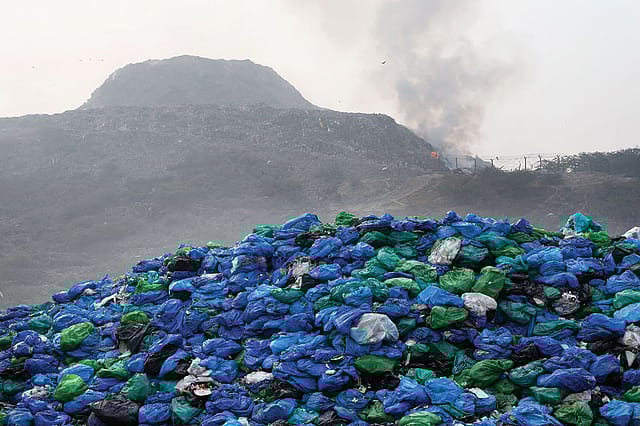
A discarded plastic bottle may one day help power an electric vehicle, smartphone, or renewable energy storage system. Researchers at Penn State have developed a method to convert waste polyethylene terephthalate (PET) plastic into highly ordered synthetic graphite, a critical material used in lithium-ion batteries. The breakthrough could simultaneously address growing demand for battery materials and the mounting challenge of plastic waste management.
Turning Plastic Waste into a Valuable Battery Material
In a study published in the journal Diamond and Related Materials, researchers demonstrated that waste PET plastic can be transformed into high-quality synthetic graphite with a highly organized crystal structure. The resulting graphite exhibited large, well-ordered crystallites—microscopic regions where carbon layers are precisely aligned—surpassing the structural ordering found in commercial natural graphite samples.

The Identity Project
11 Sep 2026 - Vol 05 | Issue 37
Amit Shah leads the mission for a national demographic correction
This level of structural organization is considered a key indicator of suitability for battery anodes, the component in lithium-ion batteries responsible for storing and releasing electrical energy.
“Most people think of a plastic bottle as waste once they're done using it,” said Shakshi Sekar, lead author of the study and a doctoral student in Penn State's John and Willie Leone Family Department of Energy and Mineral Engineering. “Our work shows that the same material can become a valuable resource for producing graphite, which is essential for modern battery technologies.”
Graphite is classified as a critical mineral by the U.S. Department of Energy and plays a central role in the production of lithium-ion batteries used in electric vehicles, consumer electronics and grid-scale energy storage systems. As demand for these technologies accelerates, securing reliable sources of battery-grade graphite has become increasingly important.
At the same time, PET remains one of the world's most widely used plastics. Despite widespread recycling efforts, significant volumes of PET waste are still discarded, downcycled into lower-value products or sent to landfills.
Graphene Oxide Helps Create Cleaner, Higher-Quality Graphite
To address both challenges, the research team combined shredded PET plastic with small amounts of graphene oxide before subjecting the material to a carefully controlled thermal treatment process. This enabled carbon atoms within the plastic to reorganize into highly ordered graphitic structures.
“We're not simply finding a use for waste plastic,” Sekar said. “We're creating a valuable material that could help support the growing demand for batteries and clean energy technologies.”
The researchers discovered that adding just 2.5 per cent graphene oxide by weight produced the highest-quality graphite. Under these conditions, the material developed crystallite dimensions that exceeded those typically associated with natural graphite, indicating an exceptional degree of structural order.
According to the team, oxygen-containing functional groups located along the edges of graphene oxide sheets help initiate and promote lateral graphite crystal growth. The exposed graphene surfaces act as templates, guiding carbon atoms into highly organized stacked arrangements during graphitization—the process that converts carbon into graphite.
Unlike many conventional synthetic graphite production methods, which rely on metal catalysts such as iron, nickel or cobalt, the Penn State approach uses graphene-based additives that avoid introducing metallic contaminants into the final product.
A Sustainable Path for Batteries and Recycling
Researchers say the catalyst-free approach could significantly simplify future manufacturing by eliminating purification steps often required to remove residual metals. This could lower chemical consumption, reduce waste generation and improve the environmental profile of graphite production.
“By avoiding metal catalysts, we can produce cleaner graphite while reducing chemical use and waste generation,” Sekar said.
Although further studies are needed to evaluate large-scale production and real-world battery performance, the findings highlight a promising pathway for converting one of the world's most common waste streams into a high-value energy-storage material.
The research also points to a broader shift in how plastic waste could be perceived in the future.
“If waste plastic can become a feedstock for advanced energy materials, it changes how we think about recycling,” Sekar said. “Instead of viewing plastic as a disposal problem, we can see it as a resource that helps support clean energy technologies.”
The study was co-authored by Randy Vander Wal, professor of energy and mineral engineering at Penn State and faculty member in Penn State's Institute of Energy and the Environment. The research was supported by the U.S. National Science Foundation.
(With inputs from ANI)