The ceasefire was supposed to calm the Middle East, but Iran used it to reload
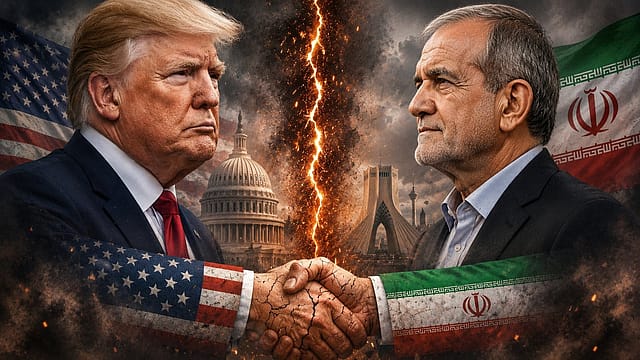
A ceasefire is supposed to buy time. Time for diplomats to talk. Time for weapons to fall silent. Time for both sides to step back from the edge. But according to latest buzz, Iran appears to have used that breathing space for something very different.
It reloaded.
Iranian and Arab officials told the Wall Street Journal that Tehran's hard-line leadership viewed the pause not as the beginning of a lasting peace, but as an opportunity to prepare for another, potentially larger confrontation with the United States and Israel.
That reportedly meant accelerating missile production, improving missile accuracy, expanding counterintelligence operations and giving the powerful Islamic Revolutionary Guard Corps, or IRGC, an even bigger role in Iran's military structure. And now the concern is no longer theoretical.
On August 17, Reuters reported that Iran had said it would adopt a “fully offensive” military posture after efforts to reach a permanent settlement stalled. The United States, meanwhile, has ruled out extending the current ceasefire arrangement.
Rise of the Pivotal Power
18 Sep 2026 - Vol 05 | Issue 38
The BRICS declaration is a strategic victory for Modi
So how did a pause that was supposed to calm the region turn into preparation for another round of fighting?
The ceasefire was supposed to open a diplomatic door
The June agreement was intended to stop the immediate cycle of attacks and create space for negotiations, including discussions over Iran's nuclear programme and sanctions. But Tehran appears to have read the situation differently.
Iranian officials reportedly feared the pause could simply give the United States and Israel time to regroup for another attack. Instead of dismantling its military posture, Iran therefore used the period to strengthen it. IRGC spokesman Brig Gen Hossein Mohebbi said in July that the force had used the ceasefire period to enhance its capabilities, accelerate missile production and improve missile accuracy.
That is the central twist in this story. The pause may have stopped some fighting. It did not necessarily stop preparations for the next one.
Iran wasn't just making more missiles
The reported preparations go beyond weapons production. The IRGC apparently expanded its influence over Iran's regular military and placed experienced security and military figures in important positions.
Iran also reportedly intensified domestic counterintelligence operations, reflecting concern that the conflict could expose weaknesses inside the country as well as on the battlefield. At the same time, the IRGC was said to have worked more closely with Iran-aligned groups across the region.
That matters because Iran's military reach has never depended entirely on missiles fired directly from Iranian territory. Its regional network — stretching through Iraq, Yemen and Lebanon — gives Tehran additional ways of putting pressure on American and Israeli interests. A separate assessment by the Institute for the Study of War and the Critical Threats Project reported that IRGC officials used periods of ceasefire to coordinate with Hezbollah, the Houthis and Iraqi militias.
And then there is the Gulf
This is where the story gets particularly worrying. Iran has already demonstrated that the conflict can spill beyond its borders. Reuters reported in July that Iranian forces targeted US military sites in Kuwait, Bahrain and Jordan, while attacks also affected shipping around the Strait of Hormuz. The strategic geography is difficult to ignore.
Several Gulf states host US military facilities. The Strait of Hormuz is also one of the world's most important energy chokepoints. So if the conflict widens, Iran does not necessarily need to strike the United States itself to impose costs on Washington. It can target the infrastructure around America's regional military presence.
Why is Kuwait suddenly so important?
Iranian planners have reportedly considered operations on enemy territory, including potential ground operations in Kuwait. That should be treated as a reported contingency option, not evidence that Iran has decided to invade Kuwait. But there is a reason the possibility has attracted attention.
Iran has already attacked targets in Kuwait during the wider conflict. Reuters reported that Iranian forces targeted US military facilities there, while Kuwait has also faced drone and missile threats. And in August, Reuters reported that an adviser to the IRGC commander said the force was developing the ability to conduct operations “on enemy soil.” That suggests Tehran's thinking may be moving beyond simply defending Iranian territory.
Hormuz remains the pressure point
Then there is the Strait of Hormuz. The waterway is critical to global oil supplies, and the conflict has already disrupted tanker traffic. Reuters reported on August 18 that oil prices rose as hopes of a US-Iran peace deal faded, with Brent crude climbing above $91 a barrel amid fears of further supply disruption. Shipping through the Strait has fallen sharply.
Iran has also threatened further action around the waterway if diplomacy fails. That makes Hormuz more than a military target. It is an economic pressure point.
A confrontation there can quickly become a problem for countries thousands of kilometres away — through oil prices, shipping costs, insurance rates and supply chains.
What happens next?
This is where the situation becomes especially unpredictable. Reuters reported on August 17 that negotiations had stalled and that Iran was threatening to move towards a fully offensive posture. The United States has rejected extending the ceasefire arrangement, while diplomatic efforts involving regional mediators are continuing.
Meanwhile, Iran appears to have spent the preceding period strengthening the very capabilities that could make another confrontation more dangerous. That does not mean a larger war is inevitable. Nor does every reported contingency plan mean it will be carried out. But the basic calculation has changed. The question is no longer simply whether the United States, Israel and Iran can agree to stop fighting.
It is whether the next pause, if one comes, will actually be used for peace. Because the lesson from the last one is uncomfortable. The missiles may have stopped for a while. The preparations did not.
(With inputs from ANI)