PM Modi Taps Dutch Expertise to Fast-Track Kalpasar Project in Gujarat: What We Know
The Kalpasar Project is one of India’s most ambitious water infrastructure plans, envisioned by Prime Minister Narendra Modi during his tenure as Gujarat’s Chief Minister. The project proposes building a massive dam across the Gulf of Khambhat to create a freshwater reservoir by harnessing waters from seven rivers that currently drain into the sea.
The idea is transformative. It aims to address Gujarat’s long-standing water scarcity by providing irrigation to nearly 10 lakh hectares across 42 talukas in nine districts of Saurashtra. Beyond irrigation, the project also integrates renewable energy generation, transportation connectivity, fisheries, and tourism development.
An official release underlined the need for such a project, stating, "Gujarat, which has struggled for decades with irregular rainfall and drought conditions, received major relief through the construction of the Sardar Sarovar Dam. However, relying solely on one project for long-term water security can be risky."

The Health and Wellness Issue
25 Sep 2026 - Vol 05 | Issue 39
Why has the project faced delays?
Despite its promise, Kalpasar has remained on paper for decades due to its immense technical complexity. Constructing a dam in a marine environment, dealing with tidal forces, and ensuring freshwater storage without salinity intrusion are major engineering challenges.
The project’s “closure methodology”—a critical aspect of dam construction—has required global expertise. Even after a historic marine survey was launched in 2004 in Bhavnagar, progress remained slow due to these challenges.
How does the Netherlands come into the picture?
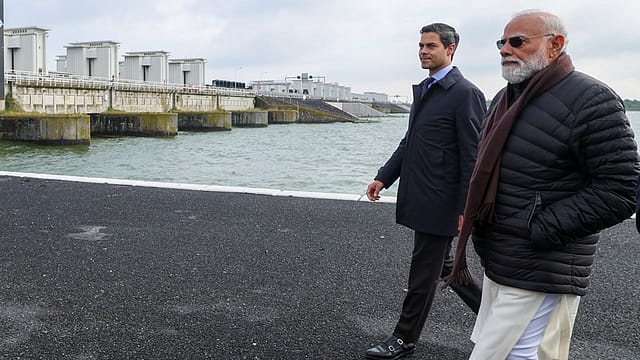
The turning point came during PM Modi’s recent visit to the Netherlands, where he inspected the iconic Afsluitdijk along with Dutch Prime Minister Rob Jetten. The structure, built nearly 80 years ago, is a global benchmark in water management.
The Afsluitdijk is a 32-kilometre-long barrier dam that separates the North Sea from a freshwater lake while protecting low-lying regions from flooding. Its defining feature—blocking saltwater while creating a freshwater reservoir—closely mirrors the core ambition of the Kalpasar Project.
Recognising these similarities, India and the Netherlands signed a Letter of Intent for technical cooperation. This agreement aims to leverage Dutch expertise in marine engineering and water management to accelerate Kalpasar’s implementation.
As the statement notes, "Prime Minister Narendra Modi's visit and the signing of the Letter of Intent for the Kalpasar Project have opened new doors of opportunity for Gujarat."
What exactly will Dutch collaboration bring?
The Netherlands brings over 90 years of experience in managing water infrastructure, especially in challenging marine environments. Institutions like Royal Haskoning have already contributed to Kalpasar’s technical planning.
The collaboration is expected to help refine engineering strategies, particularly in dam construction, salinity control, and sustainable water management. It is also aligned with the broader “India-Dutch Strategic Partnership on Water” established in 2022.
According to the Ministry of External Affairs, the partnership reflects a shared commitment to innovation, climate adaptation, and sustainable infrastructure.
What are the broader benefits if Kalpasar is completed?
If successfully implemented, Kalpasar could reshape Gujarat’s geography and economy. Apart from irrigation benefits, it is expected to drastically reduce travel distance between South Gujarat and Saurashtra from 240 kilometres to just 60 kilometres.
The project also promises significant renewable energy output—around 1,500 MW of wind energy and 1,000 MW of solar energy—while boosting fisheries and tourism sectors.
Why is this moment significant?
The renewed momentum suggests that Kalpasar is moving from vision to possibility. Modi’s direct inspection of the Afsluitdijk and the formalisation of Indo-Dutch cooperation signal political intent backed by technical partnership.
Despite decades of hurdles, the project has remained alive due to sustained political backing. The latest developments indicate that with global expertise now in play, one of India’s most ambitious water projects may finally gain traction.
(With inputs from ANI)