MEA Calls For "Unimpeded, Safe Navigation" Through Hormuz, Hopes US Attacks On Vessels "Come To An End"
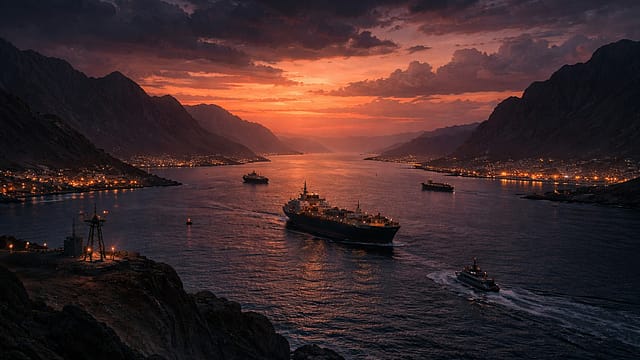
India has once again stressed the importance of maintaining free and secure maritime movement through the Strait of Hormuz, one of the world's most critical shipping corridors, amid escalating tensions in West Asia.
Speaking at a special briefing on Prime Minister Narendra Modi's upcoming visit to France and Slovakia, Ministry of External Affairs (MEA) spokesperson Randhir Jaiswal underlined India's longstanding position on maritime security.
"We have stated our position in the Strait of Hormuz. We would like, we want, and we have urged that there be unimpeded and safe navigation through the Strait of Hormuz, keeping with international law. So that is our position. This is a topic which will come up for discussion, and we'll put our points across," Jaiswal said.

Greening the Future
23 Jul 2026 - Vol 05 | Issue 30
Securing a sustainable India
The Strait of Hormuz is a narrow but strategically vital waterway connecting the Persian Gulf with the Gulf of Oman and the Arabian Sea. A significant share of the world's crude oil and liquefied natural gas exports passes through this route.
Any disruption in shipping through the strait can impact global energy supplies, freight costs, and oil prices, making developments in the region a matter of international concern.
What Prompted India's Latest Statement?
India's remarks came amid growing concerns over recent US military actions against commercial vessels in the Gulf of Oman.
The MEA expressed concern over attacks on ships carrying Indian crew members and called for an end to the incidents.
"We are deeply concerned at these attacks and hope and expect these will come to an end," Jaiswal said.
The concern follows a series of US actions against foreign-flagged vessels accused of transporting Iranian oil in violation of a US-imposed blockade.
What Happened to MT Jalveer?
On Thursday, the US Central Command (CENTCOM) confirmed that American forces had struck the Guinea-Bissau-flagged oil tanker MT Jalveer, which had 20 Indian seafarers on board.
According to CENTCOM, the vessel attempted to transport Iranian oil and allegedly ignored repeated instructions from US forces.
"U.S. Central Command (CENTCOM) acted against Guinea-Bissau flagged M/T Jalveer as it attempted to transport oil from Iran through the Gulf of Oman. A U.S. aircraft fired two Hellfire missiles into the ship's engine room after the crew repeatedly failed to comply with directions from U.S. Forces," the statement said.
The strike reportedly occurred at around 11:20 pm ET on June 10 and was aimed at disabling the vessel's movement.
Were Other Ships Also Targeted?
Yes. MT Jalveer was the third commercial vessel targeted by US forces in the Gulf of Oman during the week.
Earlier, the Palau-flagged vessels MT Marivex and MT Settebello were disabled after allegedly attempting to transport Iranian oil.
The most serious incident involved MT Settebello, where three Indian seafarers lost their lives.
What Has India Said About the Indian Crew Members?
The MEA confirmed that the three deceased Indian seafarers aboard MT Settebello have been identified and efforts are underway to bring their mortal remains back to India.
Jaiswal also confirmed that the attacks were carried out by US naval forces operating in the region.
"These attacks came from the US Navy that is stationed there. As you would have seen in the various reports, as also in what was clarified through our statements and otherwise from this podium, the three ships that have been involved in the incidents are foreign-flagged," he said.
He further noted that the vessels involved had been flagged under different jurisdictions and were subject to varying levels of US scrutiny.
"I also understand that two of them are OFAC-sanctioned ships and one of them is also in the category of a non-compliant ship," Jaiswal stated.
What Is the US Blockade and Why Are Ships Being Stopped?
According to CENTCOM, the maritime blockade was launched on April 13 and is being enforced against vessels entering or departing Iranian ports and coastal areas.
The US says the blockade is intended to support wider diplomatic efforts aimed at resolving the ongoing conflict in West Asia.
CENTCOM stated: "CENTCOM forces have disabled nine non-compliant vessels, redirected 135 ships that complied, and allowed 42 vessels supporting humanitarian aid to pass since initiating the blockade on April 13."
The US maintains that the blockade is being applied to vessels of all nationalities operating in designated Iranian maritime zones.
How Did the Current West Asia Conflict Begin?
The wider conflict began on February 28 following US-Israeli strikes on Iran, triggering a major regional confrontation.
Since then, tensions between Washington and Tehran have intensified, with both sides effectively competing for influence and control around the Strait of Hormuz.
The conflict has disrupted regional stability, heightened concerns over maritime security, and raised fears about the impact on global energy supplies and international trade.
What Does This Mean for India?
India's primary concern remains the safety of its citizens working aboard international vessels and the uninterrupted flow of maritime trade through one of the world's busiest energy corridors.
By reiterating its call for "unimpeded and safe navigation" in accordance with international law, New Delhi is seeking to protect both its economic interests and the welfare of Indian seafarers caught in the escalating crisis.
(With inputs from ANI)