PM Modi in Israel: Inside the Transformation of India-Israel Strategic Ties Since 2017
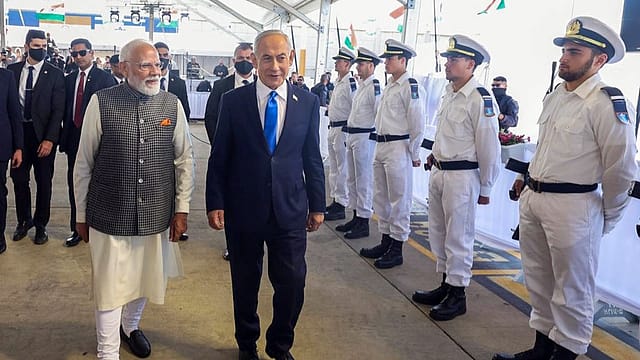
India-Israel relations have travelled a long road from diplomatic caution to open strategic alignment. What began as a limited engagement after independence has, especially since 2017, evolved into a multifaceted partnership spanning defence, innovation and now a proposed free trade agreement.
PM Narendra Modi is currently on an official visit to Israel, marking his first trip since the landmark 2017 tour that formally elevated ties to a strategic partnership.
A closer look shows how this partnership was built and what changed after 2017.
How did India-Israel relations begin after Independence?
India recognised Israel in 1950 but kept engagement minimal for decades, driven by solidarity with Palestine and the need to preserve ties with Arab states.
Full diplomatic relations were established only in 1992, under Prime Minister P.V Narasimha Rao, with the opening of embassies in Tel Aviv and New Delhi.

Zeroing In on ECI
09 Oct 2026 - Vol 05 | Issue 41
Constitutional legitimacy versus political opportunism
Why was 1992 a turning point for bilateral ties?
The end of the Cold War reshaped India’s foreign policy priorities. New Delhi began viewing Israel as a dependable defence and technology partner. According to Middle East Eye, this shift enabled public military cooperation after years of discreet collaboration, particularly in intelligence sharing and weapons supplies.
What role did defence cooperation play in building trust?
Defence cooperation became the backbone of the relationship. Israel supplied critical equipment during the 1999 Kargil conflict, reinforcing its image as a reliable partner. Today, Israel ranks among India’s top arms suppliers, with joint projects like the Barak-8 missile system anchoring long-term military collaboration.
Why is 2017 seen as the defining moment in India-Israel relations?
The breakthrough came with Prime Minister Narendra Modi’s 2017 visit to Israel, the first by an Indian PM. Alongside Benjamin Netanyahu, Modi elevated ties to a formal strategic partnership.
This formalised India’s policy of de-hyphenating its Israel and Palestine engagements and signalling a new diplomatic posture.
How did the strategic partnership expand after 2017?
Post-2017, cooperation moved beyond arms purchases to joint development and manufacturing under the Make in India initiative. Both sides broadened engagement in cybersecurity, space, agriculture, and AI, while Israel-backed Centres of Excellence across Indian states helped modernise farming practices.
What does the current defence cooperation framework look like?
India now co-produces advanced systems with Israeli firms and operates platforms ranging from surveillance drones to air defence interceptors. Defence cooperation has begun to place greater emphasis on technology transfer and joint production rather than off-the-shelf imports.
This marks a shift from buyer-seller dynamics to collaborative capability-building.
Why are FTA talks central to the next phase of India-Israel relations?
Trade is emerging as the next growth engine. The first round of FTA negotiations began in New Delhi in February 2026, aiming to boost non-defence commerce beyond the roughly $3.6 billion recorded in 2025.
Officials expect the agreement to unlock deeper links between startups and manufacturing.
What does the “special strategic partnership” between India and Israel actually mean?
Reportedly, the upgrade from the strategic partnership announced during Modi’s visit to Israel will formalise cooperation across defence, innovation, and security. Alongside Benjamin Netanyahu, India committed to deeper joint development in weapons systems, cybersecurity, and high-tech manufacturing.
This upgrade moves decisively beyond a transactional defence relationship into long-term strategic alignment.
How does geopolitics shape the partnership today?
India and Israel now cooperate within wider groupings such as I2U2, focusing on energy, food security, and infrastructure. Middle East Eye notes that shared concerns over regional stability and China’s rising influence also underpin closer strategic alignment.
(With inputs from yMedia)