Trump Moves To Revive Tariff Leverage With New Trade Probes Targeting China, India
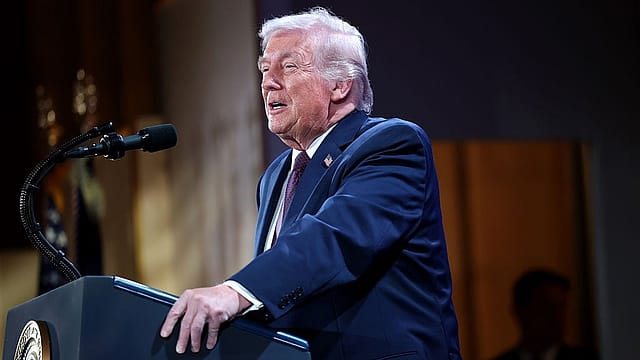
The administration of Donald Trump has launched fresh trade investigations into alleged unfair trade practices by 16 major trading partners, including India, China and Bangladesh, in a move aimed at rebuilding tariff pressure after a recent ruling by the Supreme Court of the United States struck down much of the president’s tariff programme last month.
The investigations are being carried out under Section 301 of the Trade Act of 1974, which allows the US Trade Representative to impose tariffs or other punitive measures against countries found to be engaging in unfair trade practices.
US Trade Representative Jamieson Greer said the probe could lead to new tariffs against China, the European Union, India, Japan, South Korea and Mexico by the summer.
Other trading partners under the excess industrial capacity investigation include Taiwan, Vietnam, Thailand, Malaysia, Cambodia, Singapore, Indonesia, Bangladesh, Switzerland and Norway. Canada, the second largest trading partner of the United States, was not included in the probe.
Why Has the US Trade Probe Flagged Excess Capacity In China And Japan’s Automotive Sector?

Youth Issue 2026
24 Apr 2026 - Vol 04 | Issue 68
50 Portraits of Icons and Achievers
The official notice for the probe cited the automotive sector in China and Japan as areas of concern.
It said a growing number of companies were unprofitable or unable to meet interest payments from operations.
The notice added that despite China's electric vehicle capacity exceeding domestic demand, the country’s largest EV maker, BYD, was "aggressively expanding" its overseas manufacturing footprint with factories in Uzbekistan, Thailand, Brazil, Hungary and Turkey, and was expected to expand capacity further in Europe where existing automotive plants are operating at only 55 per cent capacity.
The US Trade Representative’s office also cited large US trade surpluses in Germany and Ireland as evidence of excess capacity within the European Union.
Singapore was identified as having excess global capacity in semiconductors despite running a trade deficit with the United States, while Norway was cited for excess capacity reflected in large exports of fuels and seafood.
Why Has the US Launched A Section 301 Investigation Into Forced Labour Goods?
In addition to the excess capacity inquiry, Greer said he would initiate another investigation on Thursday under Section 301 of the Trade Act of 1974 targeting goods produced using forced labour.
The probe is expected to cover more than 60 countries and could lead to a ban on US imports of such products.
The United States has previously restricted imports including solar panels and other commodities from China’s Xinjiang region under the Uyghur Forced Labor Protection Act signed by former president Joe Biden.
The new investigation could broaden those restrictions to other countries.
Greer said he wanted other countries to enforce similar bans on goods produced with forced labour in line with standards embedded in a nearly century old trade law.
How Do Trump’s Temporary Tariffs Under Section 122 Link To The New US Trade Investigations?
Washington has repeatedly alleged that Chinese authorities established labour camps for ethnic Uyghur and other Muslim groups in the western region. Beijing has consistently denied the allegations.
The trade probes follow the February 20 ruling by the Supreme Court of the United States that invalidated the administration’s global tariffs imposed under the International Emergency Economic Powers Act.
Following the ruling, Trump imposed a temporary 10 per cent tariff for 150 days under Section 122 of the Trade Act of 1974 in late February.
Greer said the administration intends to complete the Section 301 investigations, including any proposed remedies, before those temporary tariffs expire in July.
The excess capacity investigation will follow an accelerated timeline, with public comments accepted until April 15 and a public hearing scheduled around May 5.
What Did Jamieson Greer Say About Trump’s Plan To Tackle Unfair Trade Practices?
The probes provide the administration with a mechanism to re-establish a credible tariff threat against trading partners in order to keep them engaged in negotiations and enforce trade agreements designed to reduce previously imposed tariffs.
Greer said the measures had been anticipated by international partners and should not come as a surprise. He urged countries to adhere to existing agreements but did not guarantee that compliance would shield them from new tariffs.
Emphasising the president’s stance, Greer said Trump "will find a way to deal with unfair trading practices. He'll find a way to get our trade deficit down. He'll find a way to protect U.S. manufacturing. We have a lot of tools to do it."
The investigations also come as US officials led by Treasury Secretary Scott Bessent prepare to meet Chinese counterparts in Paris later this week to lay the groundwork for a planned meeting between Trump and Chinese President Xi Jinping in Beijing at the end of March.
Trump used a Section 301 investigation during his first term to justify tariffs of about 25 per cent on many Chinese imports. The law is widely regarded as legally durable and has withstood previous court challenges.
Officials say the current investigation focuses on a long standing concern across multiple US administrations that state supported manufacturing output in China is flooding global markets with low priced goods.
Greer said the inquiry will examine factors such as large global current account surpluses, government subsidies, suppressed domestic wages, the non commercial activities of state owned enterprises, inadequate environmental and labour standards, subsidised lending and currency practices.
(With inputs from ANI)