Over 1,200 Killed in Iran, WHO Warns of Severe Public Health Risks
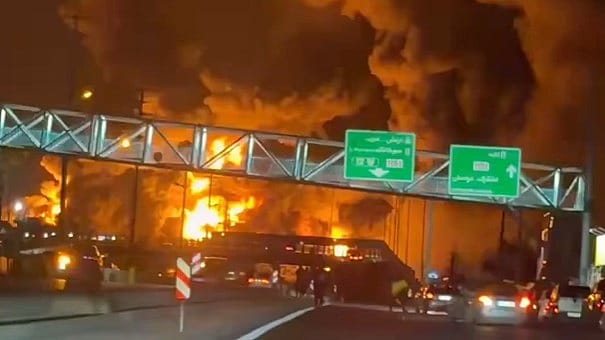
Eight days of war have brought widespread devastation across Iran, with mounting civilian casualties, severe damage to healthcare infrastructure, and growing international concern over the humanitarian impact of the escalating conflict.
Hossein Kermanpour, spokesperson for Iran's Ministry of Health, said in a post on X that more than 10,000 civilians have been injured and over 1,200 people killed since the strikes began.
The dead include around 200 children under the age of 12 and about 200 women, while around 1,400 women have also been injured.

Zeroing In on ECI
09 Oct 2026 - Vol 05 | Issue 41
Constitutional legitimacy versus political opportunism
The conflict has also severely impacted Iran's healthcare system. Kermanpour said 25 hospitals have been damaged, with nine now out of service.
Eighteen pre-hospital emergency bases and 14 ambulances have been destroyed. Two county health centres, 17 comprehensive health service centres and two rural health houses have also suffered damage.
How Has the Iran Conflict Impacted Civilians Across the Middle East?
The World Health Organization has raised alarm over the consequences of the escalating conflict.
He said the agency has verified 13 attacks on healthcare in Iran and one in Lebanon, adding that "attacks on health care violate humanitarian law."
The WHO chief also warned about broader public health risks linked to the conflict. "Nuclear risks pose grave public health threats," he said, adding that "operations at the WHO's Logistics Hub for Global Health Emergencies in Dubai are currently on hold due to insecurity."
Satellite images and verified videos reviewed by international monitors indicate that schools, hospitals and historic landmarks have been hit since the attacks began on February 28.
Which Provinces Have Been Most Targeted During the Iran Conflict?
Recent strikes have damaged hospitals and other civilian facilities located near military targets, raising concerns about the risks of bombing in densely populated areas.
Communication with people inside Iran has also become increasingly difficult after authorities imposed an almost total internet blackout, making it challenging to access video footage and verify conditions on the ground.
A non-profit organisation, Human Rights Activists News Agency, has recorded at least 752 attacks across 148 incidents in 30 provinces since the start of the conflict.
According to HRANA's aggregated data as of March 8, at least 1,205 civilian deaths have been reported, including 194 children. The figures also include 187 military fatalities and 316 deaths that remain unclassified.
Tehran province has been the most heavily targeted, accounting for around 34 per cent of the attacks, followed by Isfahan at about 8 per cent and Kermanshah at around 6 per cent. Khuzestan, Alborz and several western provinces have also reported significant strikes.
Which Provinces Have Been Most Targeted During the Iran Conflict?
The strikes also hit 32 pharmaceutical and medical centres and 65 schools, while 13 Red Crescent facilities suffered damage.
Damage to hospitals has raised further alarm among health authorities. Mohammad Raeiszadeh told state media that the in-vitro fertilisation department of a hospital was destroyed in one of the strikes.
Amin Niakan said the EMS 115 base building and two ambulances stationed there were completely destroyed in the attack.
Urging all sides to protect health workers, patients and medical facilities, Ghebreyesus said, "Attacks on health care violate humanitarian law... Peace is the best medicine".
China has reacted cautiously to Iran's decision to appoint Mojtaba Khamenei as the country's new supreme leader, describing the development as a domestic issue and urging respect for Iran's sovereignty, according to China Daily.
How Has China Responded to the Recent Iran Leadership Change?
Speaking at a regular press briefing in Beijing on Monday, Chinese Foreign Ministry spokesperson Guo Jiakun said China had taken note of media reports about the leadership change in Iran and emphasised that the decision regarding Iran's top leadership was made internally and in accordance with the country's legal framework.
"This is a decision by the Iranian side based on its constitution," he said.
The spokesperson added that Beijing does not interfere in the internal affairs of other countries and believes Iran's sovereignty and territorial integrity should be respected.
According to Chinese officials, leadership changes within Iran fall under the jurisdiction of the country's political and religious institutions and should not be subject to outside pressure or intervention.
Iran's Assembly of Experts, the clerical body responsible for selecting the supreme leader, announced the appointment of Mojtaba Khamenei on Sunday.
The 56-year-old cleric is the son of former supreme leader Ali Khamenei, who was killed during recent military strikes amid an escalating regional conflict involving Iran, the United States and Israel.
The leadership transition marks a significant moment in Iran's political history, as Mojtaba Khamenei becomes the third supreme leader of the Islamic Republic.
How Has Israel Reacted to the New Iran Leadership?
China's statement comes amid growing tensions in the Middle East, with Israel reportedly warning that it could target any successor to the late Iranian leader. Responding to those threats, Guo reiterated Beijing's opposition to actions that could further destabilise the region.
"China opposes interference in other countries' internal affairs under any pretext, and Iran's sovereignty, security, and territorial integrity should be respected," he said.
Beijing has maintained diplomatic ties with Tehran and has often called for dialogue and restraint in regional conflicts. Its latest remarks signal a continuation of China's long-standing policy of non-interference while acknowledging the leadership transition in Iran.
The appointment of Mojtaba Khamenei comes at a time of heightened geopolitical tensions and uncertainty across the Middle East.
China has not offered further comment on the political implications of the decision, limiting its response to reiterating that the matter remains an internal affair for Iran.
(With inputs from ANI)