‘Not Happy’: Trump Criticises Macron, UK Over Reluctance in Strait of Hormuz Coalition
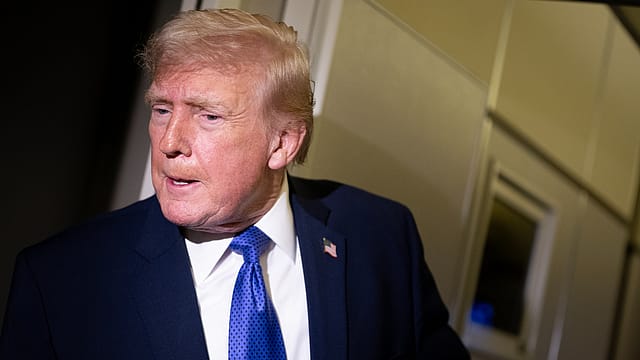
US President Donald Trump expressed dissatisfaction with key Western allies, including Emmanuel Macron, over their reluctance to join a coalition aimed at reopening the Strait of Hormuz, as the ongoing US-Israeli war with Iran entered its third week.
Speaking during a lunch with the Trump Kennedy Center Board Members, Trump said the United States did not depend on allies for military action.
"I think he's going to help. I spoke to him yesterday. I don't do a hard sell on them because my attitude is that we don't need anybody. We're the strongest nation in the world. We have the strongest military by far in the world,” Trump added.

Losing Memory
16 Oct 2026 - Vol 05 | Issue 42
The making of a medical and social emergency
Trump also criticised the United Kingdom for what he described as a lack of enthusiasm.
“I am not happy with the UK,” he said.
“I think they'll be involved, maybe, but they should be involved enthusiastically," the US President added.
"We've been protecting these countries for years with NATO, because NATO is us. You can ask Putin. Putin fears us. He has no fear of Europe whatsoever. He fears the United States of America and the military that I built during my first term..." he added.
How is Trump urging European allies to support the US in the Strait of Hormuz crisis?
White House press secretary Karoline Leavitt said that Trump “wished the UK had stepped up sooner and quicker” regarding the Hormuz mission.
“But he continues to speak with our allies in Europe and is calling on them for support, just as he did when he called on them to step up with respect to their defense spending in NATO. He's calling them to do more here,” she said.
She declined to comment on the possible deployment of US Marines, referring the matter to the Pentagon.
Trump also accused several Western allies of ingratitude after countries including Germany, Spain and Italy declined to immediately send warships to escort oil tankers through the Strait of Hormuz, which Iran has effectively shut using drones and naval mines.
German Chancellor Friedrich Merz said Berlin lacked the legal mandate to participate.
Why did Friedrich Merz cite lack of mandate in the Strait of Hormuz conflict?
“We lack the mandate from the United Nations, the European Union or NATO required under the Basic Law,” Merz said, adding that Washington and Israel had not consulted Germany before launching the war.
“Some are countries that we've helped for many, many years. We've protected them from horrible outside sources, and they weren't that enthusiastic. And the level of enthusiasm matters to me,” Trump said.
Detailing US military operations, stated that US forces had targeted Kharg Island.
“We attacked Kharg Island and knocked it. We destroyed everything on the island except for the area where the oil is,” the US President said.
“We left the pipes. We didn't want to do that, but we will do that... But for the purposes of someday rebuilding that country, I guess we did the right thing... We are aggressively dismantling Iran's defence industrial base, and its ability to rebuild its missiles and drone capability is getting close to zero,” he added.
Why are attacks on Fujairah, Abu Dhabi and Dubai intensifying the Strait of Hormuz crisis?
The conflict showed no signs of easing, with continued strikes reported on both sides. The Israeli military said it was targeting Iranian regime infrastructure across Tehran and Hezbollah sites in Beirut, while also preparing plans for at least three more weeks of war.
Iran launched overnight attacks on Israel and also targeted the United Arab Emirates, forcing temporary airspace closures and disrupting key energy operations.
A drone strike hit an oil facility in Fujairah for a second consecutive day, while Dubai International Airport was shut for several hours.
Oil loading operations in Fujairah and activities at the Shah gas field in Abu Dhabi were suspended following the attacks.
Iran said a recent US strike on Kharg Island had been launched from the UAE and warned it would target oil and gas facilities in countries used as staging grounds. It also threatened US industrial sites in the region and urged civilians near such facilities to evacuate.
In Iraq, rockets and at least five drones targeted the US embassy in Baghdad early Tuesday in what officials described as the most intense assault since the conflict began. Two US officials said no injuries were reported.
Trump acknowledged surprise at Iran’s widening retaliation.
“They (Iran) weren’t supposed to go after all these other countries in the Middle East,” he said. “Nobody expected that. We were shocked.”
The war, which began on February 28, has killed at least 2,000 people across the Middle East, including at least 200 children in Iran, according to Iranian Foreign Minister Abbas Araqchi.
Oil prices rose more than 2 per cent in early Tuesday trading amid supply concerns, while Asian markets rebounded following losses in the previous session, as the Strait of Hormuz crisis continued to fuel fears of global inflation.
(With inputs from ANI)