Nicolás Maduro in the Dock: Inside the High-Stakes US Court Battle
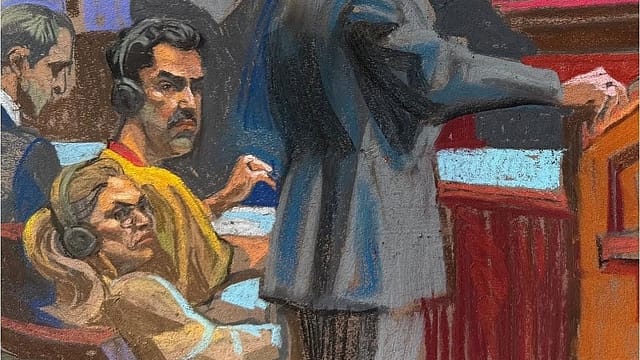
Nicolás Maduro’s prosecution in a New York court has moved rapidly since his January 3 capture this year, bringing narco-terrorism charges, disputed legal funding, and insider testimony into focus.
What began as an arrest has now widened into a case testing US law, Venezuela’s political transition, and control over billions in sovereign assets.
Here’s a more detailed look.
Why is Nicolás Maduro in a US courtroom?
Maduro was captured on January 3, 2026, during a US military operation in Caracas and flown to New York to face narco-terrorism and drug trafficking charges.

The Health and Wellness Issue
25 Sep 2026 - Vol 05 | Issue 39
He was arraigned on January 5, where he pleaded not guilty, calling the operation illegal.
What are the key charges against Nicolás Maduro?
US prosecutors allege Nicolás Maduro led the “Cartel of the Suns,” using state machinery in Venezuela to traffic large quantities of cocaine into the US in coordination with FARC.
He faces narco-terrorism and firearms charges, with potential sentences ranging from decades to life imprisonment.
What happened during the latest court hearing?
In a recent Manhattan hearing, Judge Alvin Hellerstein refused to dismiss the case but questioned aspects of the prosecution’s stance.
Maduro and his wife appeared in court after months in detention, with proceedings focused on procedural and constitutional issues.
Why is legal funding a major issue in the case?
Maduro’s lawyers argue that US sanctions blocking Venezuelan government funds violate his Sixth Amendment right to counsel.
The Treasury’s OFAC initially granted access on January 9, 2026, but reversed the decision in March, citing an error.
This prompted sharp questioning from the judge, who also challenged the government’s “national security” claim as potentially arbitrary, given the renewed US–Venezuela ties.
How is Venezuela’s political transition affecting the trial?
Following Maduro’s removal, Delcy Rodríguez assumed leadership, with improved diplomatic engagement with the US.
This shift weakens Maduro’s claim to sovereign immunity and strengthens the prosecution’s argument that he no longer represents Venezuela.
What role do witnesses and evidence play?
The prosecution is expected to rely on insiders like Clíver Alcalá, sentenced in April 2024, and Hugo Carvajal, who pleaded guilty in June 2025, with sentencing set for April 16, 2026.
As discovery evidence is shared under restrictions, the defense is contesting the “terror nexus,” arguing intent remains unproven.
How strong is the US government’s case?
Legal experts say the case remains complex, as prosecutors must prove Maduro knowingly linked drug trafficking to a terrorist objective under US law.
The narco-terrorism statute has seen few trial convictions, and courts require strong evidence tying intent, financial flows, and operational coordination together.
What are the broader geopolitical implications?
Maduro’s prosecution has altered Venezuela–US relations, with Washington tightening sanctions control while reopening limited oil trade under strict oversight.
Sovereign assets like Citgo are being auctioned to repay creditors, while oil revenues are routed through US-controlled funds, signalling a deeper restructuring of Venezuela’s economic sovereignty.
What happens next in Nicolás Maduro’s case?
A trial date has not yet been finalized, and pre-trial battles over funding, evidence, and jurisdiction could stretch proceedings for months or years.
The outcome will test both US legal limits and the intersection of law and foreign policy.
(With inputs from yMedia)