Melania Trump’s Oleshky Ceasefire: What Has Been Agreed, and Who Could It Help?
Getting food can mean risking a mined road. Staying home can mean going hungry.
That is the predicament facing residents of Oleshky, a Russian-occupied city in southern Ukraine where civilians have endured severe shortages near the front line. Reuters reported earlier this month that people were attempting dangerous journeys on foot and bicycle to obtain supplies.
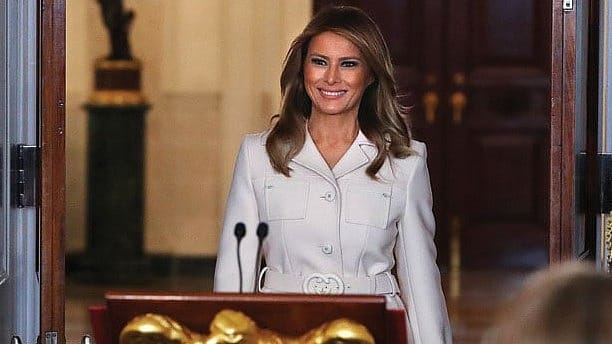
Now, the White House says US First Lady Melania Trump has helped negotiate a temporary ceasefire to bring humanitarian aid into the city and prepare civilian evacuations. The announced start date is October 29.
The development offers hope for people stranded in Oleshky. Its significance lies in the practical possibility of getting food and medicine in, and vulnerable residents out.

Losing Memory
16 Oct 2026 - Vol 05 | Issue 42
The making of a medical and social emergency
WHAT HAS MELANIA TRUMP ANNOUNCED?
According to the White House’s October 23 statement, Russia and Ukraine have agreed to temporarily stop military action in Oleshky so humanitarian assistance can enter and a designated evacuation passage can be prepared.
Melania and her representative worked directly with Russian and Ukrainian authorities on the arrangements, the statement says. “The situation in Oleshky is dire,” she said, describing elderly residents urgently needing medical attention, medicine, food and clean water.
HAVE UKRAINE AND RUSSIA CONFIRMED IT?
There has been a supporting statement from a senior Ukrainian negotiator.
David Arakhamia said on Telegram that a ceasefire would soon be established in Oleshky, alongside an operation to create permanent humanitarian corridors for evacuations and food deliveries, Reuters reported. He did not provide further operational details.
Russia had not immediately confirmed the ceasefire, according to that report. The arrangement has therefore been announced ahead of its intended implementation. Aid deliveries and evacuations are scheduled work still to be carried out.
WHERE IS OLESHKY, AND WHY ARE PEOPLE STRANDED THERE?
Oleshky lies in Ukraine’s Kherson region, across the Dnipro River from Kherson city. It remains under Russian occupation, close to the fighting.
Its humanitarian emergency predates Friday’s announcement. In an October 1 statement, the European Union cited the UN Human Rights Monitoring Mission’s findings that civilians in Oleshky and neighbouring communities faced acute shortages of food and medical assistance.
For residents, leaving requires more than finding a vehicle. Dangerous roads, mines and military activity can turn a journey for essential supplies into a threat to life.
HOW MANY PEOPLE COULD THE OPERATION HELP?
The White House estimates that 1,700–2,000 residents remain, predominantly older people, alongside approximately 50 children. Oleshky’s pre-war population was about 24,000.
These are estimates: the statement says no formal demographic count has taken place since 2022.
Many of those remaining may need assistance reaching transport, obtaining medicines or travelling safely. That explains why the proposed operation includes visits to people’s homes.
HOW WOULD THE EVACUATIONS WORK?
The White House says civilian teams from both countries will assess residents’ needs and arrange support for those wishing to leave.
Residents would be transported to their preferred destination, according to the announcement. Melania said she expected some to choose Russia and others Ukraine. The preparations include coordination on demining.
For a population with many elderly residents, the practical details matter: safe access to homes, suitable vehicles, medical support and a route protected from attack.
The statement does not specify how long the ceasefire will last.
WHAT DOES A HUMANITARIAN CORRIDOR ACTUALLY MEAN?
It is an agreed passage intended to allow civilians or humanitarian supplies to move through a conflict area.
Its safety depends on the parties respecting the arrangement and coordinating movements. A corridor needs workable agreements on routes, timing and security.
The International Committee of the Red Cross says evacuations must be voluntary, preserve family unity and include the necessary guarantees concerning destinations and safety.
For Oleshky’s residents, that means receiving enough information and support to make a meaningful choice about leaving and where to go.
HOW DID MELANIA BECOME INVOLVED?
Her office says Oleshky’s plight was raised during a private conversation at her Fostering the Future Together event during the UN General Assembly in New York.
She then used an existing communication channel with Russia and Ukraine, established through efforts to reunite children with their families. According to the White House, six previous reunification efforts involved 34 children.
That channel appears to have provided a way to discuss a specific humanitarian operation with both sides. The White House
WERE OTHERS ALSO TRYING TO SECURE ACCESS?
Yes. Oleshky had already become the subject of international humanitarian appeals.
On October 9, a senior UN official told the Security Council that a local ceasefire was urgently needed to allow civilians to leave safely and life-saving assistance to enter before winter.
Pope Leo XIV raised the city’s plight with Vladimir Putin on October 16, requesting a ceasefire for food, medical assistance and voluntary evacuations. He discussed Oleshky again with Volodymyr Zelenskyy on October 19.
Friday’s announcement follows those appeals and negotiations over humanitarian access.
DOES THIS SIGNAL AN END TO THE WIDER WAR?
The announced agreement covers Oleshky and a specific humanitarian purpose. It contains no announced settlement of the wider conflict.
Its immediate value would be measured in deliveries completed, residents reached and people evacuated safely. Cooperation on one operation could provide experience useful for further humanitarian arrangements, although that remains a possibility rather than an announced outcome.
For those still in Oleshky, October 29 could bring something more immediate than a diplomatic breakthrough: medicine at the door, food reaching the city and transport along a safer road.
With inputs from ANI & agencies