Israel election 2026: 7.3 million voters, Netanyahu’s fight for power and the battle for 61 seats
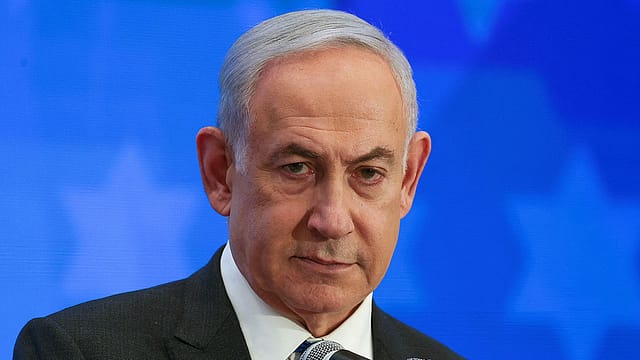
More than seven million Israelis are preparing to vote in an election that could reshape the country’s political leadership and influence its approach to security and the wider Middle East. But the biggest question is not simply who wins the most votes. It is who can assemble the parliamentary majority needed to govern.
Israel’s Central Elections Committee has prepared a nationwide operation costing 690 million Israeli new shekels. According to The Times of Israel, approximately 7.3 million citizens are eligible to vote, with 12,018 polling stations, 18,000 ballot boxes and around 100,000 workers deployed for Election Day. Voting is scheduled for Tuesday, October 27, from 7 am to 10 pm.

Look Who's Talking Regime Change
23 Oct 2026 - Vol 05 | Issue 43
How Israel is preparing for Election Day
The preparations extend beyond polling booths and ballot boxes. The election committee has arranged 6,209 accessible polling stations, including 3,621 designated special-accessibility stations, to help voters with disabilities.
Around 15,000 cameras will be used by election-integrity inspectors to document voting and report irregularities. Officials have also trained approximately 50,000 people across 2,140 venues. To make voting easier, intercity buses on eligible routes and Israel Railways services are free from the evening before election day until the end of services on October 27, according to the election committee’s published arrangements.
Why Netanyahu faces a tough fight to retain power
Prime Minister Benjamin Netanyahu, leader of the right-wing Likud party, is seeking to retain power after years marked by war, security controversies and domestic political divisions. Reuters reported on October 26 that his leadership faces scrutiny following the Hamas-led October 7, 2023, attack, while supporters credit his government with military campaigns against Hamas, Hezbollah and Iran.
His potential partners include far-right parties associated with Finance Minister Bezalel Smotrich and National Security Minister Itamar Ben-Gvir, as well as ultra-Orthodox parties Shas and United Torah Judaism. Disputes over military-service exemptions for ultra-Orthodox men have also become a significant political issue.
Netanyahu’s leading challenger is former military chief Gadi Eisenkot, who heads the centrist Yashar party. Former prime minister Naftali Bennett, allied with Yair Lapid, and former defence minister Avigdor Lieberman are also competing for influence. Yair Golan leads the left-wing Democrats, while Arab parties could prove important in determining which bloc can form a government.
What do the latest Israel election polls show?
The final pre-election surveys published on October 23 suggest that Eisenkot’s Yashar party is ahead of Likud in several polls, but neither main political camp has a straightforward route to a majority.
A survey by The Madad Project, published on October 23, projected 22 seats for Yashar and 19 for Likud. However, polling varies across outlets, and seat projections are not election results. The broader picture remains uncertain, with smaller parties potentially determining the outcome.
How does Israel choose its prime minister?
Israel uses proportional representation. Voters choose party lists rather than directly electing a prime minister. Parties must receive at least 3.25% of valid votes to qualify for seats in the 120-member Knesset.
A government needs the support of at least 61 lawmakers. After the election, President Isaac Herzog consults political parties and assigns a member of the Knesset the task of forming a government. Coalition negotiations can therefore determine who becomes prime minister, even when another party wins the most seats.
That is why Tuesday’s vote may not settle the contest immediately. Netanyahu and his challengers must win not only votes but enough partners to govern — a calculation that could shape Israel’s domestic politics and its regional policy for years to come.
(With inputs from ANI)