IRGC Targets American Base After Bandar Abbas Attack: What Happened Near Strait of Hormuz
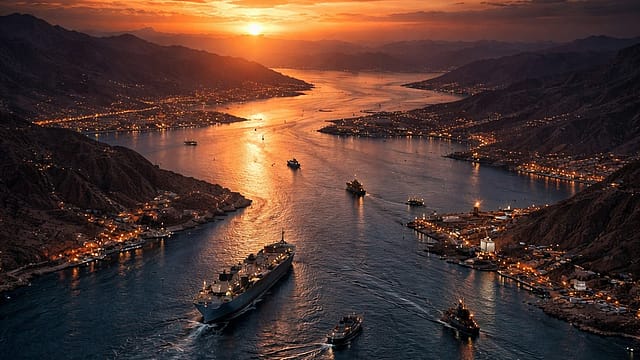
Iran’s Islamic Revolutionary Guard Corps (IRGC) on Thursday said it launched early-morning strikes on an American base after aerial projectiles hit the outskirts of Bandar Abbas Airport, according to Iranian media reports.
Tasnim News Agency reported that the IRGC described the attack as retaliation for what it called “pre-dawn aggression” by US forces.
The IRGC said in a statement, "Following the pre-dawn aggression today by the invading American army against a point on the outskirts of Bandar Abbas Airport using aerial projectiles, the American airbase, as the origin of the aggression, was targeted at 4:50 a.m."
Iranian authorities did not reveal the exact location or provide additional operational details regarding the alleged strike on the American base.

Zeroing In on ECI
09 Oct 2026 - Vol 05 | Issue 41
Constitutional legitimacy versus political opportunism
The incident marks another escalation in tensions between Washington and Tehran at a time when both countries are attempting to preserve a fragile ceasefire arrangement.
What Happened Near the Strait of Hormuz?
The latest confrontation follows reports from Iranian media about an exchange of fire between Iranian and US forces near the Strait of Hormuz, one of the world’s most strategically important oil shipping routes.
Tasnim News Agency, citing an “informed military source”, reported that the IRGC navy fired at a US tanker that allegedly attempted to cross the Strait of Hormuz after turning off its radar system.
According to the report, US forces responded by firing “at a scorched area around Bandar Abbas.”
Tasnim further stated, "The sound of the explosions was related to this incident" and "did not cause any casualties or property damage".
In a separate report, Tasnim claimed Iranian naval forces confronted four vessels attempting to enter the Gulf through the Strait of Hormuz without prior coordination with Iranian authorities.
The agency said the vessels were first issued warnings. After allegedly ignoring the instructions, Iranian naval forces fired warning shots, forcing the ships to retreat.
How Did the United States Respond?
US officials presented the military actions as defensive measures aimed at preventing further escalation.
According to CBS News, the US military carried out another round of strikes on Iran on Wednesday local time. A US official told the network that American forces shot down four Iranian drones and targeted a ground control station in Bandar Abbas that was preparing to launch a fifth drone.
CBS News reported that the drones “posed a threat near the Strait of Hormuz.”
The US official said, "These actions were measured, purely defensive, and intended to maintain the ceasefire".
The official also stated that despite the latest military exchange, the ceasefire between the US and Iran was still considered active.
Why Is the Strait of Hormuz So Important?
The Strait of Hormuz remains one of the most sensitive geopolitical chokepoints in the world because a large share of global oil shipments passes through the narrow waterway connecting the Persian Gulf to international markets.
Any disruption in the region can significantly affect global energy supplies, oil prices and shipping security.
The latest military tensions have once again raised concerns among global markets and policymakers about the possibility of disruptions to commercial shipping and energy flows in the Gulf region.
What Did Donald Trump Say About the Situation?
US President Donald Trump reiterated his administration’s hardline stance on Iran while also expressing support for maintaining the ceasefire framework.
Speaking about Iran’s nuclear ambitions, Trump said, "Iran cannot have nuclear weapons. I'm doing that for the world, not just for us."
He also warned that he “won't be outlasted” and said he “doesn't care about the midterm” elections while pursuing negotiations with Tehran.
On the issue of maritime access, Trump said the Strait of Hormuz would remain “open to everybody,” adding that freedom of navigation continued to form part of ongoing ceasefire discussions.
What Happens Next?
The latest exchange highlights the fragile and volatile nature of relations between Iran and the United States despite ongoing diplomatic efforts to avoid a broader military conflict.
With both sides accusing each other of aggressive actions while simultaneously insisting the ceasefire remains intact, the situation around Bandar Abbas and the Strait of Hormuz is likely to remain under close international scrutiny in the coming days.
(With inputs from ANI)