Iran’s Chilling ‘Hit List’: Eight Gulf Bridges Marked as War Escalates
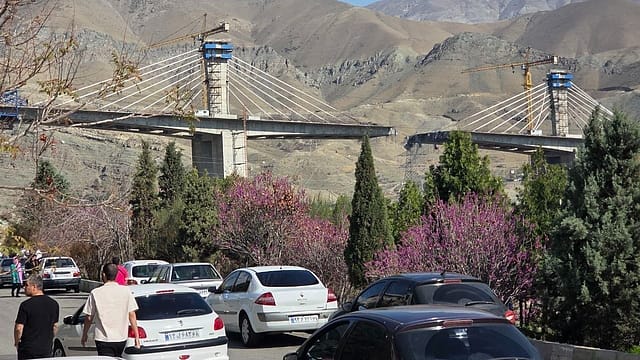
Iran has released a list of eight major bridges across the Middle Eastern region, hinting at a "tit-for-tat" retaliation following a US-Israeli attack on key infrastructure in the northern city of Karaj.
Publishing the "hit list", Iran's semi-official Fars News Agency said that several prominent bridges in Gulf nations and Jordan could be possible targets of the Islamic Revolutionary Guard Corps after two strikes hit Iran's tallest B1 bridge on Thursday.
The Iranian list includes the Sheikh Jaber Al-Ahmad Al-Sabah Sea Bridge in Kuwait; the Sheikh Zayed Bridge, Al Maqta Bridge and Sheikh Khalifa Bridge in the United Arab Emirates; the King Fahd Causeway linking Saudi Arabia to Bahrain; and the King Hussein Bridge, Damia Bridge and Abdoun Bridge in Jordan, according to an Anadolu report.

The Modi Years
02 Oct 2026 - Vol 05 | Issue 40
A Nation Rebuilt
US-Israeli strikes on Thursday partially destroyed the tallest bridge in the Middle East. Several people were injured in the strike that came after President Donald Trump warned of bombing Iran "back to the Stone Age".
The 136-metre-high B1 bridge, still under construction, was intended to link Tehran to the western city of Karaj.
How did the Iran bridge strike in Karaj lead to casualties and structural collapse?
Ghodratollah Seif, deputy governor of Alborz province where the bridge is located, said the strike killed eight people and wounded 95 others, according to state TV and Fars news agency.
Videos circulating on social media showed major sections of the bridge collapsing following the attack.
President Masoud Pezeshkian stated that Iran remains "resolute in defending itself against American and Israeli aggressors using all of its capacities," state broadcaster Press TV reported.
The remarks come over a month after the commencement of a military conflict that Tehran describes as an unprovoked war of aggression against the Islamic Republic.
The Iranian President made these observations during a telephonic conversation with his Azerbaijani counterpart Ilham Aliyev on Thursday.
During the exchange, Pezeshkian said Tehran was engaged in "indirect negotiations with the United States" at the moment Washington initiated its "strikes and bombing campaign."
Detailing the impact of the ongoing hostilities, Pezeshkian briefed Aliyev on the destruction of "vital and industrial infrastructures," as well as strikes targeting "schools" and "hospitals."
According to Press TV, he expressed gratitude to the people and government of Azerbaijan for their "sympathy and support" during the crisis.
In response, Aliyev noted the adverse effects of the conflict on regional "security and stability," and voiced hope for a swift restoration of peace. Both leaders also explored avenues to "boost Tehran-Baku cooperation in various fields."
(With inputs from ANI)