Iranian Strikes Hit Key Radar Sites Linked to US THAAD Defence Network Across West Asia
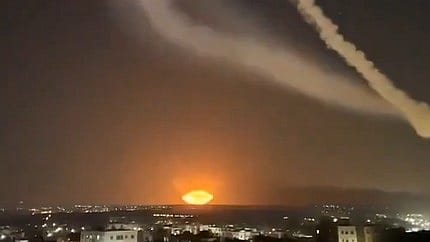
Iranian missile and drone strikes across West Asia appear to have damaged key components of the United States-built Terminal High Altitude Area Defense (THAAD) network, with radar installations in multiple countries reportedly hit during the early days of the escalating conflict, according to a CNN report.
Iranian media claims also suggest that several missiles and drones managed to bypass Western and Israeli defence systems, including THAAD, and reach targets in Israel.
Satellite imagery and analysis reported by CNN indicated that radar systems linked to THAAD batteries in Jordan, Saudi Arabia and the United Arab Emirates were struck during the opening phase of the conflict.
These radar systems supported operations by the United States and Israel for detecting and tracking incoming ballistic missiles and drones.
The Terminal High Altitude Area Defense system has been described by Lockheed Martin as a highly effective, combat-proven defence against short, medium and intermediate-range ballistic missile threats.
How did Iranian ballistic missile volleys towards Tel Aviv challenge the THAAD defence network?
THAAD is the only US system designed to intercept targets outside and inside the atmosphere and it continues incremental capability improvements within the weapon system to continually improve effectiveness against current and emerging threats.

Exclusive: To the Heavens and Back
19 Jun 2026 - Vol 04 | Issue 76
Shubhanshu Shukla relives the space odyssey that put India into orbit
According to The Times of Israel, Iran launched eight volleys of ballistic missiles at Tel Aviv, forcing millions of people to take shelter in bunkers.
Satellite imagery obtained by CNN showed that a radar system supporting a THAAD battery at Muwaffaq Salti Air Base in Jordan was struck and likely destroyed.
The base, located more than 500 miles from Iran, hosts US military aircraft and operations.
The radar was part of the AN/TPY-2 transportable radar system built by Raytheon. The radar is considered the central sensor of the THAAD interceptor system and costs close to half a billion dollars, according to a 2025 US Missile Defence Agency budget.
Did satellite imagery reveal multiple strikes on a THAAD radar system?
Satellite images showed debris and burn marks around the radar location along with two large craters nearby, indicating that multiple strikes may have been used to destroy the system.
The radar unit is spread across five large trailers, all of which appeared to have been severely damaged or destroyed, the CNN report added.
Another possible strike was observed near Prince Sultan Air Base, where smoke was seen rising from a radar site used to shelter a THAAD radar unit.
It was not immediately clear whether the radar was present at the time of the strike or whether it belonged to the US military or Saudi forces.
Additional satellite images indicated damage to several buildings at military installations near Ruwais and Sader in the United Arab Emirates.
How does damage to the THAAD radar affect the missile defence system’s effectiveness?
These sites are known to host THAAD batteries and radar systems. Pull-through vehicle sheds used to store radar equipment were among the structures hit.
Experts say that damaging the radar does not completely disable a THAAD battery but significantly reduces its effectiveness.
"It also happens to be an incredibly expensive piece of kit. The loss of even a single radar of this type would be an operationally significant event," he added.
Satellite imagery also showed damage to an early warning radar system in Qatar, which is likely linked to the Iranian desire to degrade the US-Israel nexus for a wider missile detection and communication network across the Gulf.
Amid the escalating tensions, the United Arab Emirates confirmed that its national air defences are actively responding to incoming aerial threats.
The United Arab Emirates Ministry of Defence stated that its air defence systems are currently engaged in responding to "incoming missiles and drones from Iran", as reported by Al Jazeera.
Authorities said the audible disturbances and explosive sounds heard across the country were the "result of air defences intercepting the projectiles" launched from Iranian territory.
The announcement was aimed at explaining the heightened alert across the country as defence systems worked to neutralise threats before they reached their intended targets.
In a demonstration of national resilience, Mohamed bin Zayed Al Nahyan, President of the United Arab Emirates, visited five civilians who were injured amid the escalating tensions in West Asia and the Gulf region.
During his visit to the hospital where the victims are receiving treatment, the President underlined that the UAE would continue to protect its people and the country and said the nation would emerge stronger than before.
Providing details about the injured, he said, "I am here at the hospital visiting five of those who were injured in the recent events. All five are civilians: two Emiratis, one Indian, one Sudanese, and one Iranian. They are all our responsibility, and, God willing, they will make a full recovery."
The President reassured the public that everything is well in the UAE and expressed gratitude to the armed forces, the Ministry of Interior, security services and Civil Defence.
"We are in a time of war, and I promise them that we will fulfil our duty, because it is our obligation to protect our people and our country," he said.
"We will carry out our duty towards our country, our people, and our residents who are also part of our family. May God protect the UAE, protect its people, and safeguard everyone who lives in it with dignity and security. I promise everyone that we will emerge stronger than before,” he added.
"Another message I would like to convey is directed at the enemies of the UAE: The UAE is attractive; the UAE is beautiful. The UAE is a model. But I say to them: Do not be misled by the UAE's appearance,” the UAE President said.
(With inputs from ANI)