Iran says ‘India and I are friends’ as it permits Indian ships through Hormuz
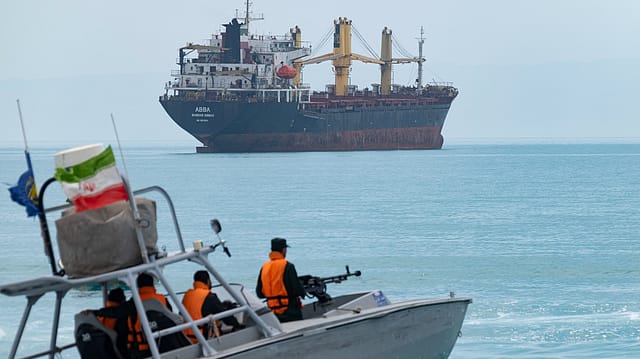
Amid escalating tensions in West Asia and disruptions to global energy routes, Iran has granted transit permission to two Indian-flagged liquefied petroleum gas (LPG) carriers through the strategically vital Strait of Hormuz. The move comes as New Delhi monitors the safety of Indian vessels and seafarers operating in the volatile Persian Gulf region.
Which Indian vessels have been allowed to pass through the Strait of Hormuz?
Iranian authorities have allowed two Indian-flagged LPG carriers to transit the Strait of Hormuz. One of the vessels, Shivalik, was last reported by vessel-tracking platform MarineTraffic to be in the Gulf of Oman and is expected to reach its destination by March 21.
According to India’s Ministry of Ports, Shipping and Waterways, the situation in the Persian Gulf remains under close watch. The ministry said 24 Indian-flagged vessels carrying 668 Indian seafarers are currently operating in the region. Another 76 Indian seafarers remain aboard three vessels east of the Strait of Hormuz.

Flood and Fury
04 Sep 2026 - Vol 05 | Issue 36
Devighat, Nepal, August 29, 2026
The ministry noted that the Directorate General of Shipping continues coordinating with ship owners, RPSL agencies and Indian missions abroad to ensure the safety of crews and ships.
Since activating a 24-hour maritime control room, authorities have handled more than 2,425 calls and 4,441 emails, while facilitating the safe repatriation of over 223 stranded Indian seafarers.
Why is Iran assuring safe passage to Indian-bound ships?
Iran’s Ambassador to India, Mohammad Fathali, confirmed that Tehran would ensure safe passage for ships bound for India through the Strait of Hormuz, emphasising the long-standing relationship between the two countries.
Answering a question on whether Iranian authorities would allow Indian-bound vessels to transit the crucial energy corridor, Fathali said, "Yes. Because India and I are friends. You can see the future, and I think that after two or three hours. Because we believe that. We believe that Iran and India are friends. We have common interests; we have a common fate."
He further stressed the shared responsibility between the two nations, adding, "Suffering of the people of India is our suffering and vice versa. And for this reason, the government of India help us, and we should help the government of India because we have a common fate and common interest."
Why has the Strait of Hormuz become a flashpoint in the current conflict?
Amid the ongoing conflict, Iranian officials maintain that the Strait of Hormuz has not been formally closed, though the volatile security environment has disrupted maritime traffic.
Abdul Majid Hakeem Ilahi, the Representative of Iran’s Supreme Leader in India, said Iran never intended to block the vital shipping route, even though many vessels are currently unable to pass safely.
"Iran has not closed the Strait. It remains open; however, due to current conditions and circumstances, ships are unable to pass through the Hormuz. Otherwise, Iran never wanted the Strait to be closed or blocked. Some (ships) are still passing through," he said.
Ilahi also urged global leaders to pressure US President Donald Trump to end the conflict, saying rising oil prices are affecting people worldwide.
"Those who initiated this war are the very ones who must stop it... Many people across the world are suffering due to this war. World leaders must unite and exert pressure on the President of the United States, urging him to put an immediate stop to this unjust war," he added.
The latest crisis in West Asia began on February 28, when tensions escalated between Iran and a US-Israel alliance. The situation intensified after the killing of Iran’s Supreme Leader Ali Khamenei in joint military strikes by the United States and Israel.
Iran subsequently retaliated by targeting Israeli and US assets across several Gulf countries and Israel, disrupting shipping routes and rattling global energy markets.
(With inputs from ANI)