Why Pakistan Army Chief Asim Munir Is Being Called the “De Facto Leader”
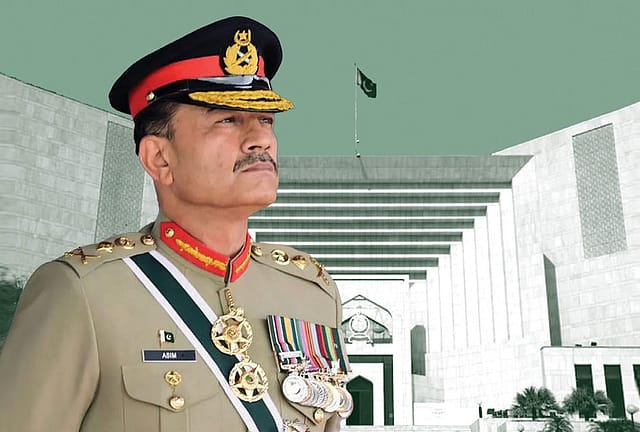
A fresh political debate has been triggered in Pakistan after former minister Fawad Chaudhry made a striking claim about the country’s power structure. In an interview, he asserted that there are "no two opinions" about who is truly in charge.
“There are no two opinions that Pakistan Army Chief Asim Munir is the de facto leader of Pakistan. The decision-making right now rests with the Army chief -- the Field Marshal,” Chaudhry stated.
His remarks reinforce a long-standing perception that the military plays a dominant role in Pakistan’s governance, often overshadowing elected civilian leadership.
Why is Asim Munir being seen as the ‘de facto leader’?
Chaudhry pointed to recent international developments to support his claim, particularly remarks by Donald Trump.
“At the moment, even yesterday, if you see, President Donald Trump referred to Pakistan Army Chief Asim Munir as the leader of Pakistan and did not even bother to mention Shehbaz Sharif. That makes it very clear -- there are no two opinions that Pakistan Army Chief Asim Munir is the de facto leader of Pakistan,” he added.
According to him, such references from global leaders highlight where real authority lies, sidelining Prime Minister Shehbaz Sharif.
What role did recent diplomatic talks play?
Pakistan recently hosted talks in Islamabad involving delegations from the United States and Iran, aimed at easing tensions in West Asia. The prominence of Army Chief Asim Munir during these discussions further fueled perceptions of military dominance in policymaking.

Open Minds 2026
26 Jun 2026 - Vol 05 | Issue 26
The power of ideas and arguments in 50 portraits
How is the West Asia conflict affecting Pakistan?
Beyond politics, Chaudhry also warned about the economic fallout of the ongoing regional conflict.
“The war must end, and we get back to normal. The economic impact in Pakistan is obviously far greater because, you know, the kind of pressure on our foreign reserves cannot afford such an expensive import. And, as you know, oil prices and gas prices have really gone up. The people of Pakistan, especially the middle class, are already feeling the heat, and it's getting difficult, very difficult, actually,” he stated.
Rising oil and gas prices are putting immense strain on Pakistan’s already fragile economy, with foreign reserves under pressure.
Is food security now at risk?
The conflict has also disrupted fertiliser and fuel supplies globally, pushing up food prices. For a country like Pakistan, which relies heavily on imports, this raises serious concerns about food security and affordability.
(With inputs from ANI)