Asim Munir in Tehran After Islamabad Dead End: The Latest From US-Iran Talks
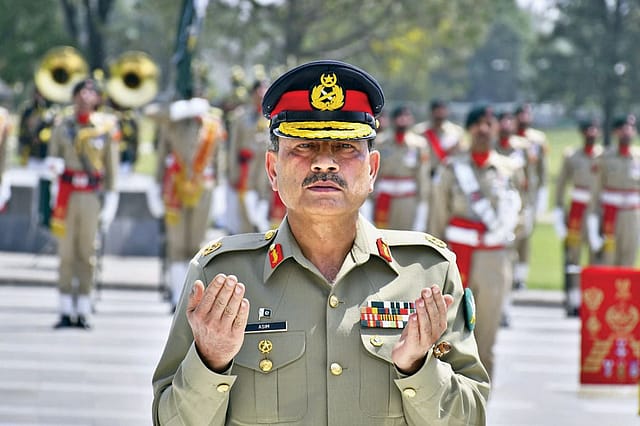
In a high-stakes diplomatic moment for West Asia, Pakistan’s Army Chief General Asim Munir has landed in Tehran carrying what is being described as a crucial message from the United States. The visit comes as tensions between Iran and the United States remain precariously balanced on a fragile ceasefire, with parallel efforts by the United Arab Emirates to reopen dialogue adding a fresh diplomatic dimension.
Is Pakistan the last bridge between Washington and Tehran?
General Munir’s visit is being seen as a last-ditch attempt to revive stalled negotiations after the “Islamabad Talks” failed to produce a breakthrough. Accompanied by Interior Minister Mohsin Naqvi, Munir was received by Iranian Foreign Minister Abbas Araghchi.
According to Iranian state media and diplomatic sources, the Pakistani delegation is carrying a specific new message from Washington outlining a possible framework for a second round of high-level negotiations.

The Grand Design
17 Jul 2026 - Vol 05 | Issue 29
How the Modi government is planning to get its biggest political agenda passed in Parliament
The urgency stems from signals sent by US President Donald Trump, who made it clear that while extending the ongoing two-week ceasefire is not under consideration, diplomacy remains preferable. Speaking to ABC News’ Jonathan Karl, Trump said, "I think you're going to be watching an amazing two days ahead. I really do."
He further added, "It could end either way, but I think a deal is preferable because then they can rebuild," while asserting that "no matter what, we took out the radicals."
Can fresh talks break the deadlock over Iran’s nuclear programme?
The renewed diplomatic push follows an intense 21-hour round of direct talks held on April 11–12 between US Vice President JD Vance and Iranian officials, which ultimately collapsed over “red line” disagreements—primarily concerning Iran’s nuclear programme.
Vance had described Washington’s proposal as its “final and best offer,” even as Trump moved to escalate pressure by announcing a naval blockade of the strategically critical Strait of Hormuz to curb what he called Iranian “extortion.”
Despite the breakdown, diplomatic channels remain active. Reports suggest a second round of talks could take place within 48 hours, with Steve Witkoff and Jared Kushner expected to play key roles. While a European venue was initially considered, Trump has indicated that Islamabad may now host the next round.
A US official, quoted by CNN, noted, "Future talks are under discussion, but nothing has been scheduled at this time."
Why is the UAE reopening dialogue with Iran now?
In a parallel diplomatic development, the UAE has initiated its first high-level contact with Iran since hostilities erupted in February. UAE Vice President Sheikh Mansour bin Zayed Al Nahyan held a phone call with Iranian Parliament Speaker Mohammad Bagher Ghalibaf.
The conversation, according to state news agency WAM, focused on “regional developments and ways to de-escalate tensions,” marking a notable shift from the confrontational stance that followed Iranian missile strikes on Abu Dhabi and Dubai earlier this year.
Just weeks ago, relations had sharply deteriorated, with the UAE recalling its ambassador, shutting its embassy in Tehran, and condemning the attacks as “blatant and irresponsible” violations of sovereignty.
The renewed outreach reflects Abu Dhabi’s strategic concerns over economic stability, particularly as a prolonged conflict and the US-led blockade threaten global oil flows and the UAE’s position as a major logistics and financial hub.
(With inputs from ANI)