Donald Trump Delays Iran Strike Amid “Very Big Discussions” With Tehran
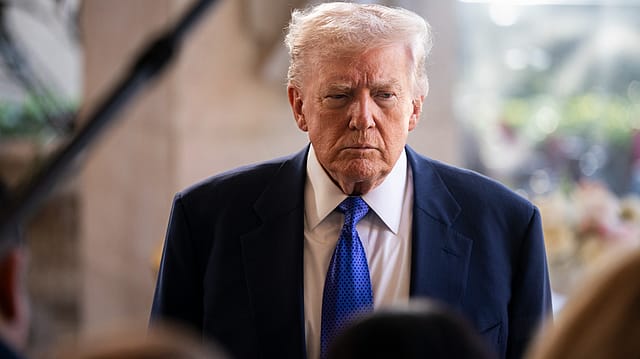
The United States appears to be pausing on the brink of military escalation with Iran, at least temporarily. President Donald Trump has confirmed that a planned attack has been “put off” following what he described as “very big discussions” with Tehran, raising cautious hopes of a diplomatic breakthrough in the West Asia crisis.
What exactly did Trump say about delaying the attack?
Trump made it clear that the decision is not permanent, but a short-term pause driven by ongoing negotiations and requests from key regional allies.
“I put it (attack on Iran) off for a little while, hopefully maybe forever, but possibly for a little while because we've had very big discussions with Iran and we'll see what they amount to. I was asked by Saudi Arabia, Qatar, UAE and some others if we could put it off for two or three days, a short period of time, because they think that they are getting very close to making a deal...It's a very positive development, but we'll see whether or not it amounts to anything,” said President Trump.
The statement signals both optimism and uncertainty, suggesting diplomacy is active but far from guaranteed.
Why are regional countries pushing for a delay?
Countries like Saudi Arabia, Qatar, and the United Arab Emirates are deeply exposed to any escalation in the region. Their request for a pause indicates that backchannel negotiations may be progressing toward a potential agreement.
Trump acknowledged this growing diplomatic push, saying multiple nations are directly engaging both Washington and Tehran.
“I was called by these three countries, plus others, and they're dealing directly with our people and right now, Iran. There seems to be a very good chance that they can work something out. If we can do that without bombing the hell out of them, I will be very happy,” said Trump.

Open Minds 2026
26 Jun 2026 - Vol 05 | Issue 26
The power of ideas and arguments in 50 portraits
This underscores a rare moment where regional actors are actively trying to prevent conflict rather than preparing for it.
What is the US stance on Iran’s nuclear programme?
Despite the pause, Trump reiterated a hardline position on Iran’s nuclear ambitions, leaving little ambiguity about Washington’s red lines.
“We have the greatest military in the world. We're not going to let Iran have a nuclear weapon,” he said, referencing a conversation with Xi Jinping.
This indicates that while diplomacy is ongoing, the threat of military action remains firmly on the table if negotiations fail.
What is happening on the ground right now?
Even as talks continue, the United States is maintaining pressure on Iran through enforcement actions.
The United States Central Command (CENTCOM) said: “CENTCOM continues to strictly enforce the U.S. blockade against Iranian ports. U.S. forces have now redirected 85 commercial vessels to ensure full compliance.”
This suggests that while bombs may be on hold, economic and strategic pressure is still intensifying.
Why did the US reject Iran’s latest proposal?
The pause comes despite Washington rejecting Tehran’s most recent peace proposal. According to US officials cited by Axios, Iran’s revised offer made only minor changes and failed to meet key US expectations.
This reflects a central tension: diplomacy is active, but both sides remain far apart on core issues, particularly sanctions relief, uranium stockpiles, and broader security guarantees.
Is a deal actually close?
That remains the biggest unanswered question. Trump’s language hints at cautious optimism, but also skepticism.
While he called the situation a “very positive development,” he also added, “we'll see whether or not it amounts to anything.”
In essence, the crisis sits at a fragile crossroads. A deal could de-escalate tensions significantly, but failure could quickly bring military options back into focus.
(With inputs from ANI)