Iran in Crisis Mode: President Threatens to Fire FM Araghchi Over Alleged IRGC Backchannel
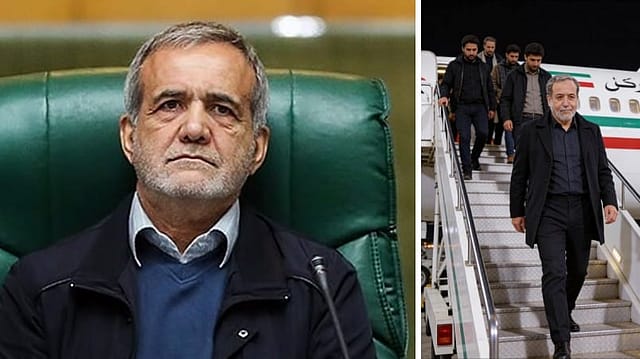
Tensions within the Iranian leadership have reached a critical point as President Masoud Pezeshkian and Parliament Speaker Mohammad Bagher Ghalibaf reportedly seek the removal of Foreign Minister Abbas Araghchi.
According to Iran International, a UK-based media outlet focused on Iranian affairs, the two leaders have accused Araghchi of bypassing the presidency to follow directives from the Revolutionary Guard.
The discord stems from allegations that Araghchi has acted less as a cabinet minister and more as an aide to Ahmad Vahidi, the commander of the Revolutionary Guards.
Sources familiar with the matter indicated that the Foreign Minister has been operating in full coordination with Vahidi, allegedly implementing policies based on his directives without keeping President Pezeshkian informed.
This internal rift has caused deep dissatisfaction for Pezeshkian, who has reportedly expressed to those in his inner circle that he will dismiss Araghchi if the current situation persists.
What sparked the Iran leadership rift between Pezeshkian and Vahidi?
As noted by Iran International, the President feels undermined by the Foreign Minister's shift towards the military command during sensitive diplomatic manoeuvres.
These developments follow earlier reports of significant divisions within the Islamic Republic's administration.

Open Minds 2026
26 Jun 2026 - Vol 05 | Issue 26
The power of ideas and arguments in 50 portraits
Disagreements between Pezeshkian and Vahidi were previously highlighted on 28 March, with sources telling Iran International that the dispute was rooted in "the handling of the war and its destructive consequences for people's livelihoods and the country's economy."
The power struggle has reportedly left the President in a "complete political deadlock", with claims that he has been stripped of the authority to appoint replacements for government officials killed during the conflict.
Vahidi has reportedly asserted that, due to the wartime emergency, all sensitive managerial posts must be directly selected and run by the Revolutionary Guards.
On the legislative front, the internal friction was visible on 27 April when a group of hardline lawmakers refused to sign a parliamentary statement backing the negotiating team.
Despite support from 261 other MPs, prominent figures aligned with Saeed Jalili withheld their signatures, illustrating the fractured nature of the domestic political landscape.
According to Iran International, this parliamentary dissent followed the resignation of Speaker Ghalibaf as the head of the negotiating team after he was reprimanded for attempting to include nuclear energy issues in the talks.
Araghchi subsequently sought to take over the leadership of the negotiations, eventually travelling to Islamabad alone on 24 April to deliver a proposal that was later rejected by the US President.
(With inputs from ANI)