India Condemns Mali Terror Attacks, Mourns Defence Minister Sadio Camara
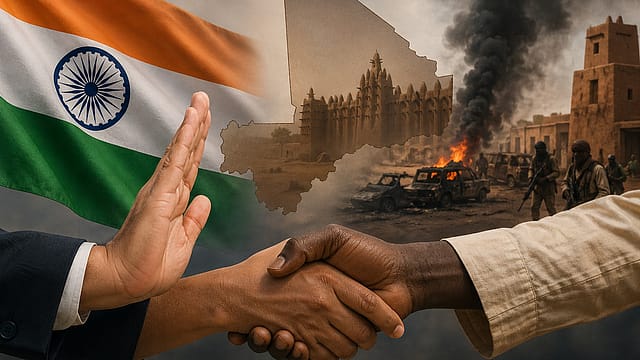
India has strongly reacted to the recent wave of terrorist attacks in Mali, condemning the violence and expressing solidarity with the affected nation. In an official statement, the Ministry of External Affairs said India "strongly condemns the terrorist attacks in Mali targeting multiple locations" and extended condolences to the victims’ families.
The statement added, "India strongly condemns the terrorist attacks in Mali targeting multiple locations. We extend our deepest condolences to the families of the victims and express our solidarity with the Government and people of Mali in this difficult time."
Who was Sadio Camara and what happened to him?
India also addressed the death of Sadio Camara, Mali’s Defence Minister and Minister of Veterans Affairs, who was killed during the attacks. Offering condolences, the statement said, "We also express our sincere condolences on the demise of General Sadio Camara, Minister of Defence and Veteran Affairs of Mali, in the terror attack."
His death marks a major blow to Mali’s leadership at a time when the country is already grappling with severe security challenges.
What exactly happened during the attacks?
According to reports, the attacks were coordinated and targeted multiple locations, including military installations in the capital, Bamako, as well as other regions. The violence also included an assault on Camara’s residence in Kati a day before the larger attacks.

Survival Instinct
22 May 2026 - Vol 04 | Issue 72
India navigates global economic turmoil with austerity and smart diplomacy
Mali’s armed forces described the situation in stark terms. "The General Staff of the Armed Forces informs the public that unidentified armed terrorist groups targeted certain locations and barracks in the capital and the interior early this morning... Fighting is ongoing," the military said in a statement.
Who is believed to be behind the attacks?
The Al-Qaeda-linked group Jama'at Nusrat al-Islam wal-Muslimin (JNIM) has claimed responsibility for several of the attacks, including those in Kati and near Bamako’s airport. Reports also suggest that Tuareg rebel groups may have been involved in the coordinated assaults across regions such as Mopti, Sevare, and Gao.
These developments underline the persistent threat posed by extremist and insurgent groups operating in Mali and the wider Sahel region.
Why is Mali facing repeated instability?
Mali has been dealing with chronic instability, which intensified after Assimi Goita seized power in a 2021 coup. Since then, the country has struggled to contain insurgencies despite promises to restore security.
The latest attacks highlight the continuing fragility of Mali’s security environment and raise questions about the effectiveness of current counterterrorism efforts.
How has India positioned itself on terrorism?
Reiterating its broader global stance, India emphasised its commitment to fighting terrorism. The MEA stated, "India reiterates its firm commitment to combating terrorism in all its forms and manifestations and supports efforts to ensure peace and stability in the region."
This aligns with India’s long-standing position of supporting international cooperation to counter terrorism and promote regional stability.
Why do these developments matter globally?
The attacks are significant not just for Mali but for global security dynamics, especially in regions vulnerable to extremist activity. The killing of a senior government official, combined with coordinated assaults on military infrastructure, signals an escalation that could have wider implications for the Sahel and beyond.
India’s response reflects both diplomatic solidarity and a broader concern about the spread of terrorism, reinforcing the need for coordinated international action.
(With inputs from ANI)