India-Afghanistan Relations: Moments That Shaped a Strategic Bond
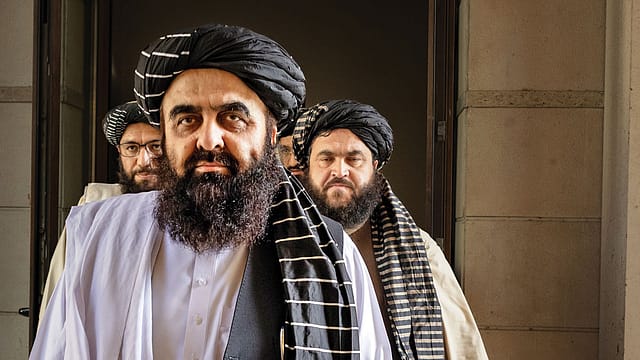
India-Afghanistan relations have long rested on development diplomacy rather than military alignment. As regional equations shift, some defining moments help explain how New Delhi built influence in Kabul through infrastructure, humanitarian aid, and people-first engagement.
Here’s how some moments shaped India–Afghanistan ties.
How did India lay the foundation of modern ties with Afghanistan?
The relationship deepened post-2001, when India re-entered Afghanistan as a major development partner. India has committed over US$3 billion in humanitarian and development assistance to Afghanistan since 2001, with more than 500 projects undertaken, according to India’s Ministry of External Affairs.
Why was the Friendship Dam a turning point in India-Afghanistan relations?
The Afghan–India Friendship Dam, formally known as the Salma Dam, symbolized India’s shift from aid provider to infrastructure builder. Inaugurated in 2016, it provides roughly 42 MW of hydroelectric power and irrigation for tens of thousands of hectares in Herat province.
The project is widely cited as a flagship infrastructure investment by India.
What role did Hamid Karzai play in expanding bilateral cooperation?
Under former Afghan president Hamid Karzai, economic and cultural ties accelerated. India backed the construction of parliament buildings, highway links, and vocational training. Bilateral trade crossed $1.5 billion before 2020, driven by Afghan exports of dry fruits and Indian pharmaceutical supplies.

Exclusive: To the Heavens and Back
19 Jun 2026 - Vol 04 | Issue 76
Shubhanshu Shukla relives the space odyssey that put India into orbit
How did humanitarian aid reshape India’s engagement after 2021?
Following the Taliban takeover, India recalibrated its approach around humanitarian aid. New Delhi sent wheat, medicines, winter clothing, and earthquake relief directly and through UN agencies.
This shift preserved goodwill while avoiding formal diplomatic recognition, keeping India present through people-centric assistance rather than political alignment.
Why did Greater Noida Stadium become Afghanistan’s cricket home?
When security concerns barred home fixtures, India offered the Greater Noida Stadium as Afghanistan’s home ground. The move gave Afghan cricket continuity and visibility. Beyond sport, it reinforced India-Afghanistan relations at a grassroots level, strengthening cultural ties through shared public spaces.
How important is economic connectivity in the current relationship?
Trade corridors now anchor strategic planning. India uses Iran’s Chabahar Port to bypass Pakistan, enabling Afghan exports to reach Indian markets. Through Chabahar Port, Afghanistan gained direct access to India, reinforcing trade as a stabilizing force in India-Afghanistan relations amid shifting regional alliances.
What do experts say about India’s evolving Afghanistan strategy?
According to eGrow Foundation, policy analysts argue that India must balance humanitarian outreach with regional security concerns, especially amid growing Chinese and Pakistani influence.
The emphasis, they note, is on soft-power tools such as education scholarships, food assistance, and healthcare rather than overt geopolitical competition.
What recent shifts in early 2026 changed India–Afghanistan ties?
In January 2026, Noor Ahmad Noor assumed charge as Charge d’Affaires at Afghanistan’s embassy in New Delhi. While short of formal recognition, the move marked a clear diplomatic recalibration, signalling India’s shift from a technical mission toward limited functional engagement with Kabul.
How did India’s 2026 Union Budget signal a shift in Afghanistan policy?
In this Union Budget, India also raised its development assistance to Afghanistan to ₹150 crore, up from ₹100 crore. The increase underscored New Delhi’s renewed focus on development diplomacy, signalling that humanitarian aid and reconstruction remain central to India-Afghanistan relations despite political uncertainty.
What lies ahead for India-Afghanistan relations?
With formal diplomacy limited, engagement now depends on humanitarian aid, trade access, and multilateral coordination. Many warn that sustaining economic links will require flexible payment mechanisms and regional cooperation.
Much as in its development-first past, India’s future engagement with Afghanistan now hinges on patience, regional coordination, and the preservation of hard-earned goodwill.
(With inputs from yMedia)