How the Iran Conflict Is Strengthening China’s Global Standing
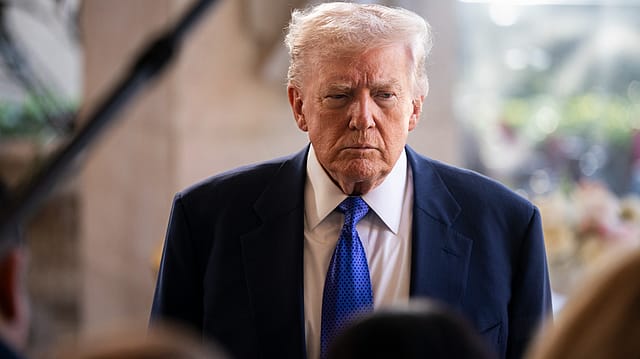
A conflict intended to project American strength is instead reshaping global power equations. As US escalates its military campaign against Iran, China is quietly emerging as a strategic beneficiary, observing, learning and expanding its diplomatic reach.
Speculation has swirled around the motivations behind US President Donald Trump’s actions, with some suggesting a calculated attempt to disrupt China’s oil supply chains. Yet such theories may overestimate strategic intent.
What is more evident is a pattern of overconfidence within US leadership that has triggered a wider geopolitical crisis. The ongoing assault on Iran, conducted in coordination with Israel, appears to lack a clearly defined endgame. In response, Tehran has turned to asymmetric warfare, targeting the Strait of Hormuz and threatening global energy flows.
Why Does the Conflict Reveal Gaps in US Preparedness?
The US response has exposed significant operational shortcomings. Iran’s retaliation reportedly caught Washington off guard, highlighting gaps in planning and readiness. Even two weeks into the conflict, critical deployments, such as the Japan-based 31st Marine Expeditionary Unit, were only being mobilized.
The reliance on air and naval power, without adequate ground preparedness, underscores a reactive strategy. Meanwhile, essential mine-hunting naval assets remain positioned far from the conflict zone, forcing Washington to seek international assistance to secure maritime routes.
How Is China Interpreting the Crisis?
For Beijing, the unfolding conflict offers both insight and opportunity. China is closely observing US military tactics, identifying both strengths and vulnerabilities.
The Abandoned Kejriwal
01 May 2026 - Vol 04 | Issue 69
Brain drain from AAP leaves Arvind Kejriwal politically isolated
As Dr. Malcolm Davis of the Australian Strategic Policy Institute said, “The Iran war is a learning laboratory for the PLA. Make no mistake, this is a valuable opportunity for China to gain more insight into the American way of war.”
Beyond military learning, the prolonged conflict is expected to drain US resources, weakening its global readiness and indirectly benefiting China’s strategic positioning.
Has US Policy Contradicted Its Own Strategy?
The escalation stands in stark contrast to the US National Security Strategy released just months earlier, which suggested that Middle East conflicts were no longer central to American foreign policy. The document had asserted that “America's historic reason for focusing on the Middle East will recede” and that the region was evolving into “a place of partnership, friendship and investment.”
Recent developments have effectively reversed that stance, pulling Washington back into prolonged conflict and undermining its own strategic narrative.
Are Decisions Being Driven by Instinct Rather Than Strategy?
Trump himself acknowledged acting on instinct, stating he launched the attack because he “had a good feeling that the Iranian regime was going to strike.”
White House press secretary Karoline Leavitt clarified this was “a feeling based on facts,” though the reliance on a small advisory circle has raised questions about the depth of strategic planning.
Will the War Stretch US Military Capacity?
Experts warn that the conflict could extend for months, significantly straining US military resources.
Davis observed, “The Iran war is likely to continue for many weeks (best case) to several months (worst case)... US weapon stocks are being drawn down.”
Such a prolonged engagement risks weakening US readiness in other critical regions, including the Indo-Pacific and Europe.
Why Is the US Seeking Global Support Mid-Conflict?
In a notable shift, Trump has urged countries including China, Japan, France, and the UK to contribute naval support to secure the Strait of Hormuz.
This appeal underscores a paradox: the US initiated the conflict but is now seeking collective responsibility to manage its consequences.
Is China Positioning Itself as a Diplomatic Alternative?
China has responded with a markedly different tone. Foreign Minister Wang Yi stated, “This is a war that should not have happened - it is a war that does no one any good.”
Yi further emphasised that “the US and Israel attacked Iran in the process of the ongoing US-Iran negotiation, which clearly violates international law”.
Beijing has advocated dialogue and multilateral engagement, positioning itself as a proponent of stability and negotiation.
Are US Alliances Beginning to Fracture?
Public sentiment across Western allies appears to be shifting. A Politico survey found growing skepticism toward US leadership, with some respondents viewing China as a more reliable partner.
Mark Lambert said, “The administration has assisted the Chinese narrative by acting like a bully. Everyone still recognizes the challenges China poses - but now, Washington no longer works in partnership and is only focused on itself.”
This erosion of trust is enabling China to deepen ties across Europe and Asia.
Is the Global Power Balance Quietly Shifting?
The broader geopolitical implications are significant. While rivalry between the US and China remains entrenched, the current crisis is accelerating a shift toward a more multipolar world.
Analysts suggest that even if tensions ease, competition across technology, economics, and security will persist, with smaller nations navigating an increasingly complex global order.
What Does This Mean for Flashpoints Like Taiwan?
The situation carries serious implications for regions like Taiwan.
Yu-Jie Chen warned, “In Taiwan, such speculation has revived a familiar concern: that Taiwan might once again be treated as a bargaining chip in Washington's broader dealings with Beijing.”
As US focus shifts back to the Middle East, concerns are rising about its ability to manage simultaneous strategic challenges.
Can the US Regain Strategic Control?
Despite ongoing tensions, diplomatic engagement between Washington and Beijing continues, with planned high-level meetings still on track.
However, unpredictability in US policy remains a key concern. As Ryan Hass cautioned, “If President Trump thinks he's building leverage with Beijing by threatening to postpone his visit, he's going to find disappointment.”
(With inputs from ANI)