Beijing Drone Sales Ban: Is the World's Drone Capital Turning Against Its Own Industry?
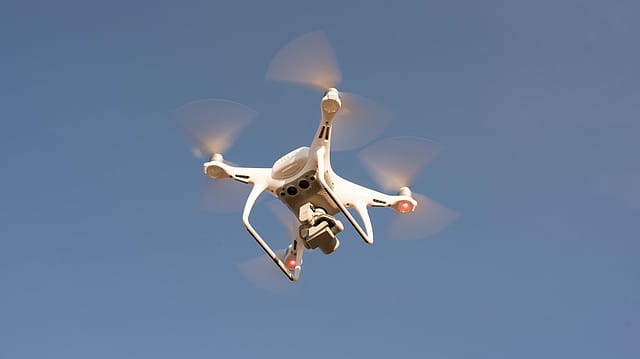
On May 1, Beijing enacted a sweeping ban on drone sales, rentals, transport, and storage, making it the first Chinese municipality to take such a comprehensive step.
The move comes amid tightening national regulations and growing concerns over low-altitude airspace security in a city housing China's most sensitive government and military infrastructure.
What Triggered Beijing's Drone Sales Ban?
A senior Beijing city official reportedly described tightening drone regulations as an "urgent task," citing mounting security challenges in low-altitude airspace, according to The Mainichi.
Rules tightened in March preceded the May 1 deadline, with retail stores clearing stock in late April.
Which Drones Are Banned?
The ban covers sales, rentals, transport, and storage of drones along with 17 major flight control and communication components.
Exemptions apply to universities, research institutions, law enforcement, counterterrorism, disaster relief, and agriculture.
How Severe Are the Penalties?
Individuals face fines of up to 5,000 yuan (approximately $730), while companies risk 10,000 yuan penalties.
According to Caixin Global, authorities plan security inspections at city entry points, with violators handed over to police.

The Abandoned Kejriwal
01 May 2026 - Vol 04 | Issue 69
Brain drain from AAP leaves Arvind Kejriwal politically isolated
Storage facilities within Beijing's Sixth Ring Road are capped at three drones or ten core components.
What Happens to Existing Drone Owners?
Existing owners must register with authorities within three months.
Registered owners will reportedly be permitted to transport drones in and out of the city under specific conditions.
Is This Strangling China's Low-Altitude Economy?
The ban risks undermining Beijing's own ambitions for a low-altitude economy covering commercial activities below 1,000 metres.
As per The New York Times, drone dealers reported declining sales even before the ban, with used listings rising and online platforms blocking deliveries to Beijing addresses.
What Does This Mean for DJI and Global Drone Sales?
Lizzi C. Lee, a fellow on the Chinese economy at the Asia Society Policy Institute, told Ars Technica that the direct impact on DJI should be limited, as Beijing represents a small slice of demand.
DJI holds between 70 and 80 percent of the global commercial drone market.
DJI's larger challenge remains in the US, where the Federal Communications Commission ruled in December 2025 to stop authorising new foreign-made drone models.
DJI has since filed an appeal with the US 9th Circuit Court of Appeals.
Could Beijing's Model Go National?
Starting May 2026, drone pilots across China must register with real names and link flight data to official identification, mirroring the US Federal Aviation Administration's Remote ID framework.
What’s The Bigger Picture?
Beijing's ban is less a rejection of drones and more a controlled experiment in lifecycle regulation.
Whether it delivers genuine security gains without stifling innovation will determine how far this model travels.
(With inputs from yMedia)