Eat the Cake, Lose the Weight? The Counterintuitive Truth
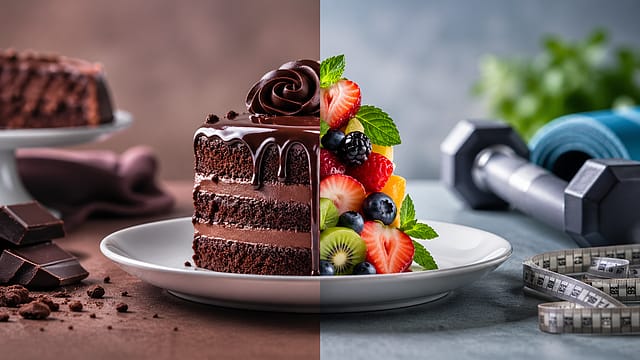
The conventional wisdom around weight loss has long rested on one idea: restrict, reduce, resist.
But a growing body of research is challenging that. According to emerging studies in psychology and nutritional science, how you think about what you eat may matter as much as what you actually eat.
Does Your Brain Know What You're Eating?
The mind-body connection runs deeper than most assume.
According to BBC Science Focus, expectation, not just caloric intake, directly shapes the brain's perception of hunger and satiation.

Rise of the Pivotal Power
18 Sep 2026 - Vol 05 | Issue 38
The BRICS declaration is a strategic victory for Modi
The implications for health and diet culture are considerable.
Can a Milkshake Trick Your Hormones?
In a widely cited experiment, Stanford University psychologist Alia Crum gave participants the same 380-calorie milkshake but told one group it was a 620-calorie indulgent shake and another it was a 140-calorie healthy option.
Reportedly, those who believed they were drinking the indulgent version experienced a significantly sharper drop in ghrelin, the hunger-stimulating hormone.
The food was identical. The mindset was not.
When the brain anticipates a pleasurable meal, it triggers the Cephalic Phase Digestive Response, releasing enzymes and hormones that process food more efficiently - a phenomenon Crum links to mindset.
Is the 'Healthy' Label Making You Hungrier?
Labelling has measurable consequences.
Participants who ate a protein bar labelled "healthy" reportedly felt less satisfied and consumed more food afterward than those who ate the same bar labelled "tasty."
The health label suppressed the expectation of pleasure, and the body responded accordingly.
Does Guilt Around Food Slow Weight Loss?
Research suggests it does.
Those who felt guilty after eating something indulgent were found to be less successful at losing weight.
A restraint mindset, according to Crum, can slow metabolism. "If you're in a restraint mindset, that will keep you from losing as much weight," she told the BBC.
Are Ultra-Processed Foods Disrupting Your Hunger Cues?
Ashley Gearhardt, a professor of psychology at the University of Michigan, reportedly described to the BBC that ultra-processed food as being like "a heavy metal concert," designed to drown out the subtler signals of whole food, making natural hunger regulation harder to maintain.
Should You Stop Restricting and Start Enjoying Food?
Crum advocates for a "mindset of indulgence," trusting the body to want what it needs.
Gearhardt recommends shifting focus to unprocessed proteins, fruits, and vegetables, not as punishment, but as foods the body is naturally wired to find rewarding.
The takeaway for weight loss is simple: eat with intention, drop the guilt, and let the body do what it was designed to do.
(With inputs from yMedia)