From Price Control to Public Safety: Inside Bangladesh PM Tarique Rahman’s 180-Day Action Plan
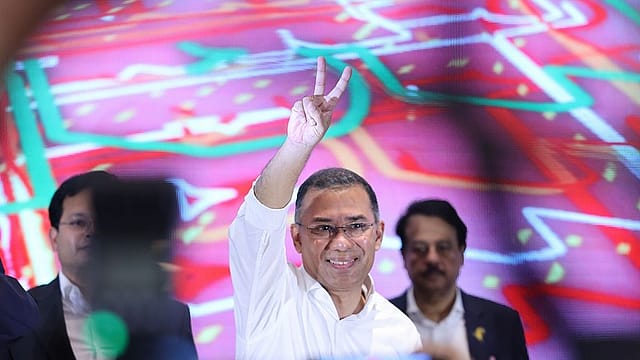
In his first address to the nation after taking oath, Bangladesh’s newly sworn-in Prime Minister Tarique Rahman laid out an ambitious 180-day roadmap, promising to restore order, rein in prices, and reset governance with a firm anti-corruption push.
Tarique Rahman, who was sworn in on Tuesday, has expanded the traditional 100-day priority framework into a 180-day action plan, signalling what many see as a longer political “honeymoon” and a broader mandate for urgent reforms.
“Restoring peace and security in the minds of the public by eliminating crime and strictly controlling corruption is the primary focus of our government's agenda,” Rahman said while addressing the nation late on Wednesday.
Improving law and order sits at the top of Rahman’s government’s agenda. Alongside a crackdown on crime, Rahman has placed strong emphasis on rooting out corruption across ministries and public institutions. He has instructed every ministry to craft and execute its own detailed action plan within the 180-day window, underscoring a results-driven approach.
Echoing the Prime Minister’s firm tone, Home Minister Salauddin Ahmed declared that mob violence would no longer be tolerated. He told journalists that such incidents had effectively ended and assured that the overall security situation, including drug control measures, was being handled strictly.
Exclusive: To the Heavens and Back
19 Jun 2026 - Vol 04 | Issue 76
Shubhanshu Shukla relives the space odyssey that put India into orbit
What is Tarique Rahman’s message on controlling prices, power supply and public transport?
The second major pillar of Rahman’s plan focuses squarely on the cost of living. With inflation and rising essential commodity prices straining households, the government has pledged to bring relief.
Rahman has prioritised controlling the prices of essential goods, ensuring uninterrupted electricity and gas supply, and reducing overall living costs. On the occasion of the holy Ramzan, he extended warm wishes to citizens and urged businesses to act responsibly so that prices remain within the reach of ordinary people.
“The BNP government must be compelled to break all syndicates of misconduct and irregularities,” he warned, in a clear message to market cartels and profiteers.
Infrastructure reform, particularly in transport, also features prominently. Rahman has called for urgent improvements in public transport systems, especially the railway network, to strengthen connectivity and ease public hardship.
What is the ‘Bangladesh First’ message by Tarique Rahman?
While Rahman did not elaborate extensively on foreign policy in his address, Foreign Minister Kalilur Rahman later articulated the guiding principle of the new administration as “Bangladesh First.” The approach aims to prioritise national interests while maintaining friendly ties with all countries, drawing continuity with the foreign policy legacy of the late President Ziaur Rahman.
Domestically, Rahman sought to send a message of unity across religious and regional lines.
“I would like to address a message to the people of the country: Muslim, Hindu, Buddhist, Christian, and regardless of religion, whether living in the hills or in the plains--this country is all of ours. For every citizen, we want to turn this country into a safe place,” Rahman said.
With a widened 180-day reform window and a strong rhetorical focus on order, affordability and accountability, Rahman’s early days in office have set clear expectations. The coming months will test whether these promises translate into tangible change for the people of Bangladesh.
(With inputs from ANI)