Explained: Why Iran Has Labelled European Armies ‘Terrorist Groups’
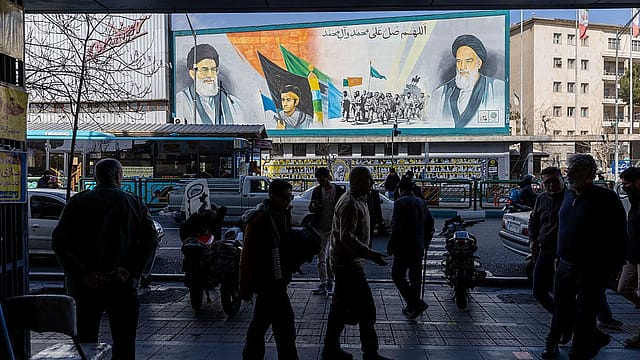
Iran has formally branded the armies of European countries as “terrorist groups”, escalating diplomatic tensions days after the European Union designated the Islamic Revolutionary Guard Corps (IRGC) as a terrorist organisation.
Iranian Parliament Speaker Mohammad Baqer Qalibaf announced the move during an open session of Parliament, calling it a reciprocal response under Iranian law to what Tehran views as an “unlawful and politically motivated” EU decision.
According to Iran’s state broadcaster Press TV, Qalibaf invoked Article 7 of Iran’s law on reciprocal action against the United States’ 2019 designation of the IRGC, stating that the same legal framework would now apply to European military forces.
The Modi Years
02 Oct 2026 - Vol 05 | Issue 40
A Nation Rebuilt
“The IRGC is the world’s most unique anti-terrorism institution,” Qalibaf said, crediting the force with playing a decisive role in defeating the Islamic State (Daesh) in the region and eliminating what he described as a global terrorist threat.
Defending the organisation, he highlighted its sacrifices in counterterrorism operations, noting that the IRGC had lost hundreds of personnel, including senior commander Lieutenant General Qassem Soleimani, who was killed in a US drone strike in 2020.
Qalibaf warned that Europe would bear responsibility for the consequences of its decision, insisting that the designation would not weaken the IRGC. Instead, he argued, it would deepen public support within Iran for the force, which he said has played a vital role in national security, disaster relief, infrastructure development, and public health efforts during the COVID-19 pandemic.
The EU’s move follows similar designations by the United States in 2019, Canada in 2024, and Australia in 2025. Brussels reportedly cited Iran’s handling of recent foreign-linked unrest and regional security concerns in its decision.
Placing the development in a wider geopolitical context, Qalibaf accused European leaders of acting under pressure from Washington and Israel, warning that such actions were accelerating Europe’s decline in the emerging global order.
“By targeting the IRGC, which stood as a barrier against terrorism reaching Europe, they have effectively shot themselves in the foot,” he said, adding that Europe’s choices were increasingly running counter to the interests of its own people.
The designation comes amid heightened regional tensions, with the United States stepping up military deployments and rhetoric against Tehran, raising fears of further escalation between Iran and the West.
(With inputs from ANI)