End of War Without a Deal Risks Boosting Iran’s Grip on Regional Energy Flows
Iran launched missiles targeting Israel’s strategic northern port city of Haifa moments after US President Donald Trump claimed that Tehran’s missile programme had been destroyed following a month-long US-Israeli military campaign, according to Iranian state media Press TV.
The Israel Defense Forces confirmed the launches in a statement on Telegram, stating that defensive systems were activated.
The IDF added that the Home Front Command had issued precautionary directives to residents.
“Upon receiving an alert, the public is instructed to enter a protected space and remain there until further notice," the statement read.
"Leaving a protected space is permitted only after receiving explicit instructions. The public is requested to continue acting in accordance with the Home Front Command's guidelines," the statement added.
Can Donald Trump End the Iran War Without a Deal After Calling It “Decisive”?
The development follows Trump’s address to the nation, in which he described the campaign against Iran as a “decisive” blow and said its core objective was nearing completion.

Open Minds 2026
26 Jun 2026 - Vol 05 | Issue 26
The power of ideas and arguments in 50 portraits
However, the prospect of ending the war without an agreement has raised concerns that Tehran could retain significant leverage over Middle East energy supplies.
Gulf Arab producers may be left to deal with the fallout of a conflict they neither initiated nor controlled.
Analysts warn that rather than weakening Iran’s leadership, the conflict could strengthen it.
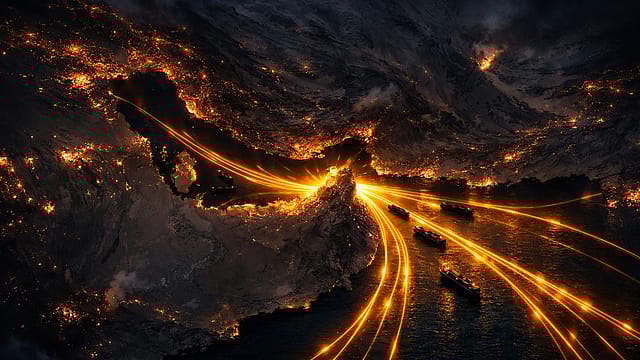
Tehran has demonstrated its capacity to retaliate, including targeting Gulf states and disrupting global energy markets by effectively shutting the Strait of Hormuz.
In an interview with Reuters, Trump said the United States would end its war on Iran “pretty quickly” and indicated he could wind down the conflict even without a deal.
Such an outcome could leave the region vulnerable, with Iran emerging undefeated and capable of threatening shipping lanes, energy flows and regional stability, while Gulf countries absorb the economic and strategic consequences.
The situation has been further complicated by what analysts describe as a miscalculation by the United States and Israel regarding Iran’s response to unprecedented strikes on its leadership.
The killing of Supreme Leader Ali Khamenei early in the conflict, intended to deliver a decisive blow, altered the trajectory of the war.
He was succeeded by his son, Mojtaba Khamenei, turning what was meant to dismantle the system into a trigger for intensified resistance and retaliation by Iran’s leadership.
(With inputs from ANI)