End of Iran War Will Be ‘Mutual’ Decision With Netanyahu: Donald Trump
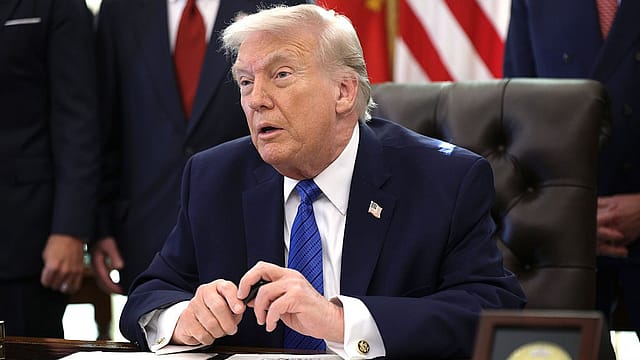
United States President Donald Trump said that the decision on when to end the ongoing conflict with Iran will be a “mutual” one taken in coordination with Benjamin Netanyahu, according to a report by The Times of Israel.
During a telephone interview with the publication, Trump claimed that the Islamic Republic had been close to destroying Israel before the current military intervention.
When asked whether the authority to halt the campaign rested solely with Washington or if Israeli leadership carried equal weight, Trump suggested the decision would be collaborative.
Flood and Fury
04 Sep 2026 - Vol 05 | Issue 36
Devighat, Nepal, August 29, 2026
“I think it's mutual, a little bit. We've been talking. I'll make a decision at the right time, but everything's going to be taken into account,” he said, indicating that he would retain the ultimate prerogative while considering Netanyahu’s input.
Will Israel Continue Military Operations if United States Halts Strikes on Iran?
Addressing the possibility that Israel might continue military operations independently if the United States halted its strikes, Trump dismissed the need for such a scenario.
The Times of Israel reported that the President declined to discuss the theoretical situation and said, “I don't think it's going to be necessary.”
The White House has suggested that the conflict could last between four to six weeks, although Trump has avoided committing to a fixed timeline.
His remarks highlight the close coordination between Washington and Tel Aviv following the joint military operation launched on February 28 that resulted in the death of Iran’s supreme leader Ali Khamenei.
The interview took place shortly after Tehran announced that Mojtaba Khamenei, the son of the former leader, had been chosen as the country’s new supreme authority.
Why Did Donald Trump Say the New Iran Leadership Would Not ‘Last Long’?
According to The Times of Israel, Trump declined to comment in detail on the appointment and said only, “We'll see what happens.”
Earlier, in remarks to ABC News, Trump had warned that the new Iranian leadership would not “last long” without approval from the White House.
The US President also entered Israeli domestic politics by renewing calls for a legal reprieve for Netanyahu.
Trump criticised Isaac Herzog for not granting a pardon to the Israeli Prime Minister, who is currently on trial for bribery, fraud and breach of trust.
“Bibi Netanyahu should be given that pardon immediately. I think [Herzog is] doing a terrible thing by not giving it. We want Bibi to be focused on the war, not on a ridiculous pardon,” Trump told The Times of Israel.
In response, Herzog’s office said that Israel “is a sovereign state governed by the rule of law,” adding that the pardon request is being processed through the Justice Ministry.
Despite earlier friction between the two leaders, Trump praised his current partnership with Netanyahu, saying, “We've done a great job together, like what we've done with Iran.”
What Did Donald Trump Claim About Iran’s Threat to Israel?
Reinforcing his justification for the conflict, Trump claimed the intervention had prevented a wider regional catastrophe.
The Times of Israel quoted him saying, “Iran was going to destroy Israel and everything else around it, and now look what we have, we have them being destroyed.”
He further credited his and Netanyahu’s leadership for Israel’s continued survival, adding that “[if] Bibi wasn't around, Israel would not exist today.”
Trump also suggested that the weakening of Tehran could affect groups aligned with Iran, including Hamas.
“Many people will disarm because of [the war against Iran],” he said, adding that “Iran is in a position that it's never known before, and it's only going to get worse for them.” He again urged Herzog to “tell this president to give him the pardon right now.”
What Did Iran’s Diplomats Say After Mojtaba Khamenei Became the New Supreme Leader?
Meanwhile, Iran’s diplomatic establishment has formally pledged allegiance to the country’s new leadership.
The Ministry of Foreign Affairs of the Islamic Republic of Iran issued a declaration supporting Ayatollah Seyyed Mojtaba Hosseini Khamenei following his appointment as the country’s new supreme authority.
The statement, shared on X by the Iranian Embassy in India, was titled “Declaration of Allegiance by the Ministry of Foreign Affairs and All Diplomats of the Islamic Republic of Iran, at Home and Abroad, to the Third Leader of the Islamic Revolution.”
Acknowledging the recent turmoil, the ministry began by “paying tribute to the martyred Leader of the Islamic Revolution and to a number of the country's senior commanders and distinguished compatriots who were martyred during the brutal aggression of the United States and the Zionist regime against the Iranian nation over the past eleven days.”
The statement congratulated the new leader and reaffirmed the constitutional process behind his appointment.
How Did Iran’s Diplomats Declare Allegiance to Mojtaba Khamenei?
It “congratulates His Eminence Ayatollah Seyyed Mojtaba Hosseini Khamenei on his worthy selection as the Third Leader of the Islamic Revolution, in accordance with the principles of the Constitution and by the decision of the Assembly of Experts for Leadership.”
According to the ministry, the congratulatory message was extended both “to His Eminence and to the great people of Iran.”
The declaration described the moment as a “critical juncture,” noting that the country faces “continued military aggression by the United States and the Zionist regime.”
It added that the new leader’s election “by the decisive vote of the representatives of the people in the Assembly of Experts and with the comprehensive support of the Iranian nation will undoubtedly ensure unity and cohesion among Iranians, as well as the independence, national sovereignty, and territorial integrity of our dear country.”
In its pledge, the ministry said that all diplomats of the Islamic Republic, both inside and outside the country, declare “their allegiance to the Third Leader of the Islamic Revolution.”
They also renewed “their commitment to His Eminence and to the great nation of Iran to continue their tireless efforts in advancing the national interests of Iran and in achieving the noble objectives of the foreign policy of the Islamic Republic of Iran.”
(With inputs from ANI)