Donald Trump Signs 10% Global Tariff Order After Supreme Court Setback
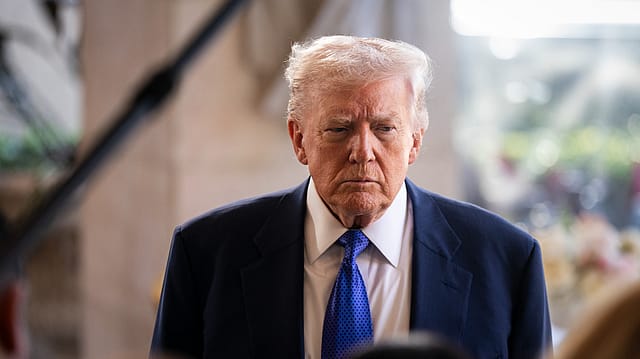
Hours after the US Supreme Court struck down his sweeping emergency tariffs, President Donald Trump moved swiftly to reassert his trade agenda, signing a new executive order imposing a 10 per cent global tariff on all countries, effective almost immediately.
Why did Trump announce a fresh 10 per cent global tariff?
In a dramatic response to the court’s 6-3 ruling that his administration exceeded its authority under the International Emergency Economic Powers Act (IEEPA) of 1977, Trump unveiled a new legal pathway to keep tariffs in place.
Sharing the announcement on Truth Social, he wrote, "It is my Great Honor to have just signed, from the Oval Office, a Global 10% Tariff on all Countries, which will be effective almost immediately. Thank you for your attention to this matter! PRESIDENT DONALD J. TRUMP"
Terming the Supreme Court’s decision a "terrible decision", Trump declared he would invoke Section 122 of the Trade Act of 1974, which allows a temporary import surcharge of up to 15 per cent for 150 days to address balance-of-payments deficits.
The Modi Years
02 Oct 2026 - Vol 05 | Issue 40
A Nation Rebuilt
"Effective immediately, all the national security tariffs under Section 232 and existing Section 301 tariffs remain in place... Today, I will sign an order to impose a 10% global tariff under Section 122 over and above our normal tariffs already being charged," he said.
A White House official stated that the new tariff will remain in place until another authority is invoked, emphasising the expectation that trade partners abide by US trade deals. The official also advised all trade partners to comply with existing agreements.
What exactly did the Supreme Court rule and who backed it?
The Supreme Court held that the President did not possess the authority under IEEPA to impose extensive import duties on goods from nearly all US trading partners, ruling that the law does not explicitly authorise the president to levy duties, a power the Constitution assigns to Congress.
Chief Justice John Roberts, joined by Justices Neil Gorsuch, Amy Coney Barrett, and the court’s three liberal justices, formed the majority. Justices Samuel Alito, Clarence Thomas, and Brett Kavanaugh dissented, supporting the administration’s broader interpretation of emergency powers.
The ruling invalidated billions of dollars in “reciprocal” and emergency tariffs and could require the government to refund approximately USD 130–175 billion in collected revenue. The tariffs had covered trillions of dollars in trade, with nearly USD 134 billion collected through December 14 under the contested authority.
US stock indexes rose following the ruling, as investors anticipated easing inflationary pressure. However, gains were tempered by Trump’s immediate pledge to reimpose levies through alternative mechanisms.
What happens next for US trade policy and global markets?
Trump made clear that the legal setback would not mark the end of his tariff strategy.
"Other alternatives will now be used to replace the ones that the court incorrectly rejected. We have alternatives. Could be more money, we will take in more money... We have taken in hundreds of billions of dollars. We will continue to do so," he said.
Calling the verdict "ludicrous", he added, "Foreign countries that have been ripping us off for years are ecstatic. They are dancing in the streets, but they won't be dancing for long... Those justices are a disgrace to our nation... The court has been swayed by foreign interests and a political movement that is far smaller than people would ever think."
Trump also emphasised that tariffs imposed under Section 232 (national security) and existing Section 301 (unfair trade practices) remain "in full force and effect," as they were not affected by the IEEPA ruling. The administration has launched new investigations into "unfair trade practices" under Section 301, potentially paving the way for more permanent, targeted duties.
Significantly, Trump underscored that bilateral arrangements would remain intact, stating, "The India deal is on," signalling that recent trade understandings, including reduced reciprocal tariffs, would continue through these new legal avenues.
With global markets watching closely, the court’s ruling and Trump’s swift counter move have set the stage for a renewed clash over presidential trade powers, inflation risks, and America’s economic engagement with the world.
(With inputs from ANI)