Deepavali's inclusion in UNESCO List Signals India’s Growing Cultural Soft-Power Push
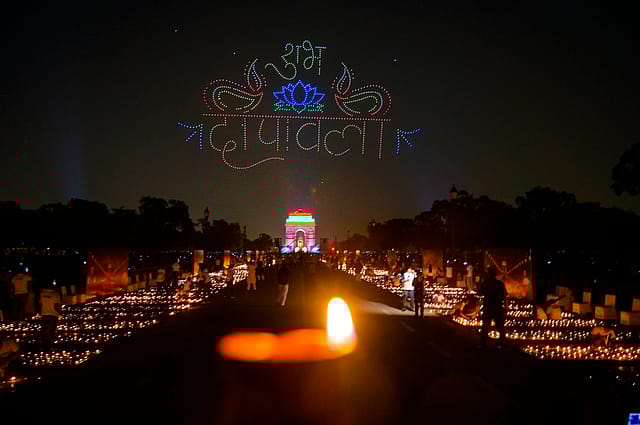
When UNESCO added Deepavali to its Representative List of the Intangible Cultural Heritage of Humanity for 2025, the decision formally acknowledged one of India’s most widely observed ritual traditions. Celebrated across the subcontinent, the festival of light aligns closely with UNESCO’s definition of community-owned, intergenerational heritage. Prime Minister Narendra Modi welcomed the inscription, describing it as global recognition of an ancient civilisational tradition and a marker of India’s cultural continuity.
UNESCO’s Representative List of the Intangible Cultural Heritage of Humanity, instituted in 2008 under the Convention for the Safeguarding of the Intangible Cultural Heritage, was conceived as an archive of living practices—the rituals, skills, festive traditions, oral knowledge systems and social customs through which communities reproduce meaning across generations. Seen against the longer arc of India’s presence on the list, the Deepavali entry illuminates how the logics of cultural recognition have evolved over time. India’s early inscriptions were shaped largely by a preservation impulse, focused on traditions sustained by relatively small communities through long apprenticeships and tightly bound social ecologies. Koodiyattam travelled from guru to disciple within Kerala’s temple networks; Ramman endured through ritual obligation in a handful of Garhwal villages; Sankirtana survived within the devotional circuits of Manipur’s Vaishnavite communities. These were practices embedded in village calendars, monastic routines and caste-linked performance worlds.
From 2016 onward, the profile of India’s inscriptions began to change in texture and scale. Yoga entered the list as a civilisational practice rather than as a threatened one. The Kumbh Mela followed, a pilgrimage of immense scale. Durga Puja in Kolkata, Garba of Gujarat, and now Deepavali extend this pattern toward widely visible, festival-centred traditions. In this later phase, heritage increasingly functions not only as preservation but also as public cultural representation on a national and global stage.
State-wise representation reveals how uneven this cultural cartography remains. No Indian state holds more than two exclusive inscriptions. Kerala has two—Koodiyattam (2008) and Mudiyettu (2010). West Bengal appears through Chhau and through Durga Puja. Rajasthan has Kalbelia. Gujarat has Garba. Punjab enters the list only once, through the Thatheras of Jandiala Guru, the only major craft tradition from India represented on the list so far. A few regions, particularly the north Indian riverine and pilgrimage belt, gain additional visibility through multi-state inscriptions such as Ramlila and the Kumbh Mela.

Iran After the Imam
06 Mar 2026 - Vol 04 | Issue 61
Dispatches from a Middle East on fire
More revealing than the distribution of entries, however, is what the list consistently does not include. Despite being among the world’s largest repositories of tribal cultural knowledge, India has no UNESCO-recognised intangible heritage listings for Adivasi medicinal systems, seed-sharing ecologies, forest cosmologies, or the major oral epics of Gond, Santhal, Bhil or Munda societies. Anthropologically, these represent some of the subcontinent’s oldest continuous knowledge traditions, yet they remain institutionally under-documented at the global heritage level.
The presence of everyday labour and livelihood traditions on India’s list is also limited. With the lone exception of Punjab’s Thatheras, India’s vast craft economy—weaving clusters, pottery traditions, stone-carving guilds, toy-making towns and agricultural ritual calendars—is largely absent from the UNESCO register. The list tilts more strongly toward ritual performance and festival culture than toward subsistence skill and occupational knowledge.
Globally, by contrast, the ICH register includes a broad range of practices that are ecologically embedded and occupationally specific—from pastoral traditions and irrigation knowledge to healing practices and seasonal work cultures. For many countries, the ICH archive reads less like a catalogue of festivals and more like a record of how people work, eat, farm, migrate and adapt within fragile social and natural environments.
Placed beside this global pattern, India’s nominations appear strongly oriented toward ritual performance and festive visibility. Other nations routinely nominate fishing techniques, grazing cycles, fermentation cultures, women’s domestic food traditions, oral healing practices and endangered craft ecologies. India, by contrast, has so far largely reserved the ICH platform for practices that are public-facing, processional and readily staged. Deepavali, in this sense, fits within a global trend in which widely shared festivals, such as Mexico’s Day of the Dead, Japan’s Gion Matsuri, Korea’s kimchi-making culture and the Mediterranean diet traditions, have increasingly moved from lived social custom into institutional heritage designation.
While Deepavali’s inscription reflects India’s growing confidence in exporting its everyday civilisational practices as global cultural capital, a larger question remains unresolved: which Indias continue to live outside this global mirror, not because their traditions lack depth or continuity, but because their forms of knowledge have not yet been translated into the language of heritage at all?