CENTCOM Claims Full Maritime Blockade of Iran, No Vessels Pass in First 24 Hours
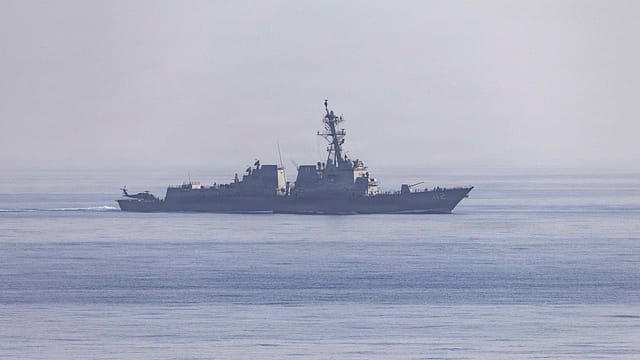
As tensions rise in West Asia, the US Central Command said more than 10,000 Sailors, Marines, and Airmen, supported by over a dozen warships and dozens of aircraft, are carrying out a mission to blockade ships entering and leaving Iranian ports.
The statement came after the United States began a naval blockade against Iran following the expiry of a deadline set by US President Donald Trump.
In a post on X on Tuesday, CENTCOM stated that during the first 24 hours of the blockade, no ships were able to pass. It further noted that the blockade is being enforced against vessels of all nations which are departing or entering Iranian ports and coastal areas.

The Modi Years
02 Oct 2026 - Vol 05 | Issue 40
A Nation Rebuilt
"During the first 24 hours, no ships made it past the U.S. blockade and 6 merchant vessels complied with direction from U.S. forces to turn around to re-enter an Iranian port on the Gulf of Oman”, the post read.
“The blockade is being enforced impartially against vessels of all nations entering or departing Iranian ports and coastal areas, including all Iranian ports on the Arabian Gulf and Gulf of Oman. U.S. forces are supporting freedom of navigation for vessels transiting the Strait of Hormuz to and from non-Iranian ports", the post added.
What Did UKMTO Report About Maritime Access Restrictions in the Strait of Hormuz Region?
Earlier on Monday, confirming the start of the operation, the United Kingdom Maritime Trade Operations (UKMTO) stated that it has received reports that "maritime access restrictions are being enforced affecting Iranian ports and coastal areas, including locations along the Arabian Gulf, Gulf of Oman, and the Arabian Sea east of the Strait of Hormuz."
The Strait of Hormuz emerged as one of the key bones of contention after the failure of peace talks in Pakistan.
Global efforts are underway to revive the vital energy artery.
In light of the developments, France and the United Kingdom are set to host a joint conference aimed at bringing together over 40 countries to ensure freedom of navigation in the Strait of Hormuz.
In a post on X, French President Emmanuel Macron confirmed that the video conference will take place in Paris on Friday, later this week, which would see peaceful players come together and contribute towards a 'multilateral and defensive mission', aimed at restoring the freedom of navigation in the world's critical energy chokepoint.
Meanwhile, Prime Minister Narendra Modi on Tuesday received a call from US President Trump during which the two leaders discussed the security situation in West Asia and stressed the importance of keeping the Strait of Hormuz open and secure.
Nearly one-fifth of the global oil passed through the Strait of Hormuz before the conflict in West Asia began. It has now emerged as a key flashpoint as prices inflate across the world.
(With inputs from ANI)