Bangladesh Heads to High-Stakes Elections 18 Months After July Uprising
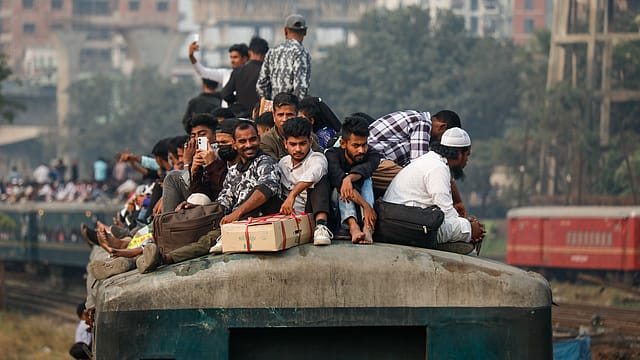
All eyes are on Bangladesh as the country heads to parliamentary elections on February 12, with authorities completing extensive preparations to ensure a peaceful and credible vote.
The results are expected to be confirmed on Friday, February 13. The polls, alongside a national referendum on the July National Charter, are widely seen as a decisive and future-defining moment for the South Asian nation.
More than 12.77 crore eligible voters will cast their ballots to elect representatives for 299 of the 300 parliamentary seats, as voting in one constituency has been postponed following the death of a candidate.

Zeroing In on ECI
09 Oct 2026 - Vol 05 | Issue 41
Constitutional legitimacy versus political opportunism
According to Election Commission data, first-time voters account for approximately 3.58 per cent of the total 1,27,700,597 voters. Among the electorate, 6.48 crore are men and 6.28 crore are women.
A total of 1,755 candidates representing 50 registered political parties are in the fray, alongside 273 independents, including 20 women.
BNP and Jamaat Face Off as Awami League Remains Out of Fray
Sixty-three women candidates are contesting under party banners. The contest is primarily between two major alliances, one led by the Bangladesh Nationalist Party led by Tarique Rahman and the other by Jamaat-e-Islami, headed by Ameer Shafiqur Rahman.
Although Jamaat was once an ally of the BNP, it is now its principal rival in the absence of the Awami League.
Pre-poll surveys conducted over the past two months by consulting firms, research organisations and think tanks suggest that the BNP is the frontrunner and that Tarique Rahman is in pole position to become the next prime minister.
Voting will take place from 7:30 am to 4:30 pm without interruption across a vast network of 42,779 polling stations nationwide.
More than half of these centres have been identified as high or moderate risk-prone. Police have classified around 24,000 of nearly 43,000 polling centres as risk-prone.
Over 1,600 Dhaka Polling Centres Marked High or Moderate Risk
In Dhaka alone, 1,614 of the 2,131 polling centres have been designated high or moderate risk. The army, however, identified two centres in Dhaka city as risky.
Inspector General of Police Baharul Alam said security arrangements are based on local sensitivity assessments and outlined a comprehensive three-tier framework comprising static forces at each polling station, mobile patrols in surrounding areas and rapid-response striking units.
A total of 1,57,805 police personnel have been assigned direct election security duties, including 93,391 static personnel and the remainder in mobile and striking roles.
An additional 29,798 personnel from regular police stations will provide support, bringing total police deployment to 1,87,603.
Armed forces members have also been deployed with magisterial powers to prevent disorder. For the first time, policemen at specific locations in Dhaka will use body-worn cameras, while 90 per cent of polling centres will be under CCTV surveillance.
Record Security Deployment and Tech Surveillance for Polls
Officials described the arrangements as the largest-ever deployment of law enforcement personnel and the most extensive use of technology in the country’s electoral history.
Ballot papers are being distributed to polling centres under stringent security measures. Authorities have confirmed that all logistical preparations involving thousands of election officials and security personnel are complete.
Election Commissioner Brig Gen retired Abul Fazal Md Sanaullah said the Commission was satisfied with the prevailing law and order situation and that compared to any time in the past, they are in a better position now.
He acknowledged isolated incidents but expressed confidence that law enforcement agencies would ensure a peaceful atmosphere during and after polling.
He also warned that “evil forces” continued to pose risks and urged political parties and supporters to maintain a celebratory atmosphere.
Yunus Urges Voters to Shape a “New Bangladesh”
In a televised address to the nation, Yunus called on citizens to turn election day into the “birthday of a new Bangladesh”, saying the people themselves would shape the nation’s promising future through their votes.
Two days ahead of polling, he described February 12 as a historic and decisive day when citizens would elect a new government and determine the future structure of Bangladesh through a referendum on the 84-point reform package under the July Charter.
He dismissed rumours that the interim government would not transfer power as baseless propaganda aimed at obstructing democratic transition.
“We will hand over the responsibility to the newly elected government with deep pleasure and pride and return to our own jobs. We ardently await that auspicious moment,” he said.
Yunus Warns Against Misinformation, Vows Strict Action on Disruptions
Yunus also warned against the spread of misinformation, referring to an identified quarter attempting to create suspicion and panic to disrupt the peaceful election atmosphere and weaken public trust.
Although he did not name the group, he had previously accused the disbanded Awami League of spreading misinformation.
“The main weapon against rumour is cautiousness and truth,” he said, adding that the state would not tolerate attempts to forcibly take over polling centres, disrupt voting or provoke unrest.
The European Union Election Observation Mission has characterised the pre-poll atmosphere as very positive.
Chief Observer Ivars Ijabs said the general mood across districts and regions was positive and hopeful, with many stakeholders viewing the elections as a fresh start for Bangladesh’s democracy.
The EU has deployed its largest-ever mission in the country, comprising over 200 observers, including 60 long-term observers active since early January and 90 short-term observers monitoring voting and counting.
Minority Communities Voice Fears of Post-Election Reprisals
Despite official assurances, concerns persist in certain areas about potential post-poll unrest, particularly among minority communities.
In Chattogram, some minority voters expressed apprehension. A Hindu youth from Jamalkhan said anonymously that whichever side loses tends to blame minorities, adding that state, election and persecution have become synonymous for them.
In Rangpur’s Gangachara upazila, farmer Manoranjan Shil, 56, recounted lingering trauma from an attack on his village last July when homes were vandalised and valuables looted, saying they are still haunted by the experience.
However, minority voters in districts such as Faridpur and Rajbari reported feeling secure, while sentiments were mixed in Mymensingh and Tangail.
The elections come 18 months after a massive student-led uprising in 2024 forced the resignation of long-time Prime Minister Sheikh Hasina and ended the Awami League’s rule.
Hasina’s government was ousted in the violent street protests known as the July Uprising on August 5, 2024.
The interim administration led by Chief Adviser Professor Muhammad Yunus subsequently disbanded the Awami League under an executive order and barred it from contesting the polls.
This election marks a critical juncture in Bangladesh’s democratic journey, with implications for governance, stability and regional dynamics in South Asia, including ties with India.
(With inputs from ANI)