$139 Million Every Single Day: How Iran Is Winning Big on Oil Despite Bombings
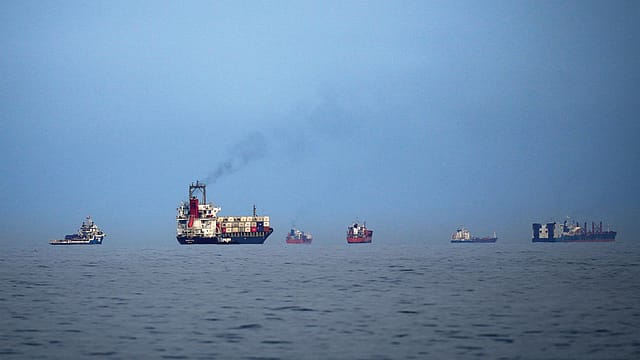
Iran is earning significantly higher revenues from oil exports during the ongoing conflict in West Asia, aided by a sharp rise in crude prices and its continued ability to ship oil through the Strait of Hormuz, according to a Bloomberg report.
The Islamic Republic has benefited from a dual effect in the market. Its flagship Iranian Light crude is being sold, largely to buyers in China, at the narrowest discount to Brent in over ten months.
At the same time, the global benchmark has climbed past $100 per barrel since the onset of bombing, boosting overall earnings.
Exports have remained close to pre-war levels of around 1.6 million barrels per day this month.
Tankers continue to load at Kharg Island and move through the Strait of Hormuz, with activity reportedly picking up in recent days.
This stands in contrast to other Gulf producers, whose shipments have faced an effective blockade.
How is Iran sustaining its oil revenue stream despite US and Israeli airstrikes?
Even as the United States and Israel carry out sustained airstrikes, Iran has managed to preserve its oil revenue stream.

Open Minds 2026
26 Jun 2026 - Vol 05 | Issue 26
The power of ideas and arguments in 50 portraits
Bloomberg reported that Washington has also temporarily eased sanctions on Iranian oil already stored in tankers at sea, a move aimed at limiting the war’s impact on global prices and one that could further support Tehran’s income.
"The Trump Administration is practically begging Iran to sell oil," Richard Nephew, senior research scholar at Columbia's Center on Global Energy Policy told Bloomberg, who has served at the US Department of State as a deputy envoy for Iran and a coordinator for sanctions policy.
"I would have thought that interdicting Iranian oil sales would have been a priority for the United States,” he added.
Based on estimates from TankerTrackers.com and prevailing prices, Iran’s daily earnings from Iranian Light crude have risen to about $139 million in March, compared to $115 million in February.
How has the narrowing discount boosted Iran’s oil earnings amid the conflict?
The discount on Iranian crude has narrowed to roughly $2.10 per barrel against Brent, compared to more than $10 before the conflict began.
Higher oil prices are critical for Iran as it deals with the economic and infrastructural impact of sustained airstrikes and the costs of its military response across the region, including the need to replenish expended weapons and fund reconstruction.
Meanwhile, US President Donald Trump said he remains undecided on whether to enforce or extend the deadline set for Iran to reopen the Strait of Hormuz, signalling that ongoing diplomatic efforts will shape the final call.
"I don't know yet. I don't know. Mr Witkoff and JD and Jared will tell me whether or not they think it's going along, and if it's not going along, maybe not," Trump said during a Cabinet meeting at the White House, referring to US Vice President JD Vance, special envoy Steve Witkoff, and Jared Kushner.
"We have a lot of time, you know what? It's a day in 'Trump time'. A day -- do you know what it is? That's an eternity," he added, indicating there was still room for negotiations.
Trump had earlier extended the deadline until Friday and ordered a five-day pause on military strikes targeting Iranian power plants and energy infrastructure, citing ongoing diplomatic engagement.
(With inputs from ANI)