China Urges Iran to Ensure Safe Passage Through Strait of Hormuz
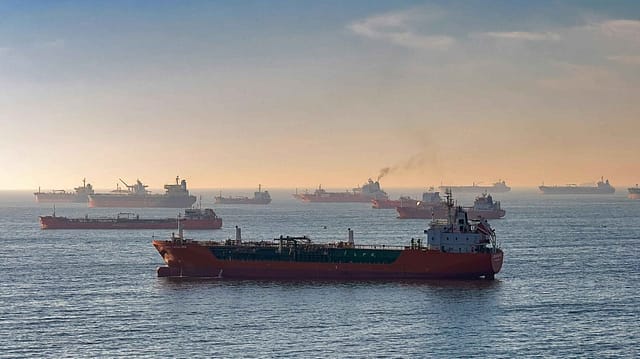
China's Foreign Minister Wang Yi called his Iranian counterpart Abbas Araghchi on Wednesday, seeking guarantees for the freedom and safety of international navigation through the Strait of Hormuz, the first such call issued by Beijing since Tehran began restricting passage through the critical waterway in the midst of its ongoing conflict with the United States.
Wang's outreach came as a Pakistan mediation delegation, headed by Field Marshal Asim Munir, arrived in Tehran the same day to discuss new peace proposals for a second round of US-Iran talks in Islamabad.
Rise of the Pivotal Power
18 Sep 2026 - Vol 05 | Issue 38
The BRICS declaration is a strategic victory for Modi
"The current situation has reached a critical stage of transition between conflict and peace, and a window for peace is opening," Wang said, according to a statement released by the Chinese foreign ministry.
Opening of the strait is the second most significant demand put forward by US President Donald Trump, alongside the halting of Iran's nuclear programme.
The Strait of Hormuz is a vital 55-km-wide maritime choke point between Iran and Oman that manages roughly 20 percent of global oil trade.
How did Wang Yi balance Iran’s sovereignty and Strait of Hormuz navigation concerns?
Wang acknowledged Iran's rights as a coastal state, saying its "sovereignty, security and legitimate rights and interests" deserved to be respected and safeguarded.
He added, however, that "the freedom and safety of international navigation through the strait should also be ensured, and efforts to restore normal transit through the strait are a shared call of the international community."
Araghchi, for his part, said Tehran expected China to play an active role in promoting peace and ending the conflict.
He added that Iran was willing to continue seeking a rational and realistic solution through peaceful negotiations, according to the Hong Kong-based South China Morning Post.
China, a close ally of Iran and the largest importer of Iranian oil, has expressed concern over the energy crisis worsened by the US blockade of the strait, which has prevented ships from carrying oil and gas from Iranian ports.
The Chinese Foreign Ministry on Tuesday sharply criticised the blockade as "dangerous and irresponsible", warning that it risked escalating tensions and undermining the shaky ceasefire.
Prior to Wednesday's call with Araghchi, Wang had also spoken with his Pakistani counterpart by phone on Monday, urging Islamabad to help "sustain the hard-won momentum" of what he described as a "highly fragile" ceasefire.
The US blockade followed an initial round of talks held in Islamabad over the weekend.
Those discussions, aimed at permanently resolving the conflict, failed to produce an agreement, with deep divisions remaining over Iran's nuclear programme and the status of the Strait of Hormuz.