Scientists Develop Cheaper Platinum-Free Catalyst for Clean Hydrogen Fuel
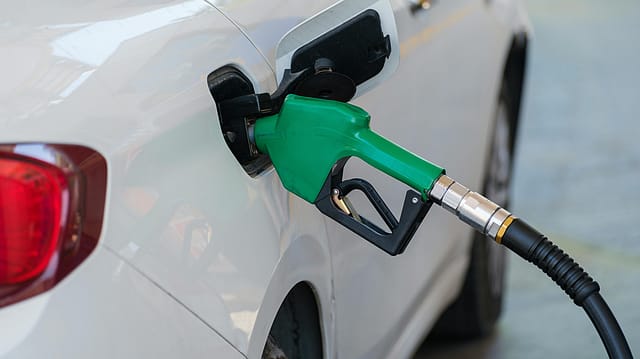
Scientists are increasingly exploring clean hydrogen as a major part of the global transition away from fossil fuels. Hydrogen can store renewable energy generated from sources such as sunlight, wind, and water, while also helping reduce harmful emissions across industries.
One of the biggest challenges, however, has been cost. Many hydrogen production systems rely on expensive platinum group metals (PGMs), making large-scale adoption difficult. Researchers have also been searching for technologies that can efficiently store renewable energy for later use.
Now, researchers at Washington University in St. Louis say they may have found a promising solution.
What breakthrough did the researchers achieve?
A team led by Gang Wu, professor of energy, environmental & chemical engineering in the McKelvey School of Engineering, developed a new catalyst designed for anion-exchange membrane water electrolysers (AEMWEs).
These systems use electricity from renewable energy sources to split water into hydrogen and oxygen, producing clean hydrogen fuel in the process.

Rise of the Pivotal Power
18 Sep 2026 - Vol 05 | Issue 38
The BRICS declaration is a strategic victory for Modi
Instead of relying on platinum-based materials, the researchers created a catalyst using rhenium phosphide (Re₂P) and molybdenum phosphide (MoP). The two materials worked together to improve the hydrogen extraction process.
The rhenium component helped hydrogen attach to and release from the catalyst surface, while molybdenum accelerated the splitting of water molecules in an alkaline electrolyte.
How does the new catalyst work better than existing systems?
The researchers paired the catalyst with a nickel-iron anode and tested its performance against advanced existing cathodes, including systems based on expensive platinum group metals.
According to the study, the new catalyst outperformed leading state-of-the-art cathodes while also demonstrating exceptional durability.
The system operated for more than 1,000 hours at industry-level current densities of 1 and 2 amperes per square centimetre. Researchers say this makes it one of the most durable platinum-free cathodes developed so far for anion-exchange membrane water electrolysers.
“Our findings allowed us to rationalise the critical role of engineering the hydrogen-bond network at the catalyst/electrolyte interface in designing high-efficiency, low-cost AEMWEs,” Wu said.
“Our catalyst showed the lowest resistance across the studied potential range, which suggests the fastest hydrogen adsorption kinetics among the studied catalysts. These newly achieved performance and durability metrics make our catalyst one of the most promising membrane electrode assemblies for practical anion-exchange membrane water electrolysers,” added Wu.
Why could this discovery matter for the clean energy industry?
Hydrogen is increasingly viewed as an important energy carrier because it can store renewable electricity and support sectors that are difficult to fully electrify, including heavy industry and manufacturing.
“Going from water to hydrogen is a very desirable way we are able to store energy for different applications,” Wu said. “Hydrogen itself can be used as an energy carrier and is useful for different chemical industries and manufacturing.”
If the new catalyst can be scaled for industrial use, it could significantly reduce the cost of producing green hydrogen by eliminating the need for platinum-based materials.
Lower costs and improved durability could help accelerate the adoption of hydrogen technologies in transportation, manufacturing, energy storage, and other sectors aiming to reduce carbon emissions.
What happens next for the technology?
Although the experiments were conducted at laboratory scale, the researchers plan to continue studying whether the catalyst system can be expanded for commercial and industrial applications.
Future research will likely focus on large-scale manufacturing, long-term operational stability, and integration with renewable energy systems.
(With inputs from ANI)