India Smartphone Sales May Fall 7% in FY27 Despite Revenue Growth: ICEA
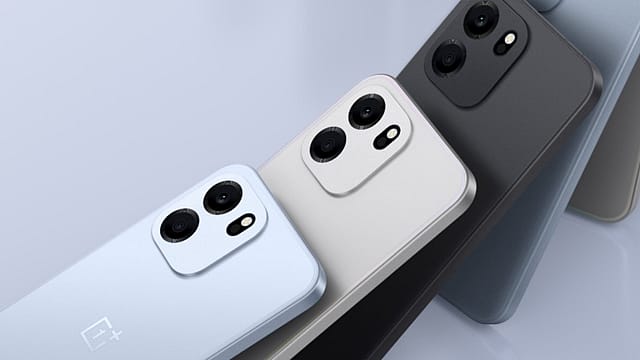
India’s smartphone industry could witness a slowdown in unit sales in the current financial year as inflationary pressures and global uncertainty weigh on consumer spending. However, industry leaders believe rising device prices will still push overall market value higher.
According to Chairman of the India Cellular & Electronics Association, Pankaj Mohindroo, smartphone shipments in India are likely to fall by 5-7 per cent in FY27 even as industry revenues continue to expand.
In an exclusive interview with ANI, Mohindroo said, “Domestic volume demand has remained at the same level for the last five years. This year, we will see a drop of about 5-7 per cent in volume. In value, we will grow because of the higher cost of product. From last year, value growth should be between 8-10 per cent.”

The Health and Wellness Issue
25 Sep 2026 - Vol 05 | Issue 39
The trend reflects a changing smartphone market where consumers are buying fewer devices, but paying more for them. Industry executives believe premiumisation and higher manufacturing costs are reshaping the sector’s growth trajectory.
How is the global AI boom making smartphones more expensive?
One of the biggest reasons behind rising smartphone prices is the sharp increase in memory chip costs. The rapid expansion of artificial intelligence infrastructure globally has increased demand for semiconductors and memory components, tightening supplies across the electronics industry.
Explaining the issue, Mohindroo said, “The biggest challenge today in the supply chain is the memory. Because of the AI boom in the world, memory supply has become short, and prices have gone up very substantially, which is impacting the final bill of material.”
The impact is being felt most strongly in India’s entry-level smartphone market. Devices that once cost between Rs 4,000 and Rs 5,000 have now become significantly more expensive, making affordability a major concern for first-time smartphone buyers.
“What was Rs 4,000-5,000 a few years back is now Rs 10,000-15,000. So, the gap for the first-time user transitioning from a feature phone to a smartphone has become much larger. That makes financing very essential,” he said.
Industry experts say this price jump could slow the migration from feature phones to smartphones, especially in smaller towns and rural markets where affordability remains critical.
Mohindroo also commented on the proposed draft framework by the Reserve Bank of India that would allow lenders to disable certain smartphone services in cases of loan defaults. According to him, the proposal could improve financing access for lower-income consumers.
“It is consent-based. If there is a default, you would be deprived of some services, and if you are making good the default, then there is an immediate recourse which the lender has to implement within one hour,” he said.
Why does ICEA believe smartphones are crucial for India’s digital future?
Despite India’s rapid digital transformation, a large section of the population still lacks access to smartphones, limiting participation in digital services and online payments.
Highlighting the scale of the challenge, Mohindroo said, “Our smartphone population is around 750 million, while the country's population is about 1.5 billion. Around 500 million people who should have smartphones still do not have smartphones. They cannot do UPI, and they are in digital darkness.”
He described the Unified Payments Interface as “the eighth wonder of the world” and stressed that smartphones are now essential for accessing banking, digital payments, and internet-based services.
At the same time, India’s smartphone manufacturing sector continues to expand rapidly. Mohindroo said the country has emerged as the world’s second-largest smartphone manufacturer, with production valued at nearly USD 70 billion.
“Mobile phone exports have gone up 160 times and are now over Rs 2.5 lakh crore. This year, India will become the second-largest exporter of mobile phones and overtake Vietnam,” he said.
He added that India’s mobile manufacturing ecosystem has grown dramatically in recent years, expanding from around Rs 18,000 crore to more than Rs 6 lakh crore.
Mohindroo also pointed to India’s semiconductor ambitions, saying the country has “finally broken ground” with 12 semiconductor units currently under development. He added that the industry is now focusing on chip design capabilities, manpower development, and the creation of Indian-owned smartphone brands and domestic supply chains over the next one to five years.
(With inputs from ANI)