India vs New Zealand: Beyond Abhishek Sharma’s Blitz, Naman Dhir Makes His Case
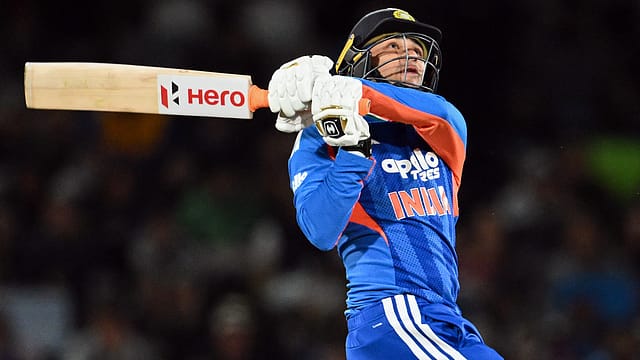
Abhishek Sharma needed 38 balls to produce the innings this series will be remembered for. Naman Dhir faced 69 across all five matches and quietly assembled India’s second-highest tally.
One smashed 113 in Wellington. The other finished without a half-century. By the time India completed their batting in Hamilton, Abhishek had 197 runs and Naman 138. The gap was 59 runs, considerably smaller than the difference in attention their performances attracted.
India had secured the five-match T20I series in three games. Their completed batting returns tell a broader story about the players who helped get them there, the contributions behind the spectacular innings and the opportunities that slipped away.
Abhishek’s hundred carried enormous weight
Abhishek’s series scores read 29, 27, 113, 27 and 1. His 197 runs came at an average of 39.40 and a strike rate of 223.86. Sixteen sixes reinforced the damage he could inflict before an attack settled.

The Era of Forever Wars
30 Oct 2026 - Vol 05 | Issue 44
Coping with an explosive Middle East
Wellington was the fullest expression of that threat. Abhishek and Vaibhav Sooryavanshi powered India to 118 without loss in the powerplay. India chased 199 in 13.2 overs, completing the series victory with 40 balls to spare.
The hundred supplied 57.4% of Abhishek’s series runs. His other four innings produced 84 from 50 balls, a strike rate of 168. That is still brisk scoring. It also shows the difference between his extraordinary ceiling and the more modest returns surrounding it.
His three scores in the twenties helped set a tempo without becoming substantial innings. In Hamilton, he lasted two deliveries for one. The next gain for India would be another longer contribution alongside the innings that overwhelms an opponent.
Naman’s case survives a closer look
Naman’s sequence was 42 not out, 31, four not out, 28 and 33. He averaged 46 and scored at exactly 200 runs per hundred balls.
His strongest contribution came immediately. In the opening match in Christchurch, India were 167/5, needing 59 from 33 balls to chase 226. Naman made an unbeaten 42 from 15 and helped finish the job.
That innings demonstrated the value of a batter who can score quickly without needing several overs to establish himself. India batting coach Sitanshu Kotak subsequently described him as “a power-packed player” who understood what was expected of him.
Naman followed with 31 off 17 in the second match. He was dismissed with the chase unfinished, leaving Tilak Varma and Nitish Kumar Reddy to complete the rescue. His contribution advanced the innings, while the finish belonged to his teammates.
Wellington required only one delivery from him, which he dispatched for the winning four. Auckland brought 28 off 13 during a collapsing chase. Hamilton’s 33 off 23 was slower and ended before the final overs.
Those distinctions matter when assessing his series. Every cameo did not carry equal weight. Nevertheless, he reached the high twenties or beyond in four innings, with his opening-match finish giving the aggregate substance.
Ishan’s recovery came late
Ishan Kishan arrived at the final match with one run from two innings, having missed the middle two games through injury. His 61 off 32 in Hamilton supplied almost his entire series tally of 62.
Five fours and five sixes accounted for 50 of those runs. With both openers dismissed cheaply, his innings alongside Shreyas Iyer gave India the recovery they needed to reach 191/8.
The performance also took Kishan beyond 2,000 T20I runs. It was a significant finish to an interrupted tour. The series itself still offered too little sustained batting evidence to place him alongside Abhishek and Naman as its leading Indian performers.
Iyer and the unfinished work
Iyer finished third among India’s scorers with 126 runs at an average of 25.20 and a strike rate of 151.81. His 50 off 23 in Hamilton supplied almost 40% of that total. Like Kishan, he used the final innings to improve a modest set of returns.
Samson ended with 107 runs, while Tilak contributed 99. Tilak’s unbeaten 51 in the second match was a reminder that a series table can understate the importance of a particular innings.
India’s batting had enough range to secure the series early. The review should recognise the different jobs involved: opening at speed, repairing a damaged innings and finishing a chase under pressure.
Abhishek produced its most destructive Indian innings. Naman’s contribution deserves to remain visible when the Wellington highlights stop playing.